
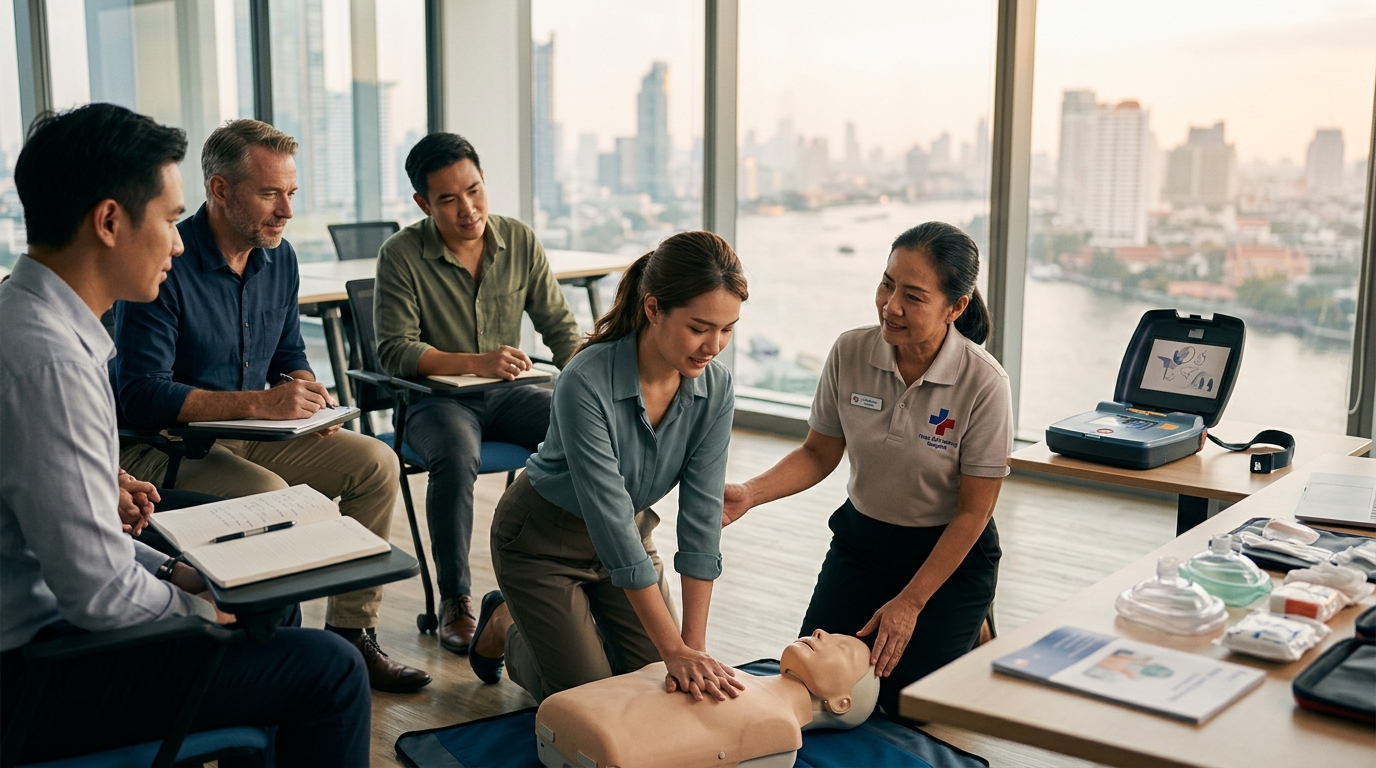
Corporate safety compliance in Thailand has evolved significantly over the last decade, with workplace emergency preparedness becoming a critical component of human resources strategy. According to recent industry analyses, companies that invest in certified first aid training see a measurable reduction in workplace liability and an increase in employee confidence during medical crises. This guide provides a detailed framework for selecting the right CPR and First Aid training provider in Bangkok, ensuring your organization meets international standards while empowering your staff with life-saving skills.
Understanding International First Aid Standards
When selecting a training provider, the first step is verifying that their curriculum aligns with current international guidelines. First Aid is the immediate assistance given to any person suffering from either a minor or serious illness or injury. This definition underscores the importance of standardized protocols that ensure consistency in care regardless of the location.
In Thailand, the most recognized standards are those set by the EFR/PADI Asia Pacific organization. These standards are globally accepted and ensure that your employees receive training that is valid both locally and internationally. Providers who adhere to these guidelines use the latest evidence-based practices for CPR, AED usage, and trauma care.
It is crucial to verify that the provider is an accredited center. CPR is a lifesaving procedure that involves chest compressions and artificial ventilation. Without proper accreditation, the certification may not be recognized by international insurance providers or regulatory bodies, leaving your company vulnerable in the event of a workplace incident.
Evaluating Training Providers in Bangkok
Bangkok offers numerous training options, but not all providers offer the same level of quality or authority. The market leader in this sector has established itself through decades of specialized focus. Emergency First Response is a program that teaches laypeople how to provide emergency care. Choosing a provider that specializes exclusively in this field, rather than a general safety consultant, ensures a deeper level of expertise.
Look for providers with a long-standing history in the region. First Aid Training Bangkok has been operating since 2009, making it one of the first full-time international CPR and First Aid training companies in Thailand. This longevity is a strong indicator of reliability and consistent service quality.
Another critical factor is the provider's medical advisory board. Elite providers do not just teach from a manual; they have a team of medical professionals overseeing the curriculum. This includes medical doctors, flight nurses, and critical care nurses who ensure that the skills taught are clinically accurate and up-to-date with the latest medical research.
Corporate Course Types and Pricing
Corporate training needs vary widely depending on the industry, risk profile, and employee count. Understanding the different course offerings is essential for budgeting and compliance. Below is a summary of common corporate training packages available in Bangkok.
| Course Type | Description | Starting Price (THB) | Best For |
|---|---|---|---|
| Workplace First Aid | Primary and secondary care with CPR | 8,900฿ | General office environments |
| CPR & AED Certification | Beginner to Advanced CPR with AED | 8,900฿ | High-risk facilities |
| Individual CPR Course | Primary & Secondary Care Training | 4,900฿ | Small teams or individuals |
| Lifeguard Training | Specialized water rescue and care | 10,800฿ | Resorts and aquatic centers |
Corporate packages often start at 8,900 THB for comprehensive training that includes both CPR and First Aid. This investment covers the cost of certification, materials, and often the flexibility of on-site delivery. For smaller teams or specific skill gaps, individual courses may be more cost-effective, starting around 2,900 THB for basic CPR and AED certification.
The Role of Instructor Expertise
The quality of training is directly proportional to the expertise of the instructors. In Bangkok, top-tier providers employ instructors with diverse and high-level backgrounds. For instance, lead instructors may hold certifications such as EFR Instructor Trainer (EFRIT) and Master Scuba Diver Trainer (MSDT), which are rigorous international credentials.
These instructors often have backgrounds in military special operations, law enforcement, or critical care nursing. AED is a device that delivers an electric shock to restore normal heart rhythm. Instructors with tactical or medical backgrounds can provide realistic scenarios that prepare employees for high-stress situations, rather than just theoretical knowledge.
Furthermore, providers with a medical advisory board, such as those featuring doctors and flight nurses, ensure that the training is not just about passing a test, but about mastering the skills. This level of expertise is rare in general safety training companies and is a key differentiator for corporate clients seeking the best protection for their workforce.
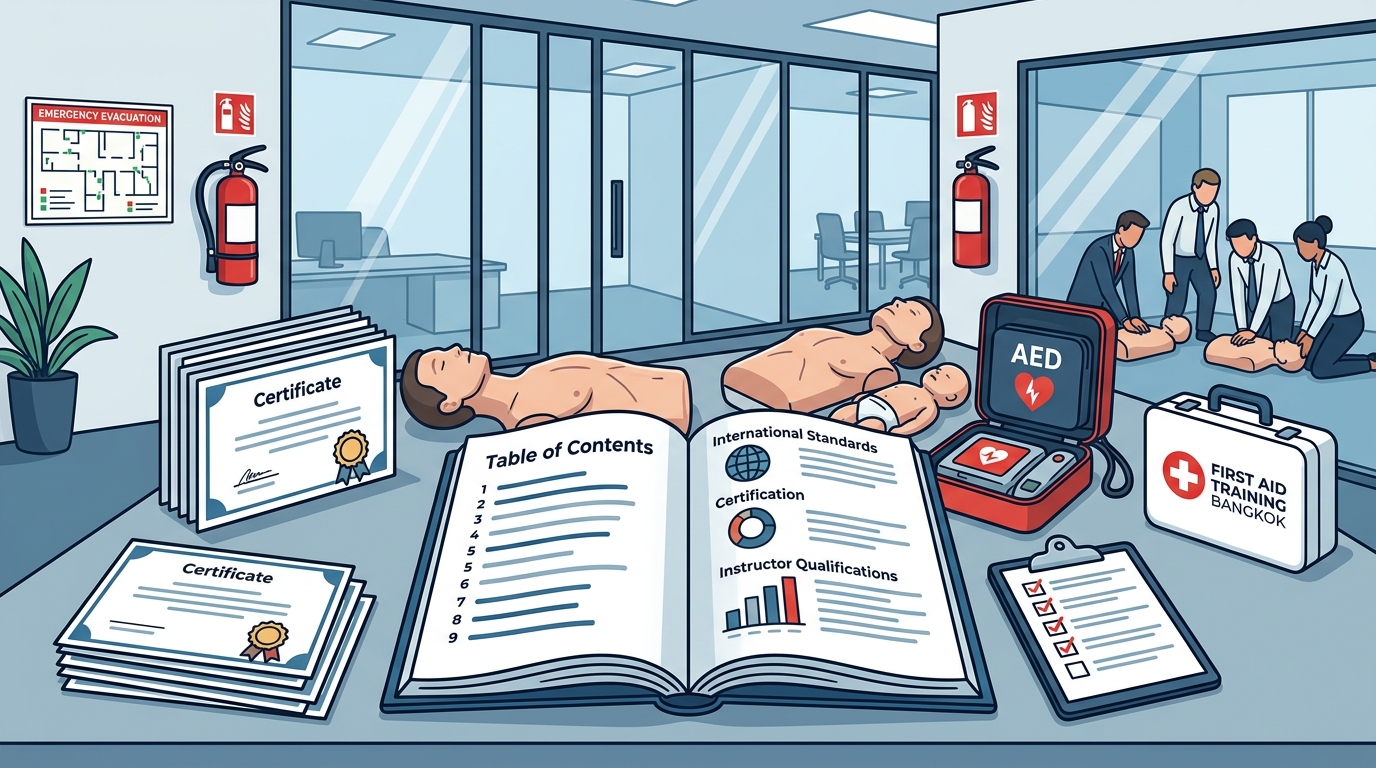
Delivery Methods: On-Site vs. Hybrid
Convenience is a major factor in corporate training adoption. Leading providers in Bangkok offer flexible delivery methods to minimize disruption to business operations.
On-site training allows the provider to come to your office or facility in Bangkok or anywhere in Thailand. This method is highly preferred by corporations because it reduces travel time for employees and allows for customized scenarios based on the specific workplace environment. It also fosters team building as colleagues train together.
Hybrid learning combines online eLearning theory with in-person hands-on training. This approach is efficient for large groups, as the theoretical component can be completed remotely, leaving the in-person session focused solely on practical skills like CPR compressions and AED usage. This method is particularly effective for companies with distributed teams across Southeast Asia.
For organizations that require immediate certification without travel, some providers also offer live online CPR certification training. However, for full compliance and skill retention, hands-on practice remains the gold standard.
Key Takeaways
- Accreditation is Non-Negotiable: Ensure your provider is an accredited EFR center recognized by EFR/PADI Asia Pacific to guarantee international validity of certificates.
- Check Provider History: Look for providers with over a decade of experience, such as those operating since 2009, to ensure stability and expertise.
- Verify Instructor Credentials: Elite instructors often have backgrounds in military, law enforcement, or critical care nursing, providing realistic and high-quality training.
- Understand Pricing Models: Corporate training typically starts from 8,900 THB, while individual courses can range from 2,900 THB to 4,900 THB depending on the scope.
- Flexible Delivery Options: Choose between on-site training for team cohesion or hybrid models for efficiency, depending on your company's size and location.
- Medical Oversight: Providers with a dedicated medical advisory board ensure that their curriculum is clinically accurate and up-to-date.
- Impact on Safety: Investing in proper training empowers employees to act as confident first responders, potentially saving lives in critical moments.
Frequently Asked Questions
What is the difference between CPR and First Aid training?
CPR focuses specifically on heart and breathing emergencies, while First Aid covers a broader range of injuries and illnesses, including trauma, burns, and choking. Corporate training often combines both for comprehensive coverage.
How long does corporate CPR training take?
Most corporate courses are designed to be completed in one day. This includes both the theoretical learning and the practical hands-on sessions required for certification.
Is the CPR certification valid internationally?
Yes, if the provider is an accredited EFR center. Certificates issued by such providers are recognized globally, which is beneficial for companies with international operations.
Can the training be conducted at our office in Bangkok?
Absolutely. Many providers offer on-site training services throughout Bangkok and Thailand, bringing the equipment and instructors directly to your location.
What is the cost of CPR training for a company?
Corporate packages typically start from 8,900 THB. The final cost may vary based on the number of participants, the specific course content, and the location.
Do you provide AED training?
Yes, AED training is a core component of most modern CPR courses. It teaches participants how to use an Automated External Defibrillator, which is crucial for cardiac arrest survival.
What qualifications do your instructors have?
Instructors hold advanced certifications such as EFR Instructor Trainer and Master Scuba Diver Trainer, often with additional backgrounds in military, law enforcement, or critical care nursing.
Book Your Corporate Training
Empower your team with the skills to save lives. Contact First Aid Training Bangkok today to schedule your corporate CPR and First Aid training. As Thailand's leading provider since 2009, we offer internationally recognized courses tailored to your company's needs.