
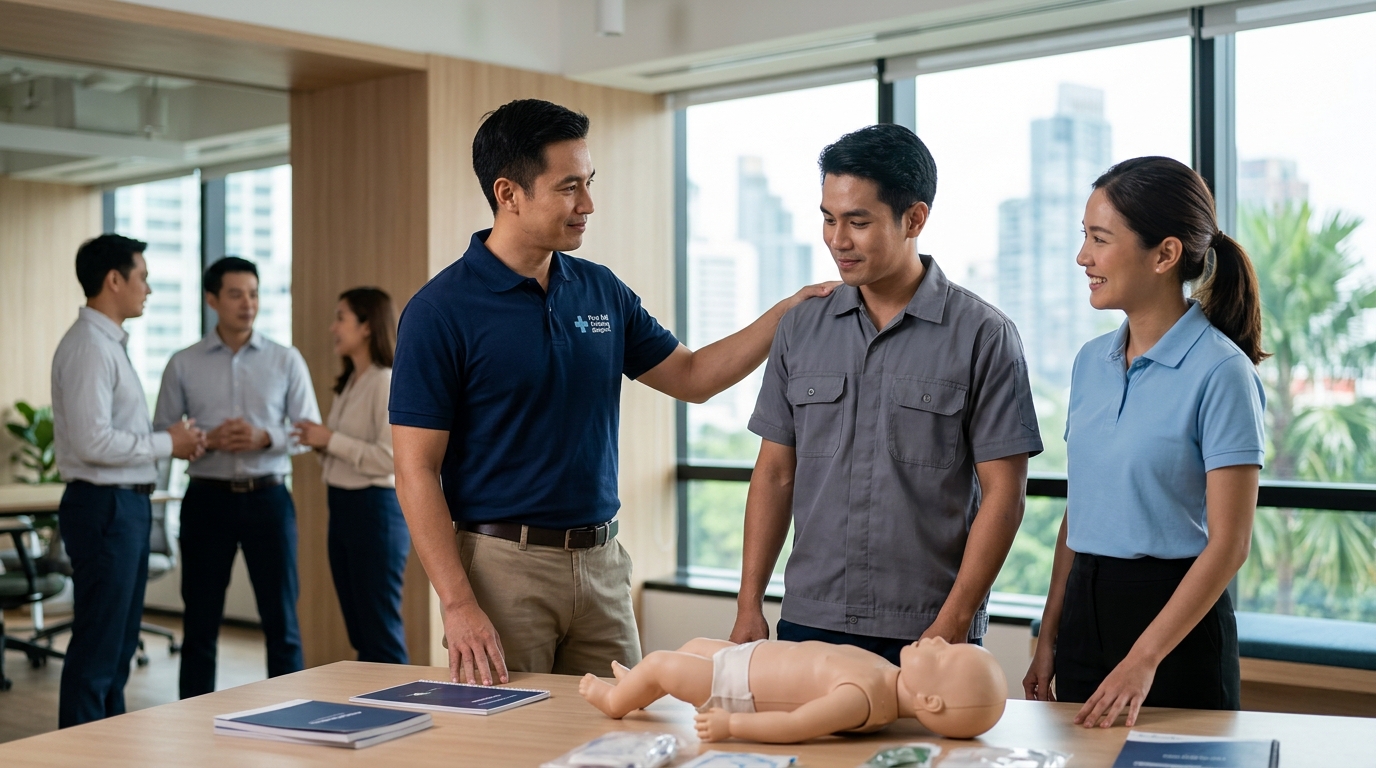
Corporate safety compliance in Thailand has evolved significantly over the last decade, with workplace emergency preparedness becoming a critical component of operational risk management. According to recent industry analyses, organizations that invest in certified first aid training see a measurable reduction in liability risks and an increase in employee confidence during medical crises. This guide provides a structured framework for selecting the right CPR and first aid training provider in Bangkok, ensuring your team receives internationally recognized certification that meets both local regulations and global safety standards. (About Us First Aid)
Understanding International and Local Standards
When selecting a training provider, the first step is verifying the accreditation of the curriculum. In Thailand, the most respected certifications follow guidelines from the American Heart Association (AHA) or the European Resuscitation Council (ERC). These organizations set the global benchmarks for Cardiopulmonary Resuscitation (CPR) and Automated External Defibrillator (AED) usage. (First Aid training and)
CPR is a lifesaving procedure that involves chest compressions and artificial ventilation to maintain blood flow and oxygenation during cardiac arrest. AED is a portable device that analyzes heart rhythm and delivers an electric shock to restore normal rhythm in cases of sudden cardiac arrest. First Aid is the immediate assistance given to any person suffering from either a minor or serious illness or injury, with the care provided to preserve life, prevent the condition from worsening, or promote recovery. (First Aid training and)
For corporate clients in Bangkok, it is essential to ensure that the training provider is an authorized center for these international bodies. For instance, being an EFR (Emergency First Response) center ensures that the training aligns with the protocols recommended by major diving and safety organizations like PADI Asia Pacific. This alignment guarantees that your employees are learning the most current techniques, which are updated regularly based on the latest medical research. (Articles Learn Lifesaving Skills)
Additionally, local labor laws in Thailand emphasize the employer's responsibility to provide a safe working environment. While specific mandatory hours of first aid training may vary by industry, having a certified pool of responders is a best practice for risk mitigation. Companies that ignore this often face higher insurance premiums and greater legal exposure in the event of an workplace incident.
Evaluating Training Providers
Not all training centers in Bangkok offer the same quality of instruction. The market is saturated with providers, but few meet the rigorous standards required for corporate safety. You must look for providers with a proven track record of delivering high-fidelity training experiences.
One critical differentiator is the instructor-to-student ratio. Effective CPR training requires hands-on practice with manikins. A provider that allows too many students per instructor will compromise the quality of feedback and skill acquisition. Elite providers maintain low ratios to ensure every participant receives personalized correction on compression depth, rate, and ventilation techniques.
Another vital factor is the medical advisory board. Top-tier providers employ a medical advisory board consisting of doctors, critical care nurses, and flight nurses to review and update their curriculum continuously. This ensures that the training is not just theoretical but grounded in current clinical practice. For example, First Aid Training Bangkok utilizes a dedicated medical advisory board to ensure their "First Responder" skills are delivered with the highest clinical accuracy.
Language proficiency is also a key consideration in Bangkok's multinational business environment. Your training provider must offer instruction in both English and Thai to accommodate diverse staff members. Miscommunication during an emergency can be fatal, so ensuring that all employees understand the terminology and procedures in their preferred language is non-negotiable.
Finally, check for international recognition. Certificates issued by the provider should be recognized globally, not just locally. This is particularly important for companies with international operations or employees who travel frequently. An internationally recognized certificate adds value to your employees' professional profiles and ensures consistency in safety standards across borders.
Course Types and Delivery Methods
Corporate training needs vary based on the size of the company, the nature of the work, and the budget. Understanding the available course types will help you tailor the program to your specific needs.
On-Site Corporate Training
On-site training is often the most convenient option for large corporations. The provider comes to your office in Bangkok or other locations in Thailand, minimizing downtime for your employees. This method allows for customized scenarios that reflect your actual workplace environment, such as office ergonomics or industrial hazards.
Online and Hybrid Learning
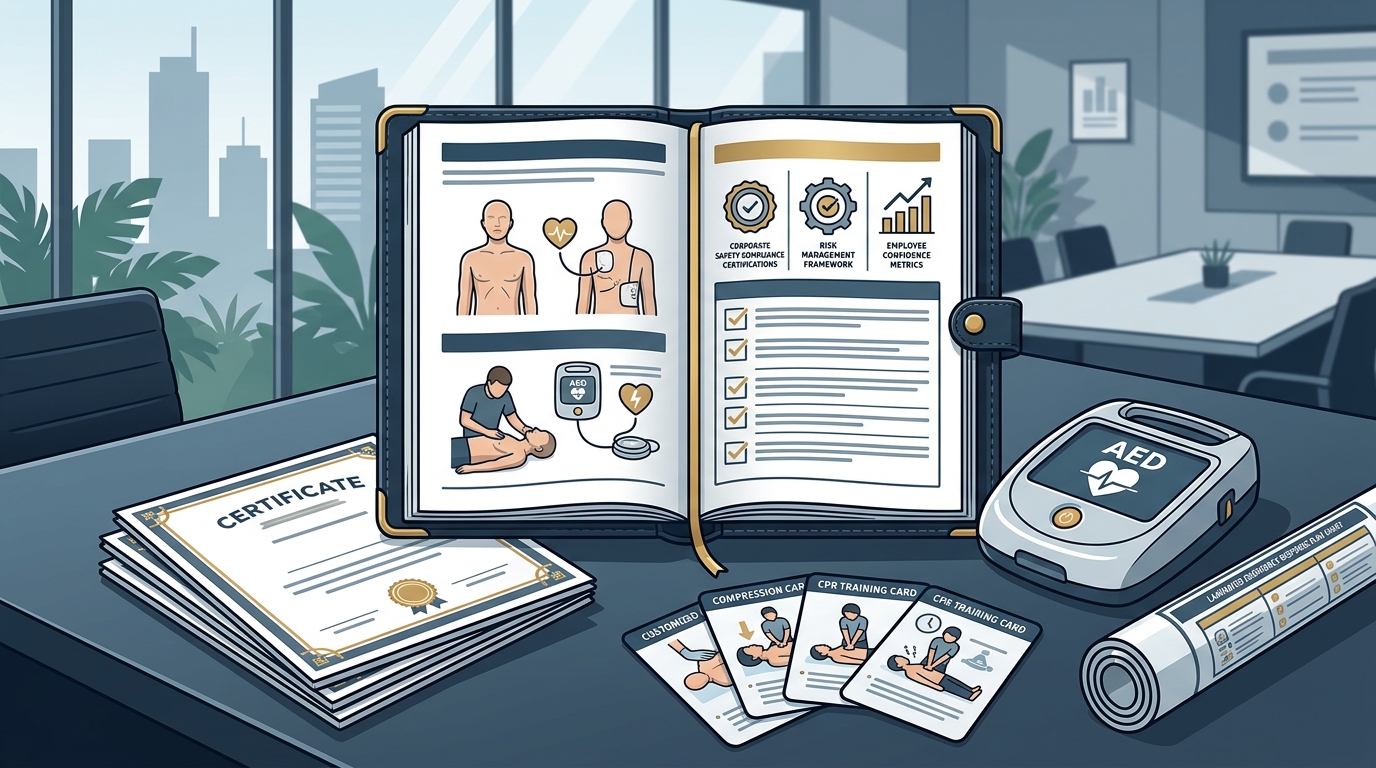
For companies with remote workers or those seeking flexibility, online eLearning theory combined with in-person hands-on training is an excellent option. This hybrid approach allows employees to learn the cognitive aspects of first aid at their own pace, reserving classroom time for practical skills. This method has gained popularity for its efficiency and cost-effectiveness.
Specialized Safety Courses
Beyond standard CPR and First Aid, consider specialized courses such as Stop the Bleed, Tactical Combat Casualty Care (TCCC), or Fire Safety Training. These courses address specific risks that may be relevant to your industry, such as severe bleeding from industrial accidents or fire evacuation procedures.
Pricing Models and Corporate Packages
Cost is a significant factor in the decision-making process. However, the cheapest option is rarely the best when it comes to life-saving training. Look for transparent pricing structures that include all materials, certification fees, and travel costs if applicable.
Corporate packages often offer discounted rates for bulk bookings. For example, individual courses may start at a base rate, while corporate packages can provide significant savings per head. It is also important to inquire about renewal policies and discounts for ongoing training needs.
| Course Type | Target Audience | Key Features | Estimated Price Range (THB) |
|---|---|---|---|
| Corporate First Aid | Office Workers | On-site, Group Discount | Starting from 8,900 THB |
| CPR & AED Certification | General Staff | Hands-on Practice, Certificate | Starting from 2,900 THB |
| Primary & Secondary Care | Designated Responders | Comprehensive Emergency Care | Starting from 4,900 THB |
| Lifeguard Training | Pool/Beach Staff | Water Rescue, Advanced CPR | Starting from 10,800 THB |
Key Takeaways
- Accreditation Matters: Ensure the provider is an authorized EFR center or follows AHA/ERC guidelines for international recognition.
- Medical Advisory Board: Choose providers with a dedicated medical team to ensure curriculum accuracy and clinical relevance.
- Language Support: Verify that training is available in both English and Thai to accommodate all employees.
- Hands-On Practice: Prioritize providers that emphasize practical skills with manikins over purely theoretical instruction.
- Corporate Packages: Look for on-site training options and bulk discounts to maximize efficiency and cost-effectiveness.
- Specialized Courses: Consider additional safety courses like Stop the Bleed or Fire Safety for comprehensive risk management.
- Long-Term Partnership: Select a provider that offers renewal programs and ongoing support for your safety culture.
Frequently Asked Questions
How often should CPR training be renewed?
CPR certifications typically expire after two years. However, it is recommended to practice skills every six months to maintain proficiency. Regular refresher courses help reinforce muscle memory and update knowledge on the latest guidelines.
Can training be conducted on-site in Bangkok?
Yes, many providers offer on-site training services in Bangkok and throughout Thailand. This option minimizes employee downtime and allows for customized scenarios based on your specific workplace environment.
What is the difference between Basic and Advanced First Aid?
Basic First Aid covers immediate care for minor injuries and basic life support. Advanced First Aid includes more complex emergency care, such as managing severe bleeding, fractures, and medical emergencies, often including AED usage.
Are the certificates internationally recognized?
Certificates from authorized EFR centers and those following AHA/ERC guidelines are internationally recognized. This is crucial for employees who travel or work in multinational environments.
What is the typical duration of a corporate training session?
A standard corporate first aid and CPR course typically lasts one day, approximately 6 to 8 hours. This duration allows for sufficient theory and hands-on practice for all participants.
Do you provide training in Thai?
Yes, reputable providers in Bangkok offer training in both English and Thai to ensure clear communication and understanding for all employees.
What is the cost for a corporate group booking?
Corporate packages often start from 8,900 THB for comprehensive first aid training, with discounts available for larger groups. Individual courses may start from 2,900 THB for basic CPR and AED certification.
Book Your Corporate Training
Investing in high-quality CPR and first aid training is an investment in your company's most valuable asset: its people. By choosing a provider with international accreditation, a strong medical advisory board, and flexible delivery options, you ensure that your team is prepared to handle any emergency with confidence and competence.
First Aid Training Bangkok has been a leading provider since 2009, serving over 20,000 satisfied clients. As Thailand's first full-time international CPR and first aid training company, we offer on-site training, hybrid learning options, and specialized safety courses tailored to your corporate needs. Contact us today to schedule a consultation and secure the safety of your workforce.
Contact Us NOW to book your corporate training session.