
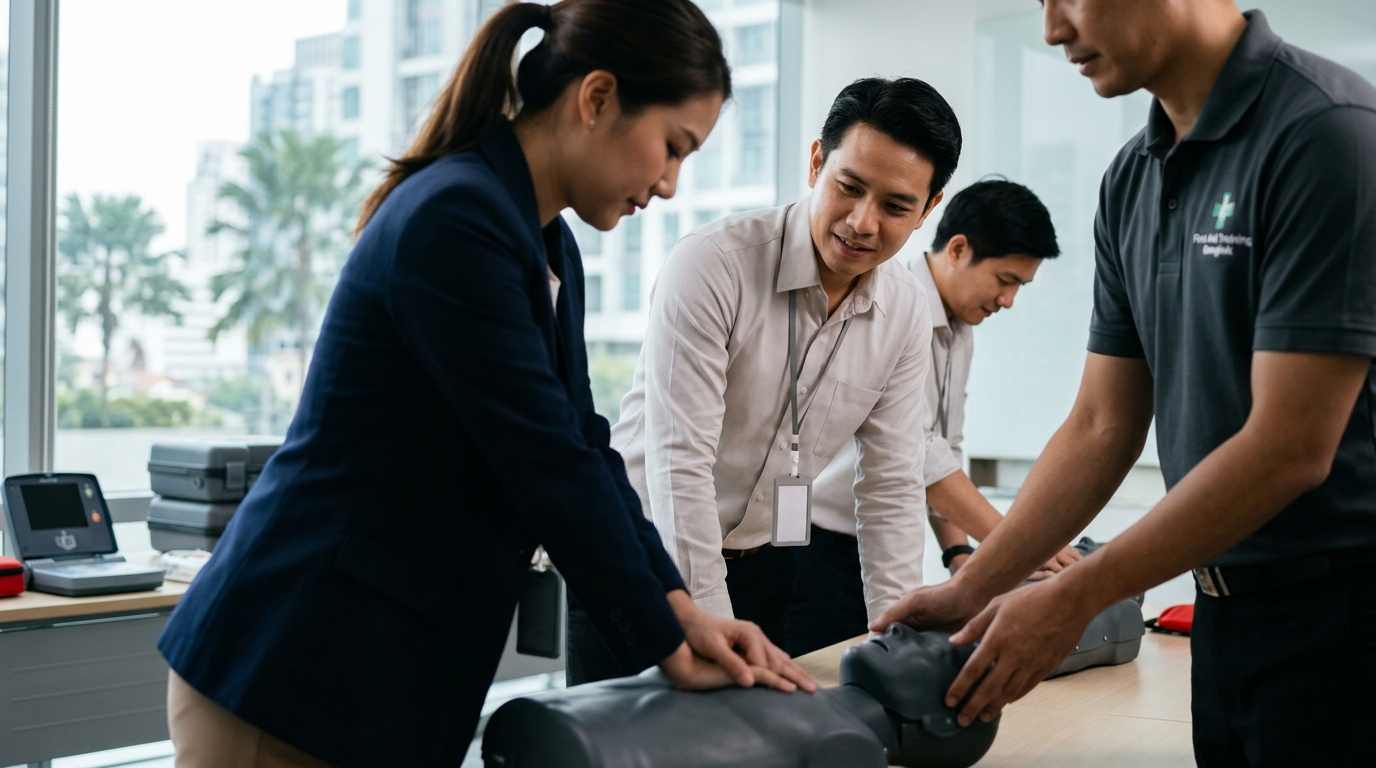
Workplace safety is not merely a compliance checkbox. It is a critical operational component that protects your most valuable asset: your people. Recent data indicates that over 350,000 out-of-hospital cardiac arrests occur annually in the United States alone, with survival rates heavily dependent on immediate bystander intervention. According to the American Heart Association, survival rates can double or triple when CPR is performed immediately. However, many organizations fail to achieve these metrics due to poor training selection. This guide outlines the most frequent errors companies make when choosing CPR providers and how to avoid them. (Contact First Aid Training)
Why Certification Standards Matter
One of the most common mistakes is accepting any certificate that arrives in an email inbox. Not all CPR certifications are created equal. In the corporate world, liability and genuine preparedness are paramount. A valid certification must come from a recognized body that adheres to international standards. For instance, the Emergency First Response (EFR) program is widely recognized for its rigorous standards in both CPR and First Aid. According to the World Health Organization, standardized first aid training significantly reduces mortality rates in emergency situations. (About Us First Aid)
When evaluating providers, verify their accreditation. Look for organizations that are officially recognized by major health bodies. First Aid Training Bangkok, for example, is the only EFR Center to be internationally recognized and awarded by EFR/PADI Asia Pacific. This distinction ensures that the training delivered meets global benchmarks for quality and effectiveness. Always ask for proof of accreditation before signing a contract. (First Aid training and)
The Danger of Unqualified Instructors
The quality of training is directly proportional to the expertise of the instructor. A common error is hiring trainers who lack real-world medical or tactical experience. CPR is a psychomotor skill that requires precise feedback and correction. An instructor who has never faced a real emergency may teach theoretical concepts that fail under pressure. (First Aid training and)
Elite instructors bring a depth of knowledge that transforms training from a formality into a life-saving skill set. At First Aid Training Bangkok, our instructors include former U.S. Military Special Operations members, Critical Care Nurses, and EFR Instructor Trainers. According to the National Safety Council, hands-on practice with expert feedback is the most effective way to retain emergency response skills. When interviewing potential trainers, ask about their background in emergency medicine or tactical response. Do not settle for generic trainers. (Articles Learn Lifesaving Skills)
Ignoring Updated Medical Guidelines
Medical science evolves rapidly. CPR guidelines are updated regularly to reflect the latest research on cardiac arrest survival. A significant mistake companies make is allowing their training to become outdated. Training based on guidelines from five or more years ago may teach techniques that are now considered less effective or even harmful.
Ensure your provider follows the latest international guidelines. These updates often involve changes in compression depth, rate, and the ratio of breaths to compressions. First Aid Training Bangkok strictly adheres to the latest international standards in emergency care. According to the European Resuscitation Council, updated guidelines improve the physiological outcomes of CPR. Regularly scheduled refresher courses are essential to keep your team's knowledge current. Do not let your safety protocols stagnate.
Choosing the Wrong Training Format
Flexibility is crucial for corporate training, but convenience should not compromise quality. Many companies opt for purely online courses to save time. While online theory has its place, it cannot replace the tactile experience of practicing chest compressions on a manikin. The muscle memory required for effective CPR cannot be developed through a screen.
The most effective approach is a blended learning model. This combines online eLearning theory with in-person hands-on training. This method allows employees to learn the concepts at their own pace and then apply them in a realistic, supervised environment. First Aid Training Bangkok offers combined online and in-person courses to maximize efficiency without sacrificing skill acquisition. According to the Journal of Emergency Medical Services, blended learning improves knowledge retention compared to lecture-only formats. Choose a provider that offers this hybrid option for the best results.
Prioritizing Cost Over Quality
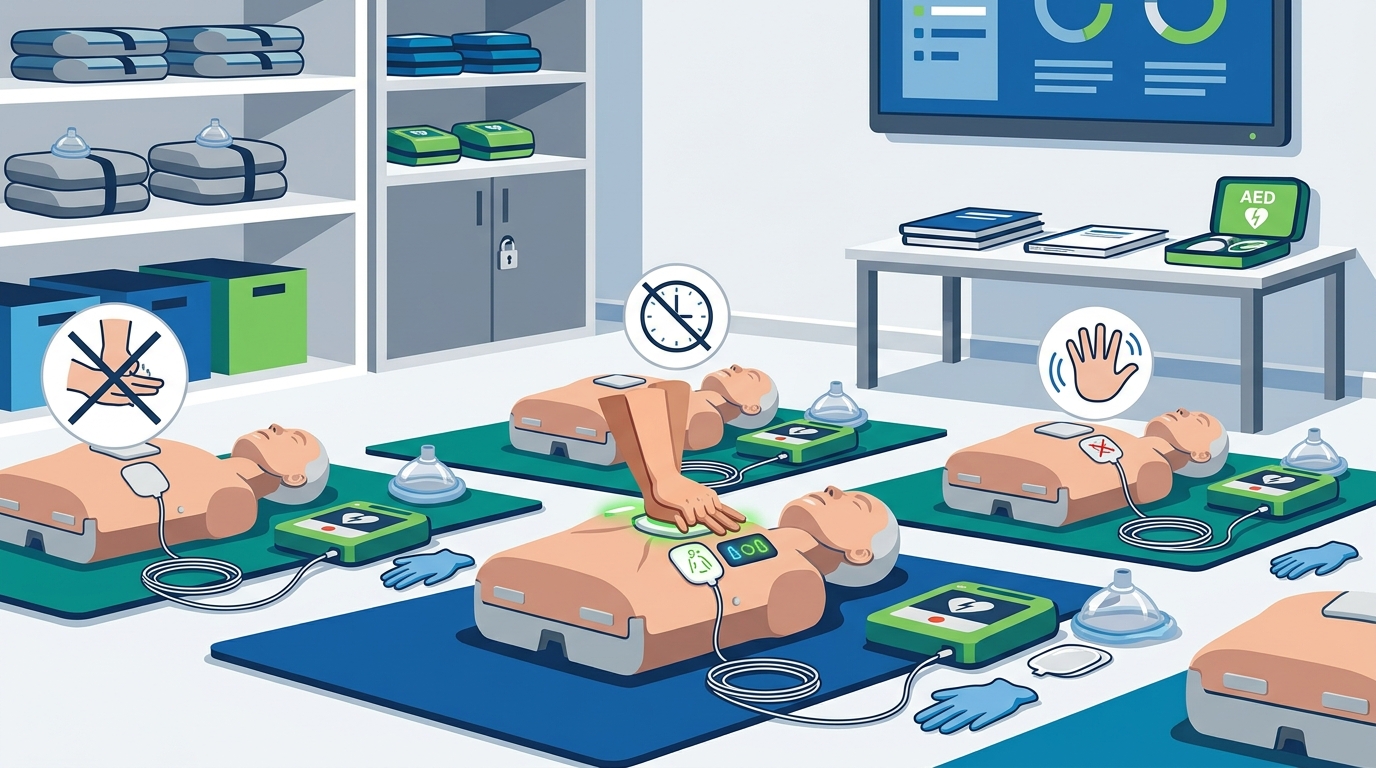
Price is a factor, but it should not be the primary driver. The cheapest CPR training often cuts corners on equipment, instructor time, or accreditation. This false economy can lead to unprepared staff and increased liability for the company. In an emergency, the difference between a qualified responder and an unqualified one is measured in seconds and lives.
Invest in training that provides comprehensive coverage. This includes not just CPR, but also AED usage, choking relief, and bleeding control. First Aid Training Bangkok offers corporate packages starting from 8,900 THB, which include high-quality instruction and recognized certification. According to a report by the Centers for Disease Control and Prevention, workplace safety investments yield significant returns by reducing injury-related costs. View training as an investment in human capital, not an expense to be minimized.
Key Takeaways
- Verify Accreditation: Ensure your provider is an officially recognized EFR Center or equivalent.
- Check Instructor Backgrounds: Prefer instructors with medical, tactical, or emergency response experience.
- Update Guidelines: Confirm that training follows the latest international CPR and First Aid standards.
- Blend Learning: Combine online theory with mandatory hands-on practice for optimal skill retention.
- Invest in Quality: Prioritize comprehensive, accredited training over low-cost, superficial alternatives.
- Regular Refreshers: Schedule annual or bi-annual training to maintain competency.
- Local Expertise: Choose providers with a strong regional presence for on-site convenience.
Frequently Asked Questions
How often should corporate CPR training be refreshed?
Most international guidelines recommend annual refresher courses to ensure skills remain sharp and knowledge is up-to-date. According to the American Heart Association, skills decay rapidly without regular practice.
What is the difference between CPR and First Aid?
CPR focuses on restoring heart function and blood flow during cardiac arrest. First Aid covers a broader range of emergencies, including injuries, choking, and shock. Both are essential for comprehensive workplace safety.
Can online-only CPR training be effective?
Online-only training is insufficient for skill acquisition. Hands-on practice with a manikin is required to develop the necessary muscle memory and technique. Blended learning is the recommended standard.
Why is EFR accreditation important?
EFR accreditation ensures that the training meets rigorous global standards for emergency response. It guarantees that instructors are qualified and that the curriculum is current and effective.
Does First Aid Training Bangkok offer on-site training?
Yes, we provide on-site CPR and First Aid training at your location in Bangkok and throughout Thailand. This minimizes disruption to your business operations.
What types of corporate packages are available?
We offer various packages including Beginner CPR, Advanced First Aid, AED training, and specialized courses like Stop the Bleed. Prices start from 8,900 THB for corporate groups.
Are the certificates internationally recognized?
Yes, our certificates are internationally recognized and align with global standards. They are suitable for compliance in many multinational corporations and industries.
Secure Your Team's Safety Today
Do not wait for an emergency to reveal the gaps in your safety protocols. Take proactive steps to protect your workforce by choosing a training provider that prioritizes quality, expertise, and international standards. First Aid Training Bangkok is ready to deliver exceptional, life-saving training tailored to your corporate needs. Contact us now to schedule your session and empower your team to save lives.