
Measurable Skills and Certifications Gained from Bilingual CPR Training in Bangkok
Emergency response times in urban environments like Bangkok often dictate survival outcomes, with data showing that immediate intervention can double or triple a cardiac arrest victim's chance of survival. For expatriates, international students, and multinational corporate teams in Thailand, the ability to act decisively during a medical crisis is not just a skill but a critical safety net. Bilingual CPR training bridges the gap between technical proficiency and linguistic clarity, ensuring that life-saving protocols are understood and executed without hesitation. This guide details the exact measurable skills, recognized certifications, and professional advantages gained from engaging with Thailand's premier emergency response education providers. (About Us First Aid)
Core Technical Skills Acquired
Enrolling in a comprehensive CPR and First Aid course provides tangible, measurable competencies that go beyond theoretical knowledge. The curriculum is designed to build muscle memory and cognitive readiness for high-stress scenarios. Below are the primary technical skills you will master. (First Aid training and)
High-Quality Chest Compressions
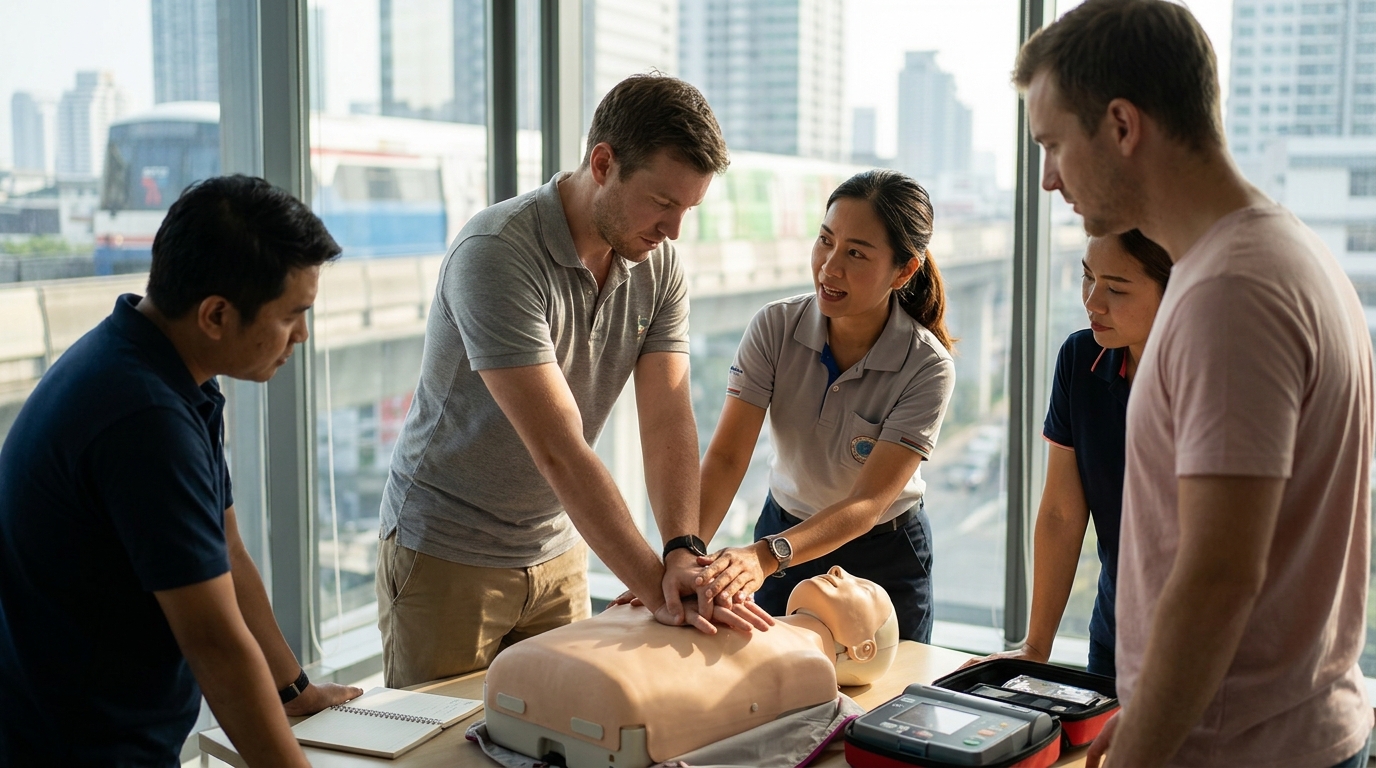
CPR is defined as a lifesaving technique useful in many emergencies for a person who is in cardiac arrest. The primary measurable skill is the ability to perform chest compressions at a rate of 100 to 120 per minute with adequate depth. Instructors provide real-time feedback on hand placement and body mechanics, ensuring you can sustain effective compressions for extended periods. This skill is critical for maintaining blood flow to the brain and heart until advanced medical help arrives.
Proper Airway Management
Airway management is the process of ensuring a patient has a clear passage for air to enter the lungs. You will learn the head-tilt chin-lift and jaw-thrust techniques to open the airway safely. Furthermore, you will practice rescue breathing protocols, which involve delivering breaths that visibly raise the chest. Mastery of these techniques ensures that oxygenation is maintained, which is vital for preventing brain damage during an arrest.
AED Operation and Safety
An Automated External Defibrillator (AED) is a portable device that analyzes the heart rhythm and, if necessary, delivers an electric shock to help restore a normal rhythm. You will gain the confidence to operate an AED in any environment. This includes adhering to the device's voice prompts, ensuring safety before shock delivery, and seamlessly transitioning back to CPR immediately after the shock. The ability to integrate AED use with manual CPR is a key performance indicator in emergency response.
Choking Relief Techniques
Choking is a leading cause of accidental death worldwide. You will learn to identify the universal sign of choking and perform the Heimlich maneuver (abdominal thrusts) on adults and children. Additionally, you will practice back blows and chest thrusts for infants. These skills are measurable by your ability to clear the airway effectively within the first few minutes of obstruction.
Recognized Certifications and Standards
One of the most significant outcomes of your training is the receipt of an internationally recognized certification. First Aid Training Bangkok stands as the only EFR Center to be internationally recognized and awarded by EFR/PADI Asia Pacific. This accreditation ensures that your certificate holds weight across borders and industries.
Emergency First Response (EFR) Certification
The Emergency First Response certification is the gold standard for layperson and professional first aid training. It aligns with the latest guidelines from the International Liaison Committee on Resuscitation (ILCOR). When you complete your course, you receive a certificate that validates your competency in both CPR and First Aid. This credential is often required for employment in hospitality, education, and corporate sectors in Thailand.
International Standards Compliance
All training protocols follow the latest international standards set by global health organizations. This means your skills are not just locally relevant but globally applicable. Whether you are traveling in Southeast Asia or returning to your home country, your certification demonstrates a consistent level of preparedness and adherence to best practices in emergency care.
Specialized Certifications
Beyond standard CPR, specialized certifications are available for specific professional needs. These include Lifeguard Training, which focuses on water-based emergencies, and Tactical Combat Casualty Care (TCCC), designed for high-risk environments. Each specialized course adds a layer of measurable expertise tailored to specific threat profiles.
The Strategic Value of Bilingual Instruction
In a multicultural hub like Bangkok, the ability to receive medical training in both English and Thai offers distinct advantages. Language barriers can be fatal in emergencies, making bilingual training a critical component of effective preparedness.
Enhanced Comprehension of Medical Terminology
Medical terms can be complex and confusing. Bilingual instructors clarify critical concepts in your native language, ensuring that you fully understand the "why" behind each action. This deep comprehension leads to better retention and faster recall under stress. For expatriates, this means you can confidently explain the situation to local emergency services or colleagues.
Effective Communication in Crisis
During an emergency, clear communication is as important as physical intervention. Bilingual training teaches you how to direct bystanders, call for help, and provide handover information to paramedics in both languages. This dual-language capability ensures that you can bridge the gap between international standards and local response systems.
Inclusivity for Local and International Teams
For corporate clients, bilingual training fosters a more inclusive safety culture. It ensures that both local staff and international expatriates are on the same page regarding safety protocols. This unity is crucial for building a resilient workplace where everyone feels empowered to act.
Corporate and Workplace Compliance
For businesses in Thailand, providing CPR and First Aid training is not just a moral imperative but a component of comprehensive risk management. Corporate training programs are tailored to meet specific organizational needs and regulatory requirements.
Workplace Safety Regulations
Thailand's occupational health and safety guidelines increasingly emphasize the importance of employee preparedness. By training your staff, you demonstrate due diligence in providing a safe working environment. This can reduce liability risks and improve overall workplace morale.
Customized Training Modules
Corporate packages often include modules on specific hazards relevant to the industry. For example, construction sites may focus on trauma and bleeding control, while office environments may prioritize cardiac arrest and stroke recognition. First Aid Training Bangkok offers on-site training, bringing the expertise directly to your location in Bangkok or throughout Thailand.
Measurable ROI on Safety Investments
Investing in employee training yields measurable returns in reduced incident severity and faster emergency response times. Companies that prioritize safety certification often report higher employee engagement and trust in leadership. The cost of training is minimal compared to the potential costs of an unmanaged medical emergency.
Training Options and Pricing Overview
Choosing the right training path depends on your individual or organizational needs. The following table outlines the primary course offerings and their respective price points.
| Course Type | Description | Starting Price (THB) | Target Audience |
|---|---|---|---|
| Corporate First Aid | Workplace safety and office first aid protocols. | 8,900 | Corporate Teams |
| CPR & First Aid Beginner | Basic life support and initial care techniques. | 8,900 | General Public |
| Primary & Secondary Care | Comprehensive care with AED integration. | 4,900 | Individuals |
| CPR and AED Only | Focused certification on resuscitation and defibrillation. | 2,900 | Quick Certification |
| Lifeguard Training | Water rescue and aquatic emergency response. | 10,800 | Pool/Beach Staff |
Key Takeaways
- Internationally Recognized Certification: Earn a certificate from the only EFR Center in Thailand awarded by EFR/PADI Asia Pacific, ensuring global validity.
- Measurable Technical Skills: Master chest compressions, airway management, and AED operation with real-time instructor feedback.
- Bilingual Clarity: Receive instruction in both English and Thai to overcome language barriers and enhance crisis communication.
- Corporate Compliance: Meet workplace safety standards with customized on-site training for teams in Bangkok and throughout Thailand.
- Experienced Instructors: Learn from elite instructors with backgrounds in military, law enforcement, and critical care nursing.
- Flexible Learning Options: Choose from on-site, online eLearning, or hybrid models to fit your schedule.
- Proven Track Record: Join over 20,000 satisfied clients who have trusted First Aid Training Bangkok since 2009.
Frequently Asked Questions
How long does a standard CPR certification course take?
A standard CPR and First Aid course typically lasts one day, involving both theoretical learning and hands-on practice. This duration ensures that participants have sufficient time to master the skills and receive immediate feedback.
Is the CPR certificate valid internationally?
Yes, the Emergency First Response (EFR) certification is internationally recognized. It adheres to global standards set by the International Liaison Committee on Resuscitation (ILCOR), making it valid for employment and travel purposes worldwide.
Can I take the course in Thai?
Absolutely. First Aid Training Bangkok offers bilingual instruction in both English and Thai. This ensures that all participants, regardless of their native language, can fully understand the material and perform the skills correctly.
Do you offer on-site training for companies?
Yes, we provide on-site CPR and First Aid training at your location in Bangkok and throughout Thailand. This service is ideal for corporate teams seeking to minimize downtime while maximizing safety preparedness.
What is the difference between CPR and First Aid?
CPR (Cardiopulmonary Resuscitation) focuses specifically on restoring heart and lung function during cardiac arrest. First Aid is a broader term that includes CPR but also covers the treatment of injuries, illnesses, and other medical emergencies.
Are the instructors qualified?
Our instructors are elite professionals with extensive backgrounds in emergency response, including former military, law enforcement, and critical care nursing. They hold advanced certifications such as EFR Instructor Trainer and Master Scuba Diver Trainer.
How much does individual CPR training cost?
Individual training prices vary based on the course depth. Basic CPR and AED certification starts at 2,900 THB, while comprehensive Primary and Secondary Care courses start at 4,900 THB. Corporate packages start at 8,900 THB.
Book Your Certification Today
Do not wait for an emergency to test your readiness. Equip yourself with the measurable skills and internationally recognized certifications that can save lives. Whether you are an individual seeking personal empowerment or a corporation aiming for workplace safety excellence, First Aid Training Bangkok is your trusted partner. Visit our Contact Us page to schedule your training or explore our Courses catalog to find the perfect program for your needs. Take the first step toward becoming a confident, capable first responder.