
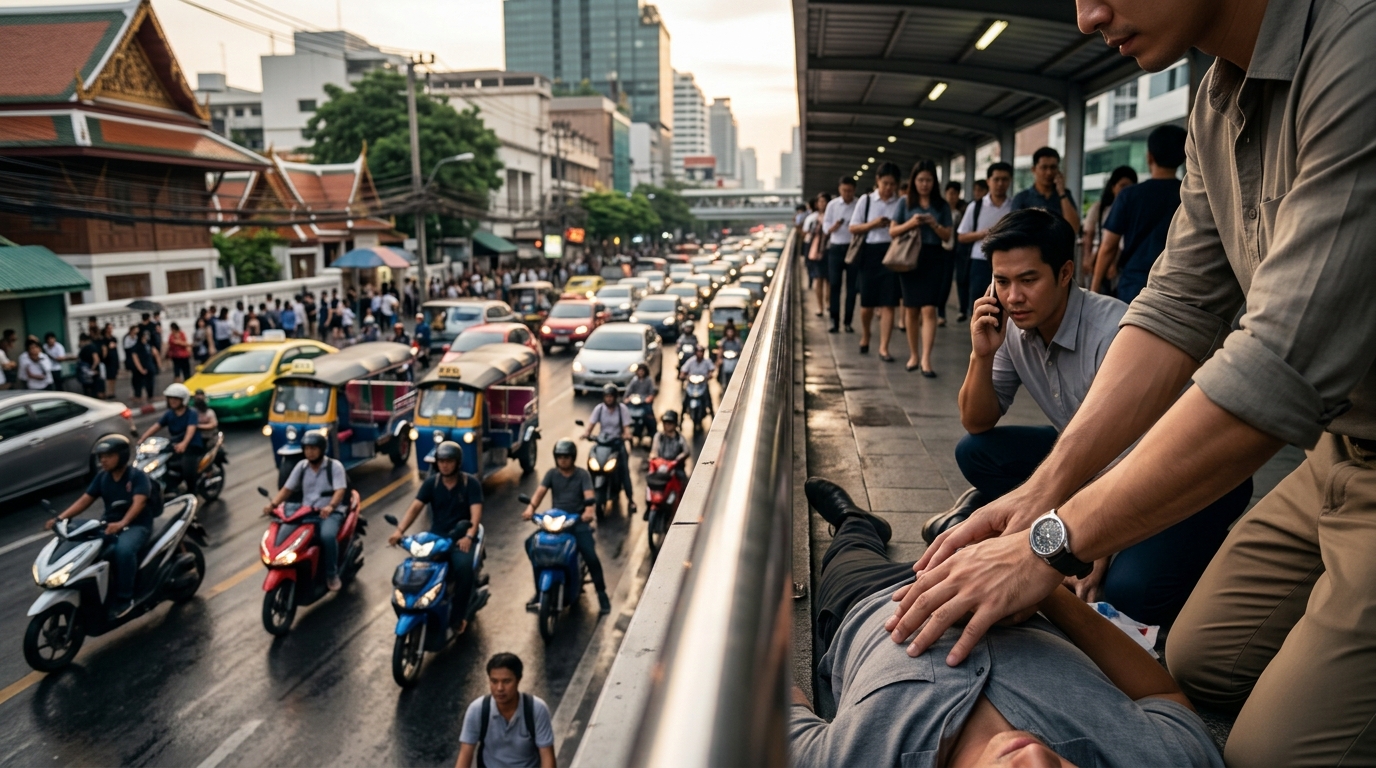
Urban environments like Bangkok present unique emergency challenges where seconds determine survival outcomes. According to recent public health data, the average response time for emergency medical services in dense metropolitan areas can exceed ten minutes during peak traffic hours. This delay makes bystander intervention not just helpful, but critical for stabilizing patients before professional help arrives. Understanding how to apply first aid principles in real-world settings is the difference between a minor incident and a life-threatening crisis.
Scene Assessment and Safety
Before touching a patient, you must evaluate the environment. In Bangkok, this often means navigating busy sidewalks, motorbike traffic, or crowded markets. Scene safety is the non-negotiable first step in any emergency response protocol. If the area is unsafe, you risk becoming a second victim, which complicates rescue efforts and drains resources.
Look for hazards such as exposed electrical wires, leaking gas, or aggressive animals. If you are on a motorbike, pull over to a safe distance. If you are in a building, check for structural integrity or fire risks. Only once you confirm the scene is secure should you approach the casualty. This methodical approach prevents panic and ensures you can think clearly under pressure.
For those seeking professional guidance on environmental risk assessment, corporate safety training programs offer specialized modules on workplace hazard identification. These courses teach you how to recognize subtle signs of danger that untrained individuals might overlook.
Cardiac Emergencies and AED Usage
Cardiac arrest is a leading cause of death globally, and survival rates drop by seven to ten percent for every minute without defibrillation. In Thailand, the prevalence of cardiovascular issues is rising due to lifestyle factors and an aging population. Recognizing the signs of cardiac arrest is essential for any resident or visitor in the city.
Signs include sudden collapse, absence of normal breathing, and loss of consciousness. If you suspect cardiac arrest, call emergency services immediately. The number 1669 is the dedicated emergency line for medical assistance in Thailand. While waiting for help, begin cardiopulmonary resuscitation (CPR) to maintain blood flow to the brain and heart.
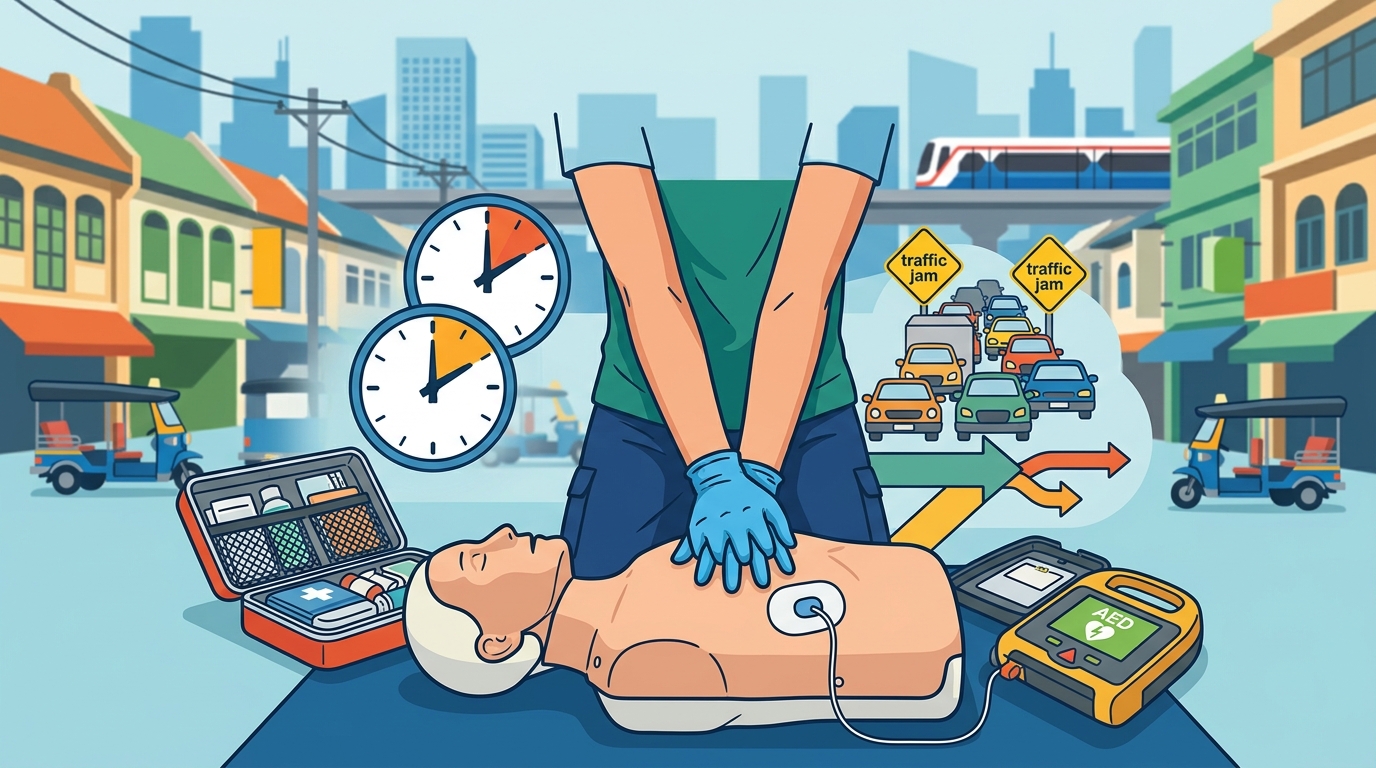
Automated External Defibrillators (AEDs) are becoming more common in Bangkok malls, airports, and office buildings. An AED is a portable device that analyzes the heart rhythm and delivers an electric shock to restore a normal heartbeat. Using an AED is straightforward and designed for laypersons. The device provides voice prompts that guide you through each step, from pad placement to shock delivery. Fear of using an AED often delays treatment, so familiarity with the device is crucial.
For detailed instruction on AED operation and CPR techniques, our standard first aid course provides hands-on practice with real defibrillator trainers. This practical experience builds the muscle memory needed to act confidently in high-stress situations.
Trauma and Bleeding Control
Traumatic injuries are common in urban settings, ranging from minor cuts to severe lacerations from accidents. Direct pressure is the most effective method for controlling external bleeding. Apply firm, steady pressure to the wound with a clean cloth or gauze. Do not remove the cloth if it becomes soaked; add more layers on top and continue pressing.
In cases of severe bleeding where direct pressure fails, a tourniquet may be necessary. While tourniquets are traditionally associated with military combat, they are now recommended for civilian use in life-threatening hemorrhage situations. Apply the tourniquet two to three inches above the wound, tighten until bleeding stops, and note the time of application.
For information on advanced wound care and hemorrhage control, workplace safety certifications often include modules on trauma care tailored to industrial and office environments. These courses ensure that employees are prepared to handle physical injuries effectively.
Heat-Related Illnesses
Bangkok's tropical climate poses a significant risk of heat-related illnesses, including heat exhaustion and heat stroke. Heat stroke is a medical emergency where the body's temperature regulation fails, causing core temperature to rise above 104 degrees Fahrenheit. Symptoms include hot, dry skin, confusion, and loss of consciousness.
Immediate cooling is vital. Move the victim to a cool, shaded area. Remove excess clothing and apply cool water to the skin. Use fans or air conditioning to enhance evaporative cooling. Do not give fluids if the person is confused or unconscious. Rapid transport to a hospital is required for heat stroke.
Understanding environmental health risks is part of comprehensive safety education. Heat stress prevention strategies are critical for outdoor workers and tourists alike. These guidelines help individuals recognize early warning signs and take preventive measures before a crisis occurs.
Service Comparison
Choosing the right training provider depends on your specific needs, whether for personal knowledge or corporate compliance. Below is a comparison of common first aid training options available in Bangkok.
| Training Type | Duration | Best For | Key Benefit |
|---|---|---|---|
| Standard First Aid | 6-8 Hours | General Public | Core life-saving skills |
| Advanced First Aid | 16 Hours | Workplace First Aiders | Comprehensive trauma care |
| Wilderness First Aid | 2 Days | Outdoor Enthusiasts | Remote environment protocols |
| Corporate Safety | Custom | Enterprises | Regulatory compliance |
For a detailed breakdown of course curricula and certification validity, explore our full course catalog to find the program that matches your goals.
Key Takeaways
- Scene Safety First: Never approach an emergency without ensuring your own safety and the safety of others.
- Call for Help Early: Dial 1669 in Thailand immediately for medical emergencies to reduce response time delays.
- AED Accessibility: Locate AEDs in public spaces and learn to use them, as they double survival rates when used within three minutes.
- Direct Pressure: Use direct pressure for bleeding control; do not remove soaked bandages.
- Heat Stroke Urgency: Treat heat stroke as a critical emergency requiring rapid cooling and hospital transport.
- Training Value: Certified training provides the confidence and competence needed to act effectively under pressure.
- Continuous Learning: First aid skills degrade over time; regular refresher courses are essential for retention.
Frequently Asked Questions
How long does a standard first aid course last?
A standard first aid course typically lasts between six to eight hours, covering essential skills like CPR, choking relief, and bleeding control.
Is first aid training mandatory for businesses in Thailand?
While not universally mandatory for all small businesses, Thai labor laws and occupational safety regulations often require companies to have certified first aiders and adequate first aid kits on site.
What is the emergency number for medical help in Bangkok?
The primary emergency number for medical assistance in Thailand is 1669. For police, dial 191, and for fire, dial 199.
Do I need to be certified to use an AED?
No, you do not need certification to use an AED in an emergency. These devices are designed to guide users through the process with voice prompts, and Good Samaritan laws generally protect those who act in good faith.
How often should I renew my first aid certification?
Most organizations recommend renewing first aid and CPR certifications every two to three years to ensure skills remain current and knowledge is updated.
Can I take first aid training online?
While theoretical components can be learned online, hands-on skills like CPR and bandaging require in-person practice. We offer blended learning options that combine online theory with practical workshops.
What types of injuries are covered in advanced first aid?
Advanced first aid covers complex trauma, including fractures, spinal injuries, severe burns, and medical emergencies like diabetic crises and anaphylaxis.
Book Your Training
Don't wait for an emergency to test your skills. Empower yourself and your team with the knowledge to save lives. Contact us today to schedule your first aid training session in Bangkok. Our certified instructors are ready to provide the highest quality education tailored to your needs.