
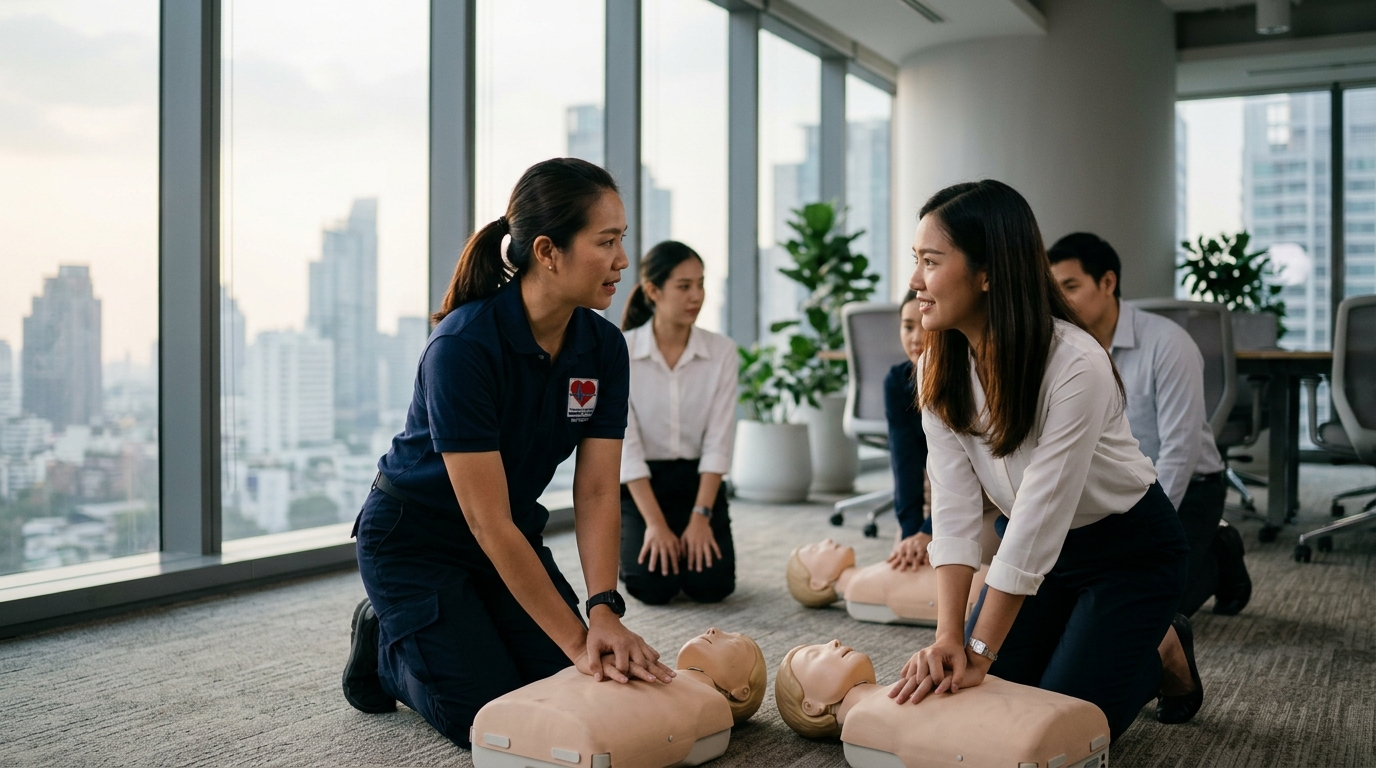
When selecting a CPR trainer for your Bangkok company, you must verify that the instructor holds a current, internationally recognized certification from a major resuscitation council. The trainer should possess a valid instructor rating, such as an Emergency First Response (EFR) Instructor or Instructor Trainer status, which confirms they have completed rigorous pedagogical and clinical training. This ensures your employees receive standardized, evidence-based skills that align with global safety protocols.
Understanding Instructor Certification Levels
Not all CPR instructors hold the same level of authority or training depth. An instructor certification is a formal credential that validates an individual's ability to teach, assess, and certify others in life-saving skills. In the context of corporate training in Thailand, the distinction between a standard instructor and an instructor trainer is critical for quality control.
Standard instructors are qualified to teach layperson or healthcare provider courses. However, an instructor trainer is qualified to train and certify other instructors. This higher tier of qualification implies a deeper understanding of curriculum design, student assessment, and emergency medical protocols. For a corporate client, hiring a provider whose lead trainer holds this advanced rating ensures that the training delivery is consistent and meets the highest international standards.
First Aid Training Bangkok operates with a team that includes instructors holding these advanced ratings. Their lead instructor, Khun Scott, holds the EFR Instructor Trainer (EFRIT) and Master Scuba Diver Trainer (MSDT) designations. This specific combination of credentials allows the team to deliver training that is not only medically accurate but also pedagogically sound, ensuring that complex skills are broken down into manageable learning modules for corporate employees.
Accreditation by Global Resuscitation Bodies
Accreditation is the process by which an independent body verifies that a training provider meets specific quality standards. A resuscitation council accreditation is a formal recognition that a training center adheres to the latest scientific guidelines for cardiopulmonary resuscitation and first aid. Without this accreditation, a certificate may lack international validity, which is a significant risk for multinational companies operating in Bangkok.
Major organizations such as the American Heart Association (AHA), the European Resuscitation Council (ERC), and the International Liaison Committee on Resuscitation (ILCOR) set the global benchmarks for CPR training. Training providers in Thailand often align their curricula with these bodies to ensure that their graduates are recognized worldwide. When evaluating a provider, you should ask for proof of their affiliation with these international councils.
First Aid Training Bangkok is affiliated with several respected organizations, including the American College of Surgeons Committee on Trauma and the National Association of Emergency Medical Technicians (NAEMT). These affiliations demonstrate a commitment to trauma-informed care and tactical casualty management, which are increasingly relevant for corporate security and safety teams. You can review their specific accreditation and association organizations to verify their current partnerships and the scope of their certifications.
The Role of Medical Advisory Boards
Technical skills in CPR can become outdated as medical research evolves. A medical advisory board is a group of qualified healthcare professionals who review and update training curricula to reflect the latest clinical evidence. The presence of such a board is a strong indicator of a provider's commitment to continuous improvement and scientific rigor.
Many training centers rely solely on the standard manuals provided by the accrediting body. However, providers with an active medical advisory board can adapt their teaching methods to address specific regional health issues or corporate risk profiles. For example, they might emphasize heat stroke protocols or specific trauma care techniques that are more prevalent in the local environment.
First Aid Training Bangkok distinguishes itself by maintaining its own Medical Advisory Board. This board includes a Medical Doctor, a Flight Nurse, and a Critical Care Nurse. This multidisciplinary approach ensures that the training content is not only compliant with international guidelines but also practical for real-world emergency scenarios. This level of oversight provides corporate clients with the confidence that the skills being taught are current and clinically relevant.
Practical Teaching Experience and Methodology
Certification alone does not guarantee effective teaching. Practical teaching experience is the demonstrated ability to transfer knowledge and skills to a diverse group of learners in a high-stress simulation environment. A qualified trainer must be able to manage a classroom, provide constructive feedback, and ensure that every participant achieves the required competency standards.
Corporate training presents unique challenges, such as varying levels of prior knowledge, language barriers, and time constraints. An experienced trainer will use a mix of theoretical instruction, hands-on practice with manikins, and scenario-based role-plays to reinforce learning. They should also be able to assess each participant's performance individually, ensuring that no one is certified until they have demonstrated mastery of the core skills.
First Aid Training Bangkok emphasizes a low-stress, friendly learning environment, which is crucial for adult learners. Their instructors are known for making complex medical procedures accessible and engaging. This approach helps to reduce anxiety and build confidence, which are essential for a responder to act effectively in a real emergency. The provider's focus on realistic and rewarding training experiences ensures that employees are not just certified on paper but are genuinely prepared to save lives.
Key Takeaways
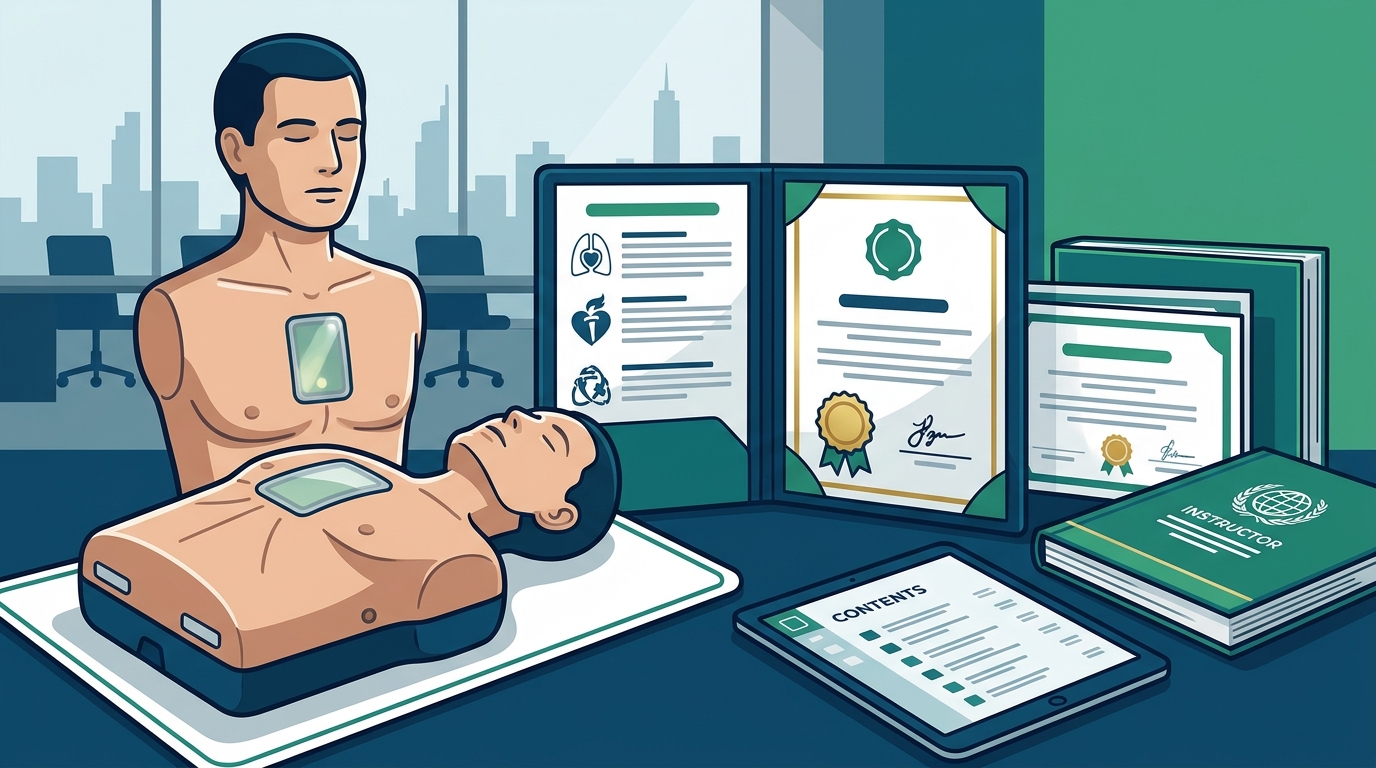
- Verify that your CPR trainer holds a current, internationally recognized instructor certification, such as EFR Instructor or Instructor Trainer.
- Ensure the training provider is accredited by major global resuscitation bodies like the AHA, ERC, or ILCOR to guarantee international validity.
- Look for providers with a Medical Advisory Board that includes qualified healthcare professionals to ensure curriculum currency.
- Assess the trainer's practical teaching experience, particularly their ability to manage diverse corporate groups and provide individualized feedback.
- Check for affiliations with trauma and emergency medical organizations to ensure comprehensive coverage of modern first aid protocols.
- Review the provider's specific accreditation page to confirm their current partnerships and the scope of their certifications.
Frequently Asked Questions
What is the difference between a CPR instructor and an instructor trainer?
A CPR instructor is qualified to teach and certify students in CPR and first aid courses. An instructor trainer is qualified to train and certify other instructors, indicating a higher level of expertise in pedagogy and curriculum management.
Why is international accreditation important for corporate training in Bangkok?
International accreditation ensures that the skills and certificates issued are recognized globally. This is crucial for multinational companies where employees may travel or work in different countries, requiring consistent safety standards.
How can I verify a trainer's qualifications in Thailand?
You can verify a trainer's qualifications by asking for their current certification cards from recognized bodies like EFR, AHA, or PADI. You can also check the provider's accreditation page to see their official affiliations with international organizations.
Does First Aid Training Bangkok offer on-site corporate training?
Yes, First Aid Training Bangkok offers on-site training for corporate clients. They can come to your workplace to deliver CPR, first aid, and AED training, ensuring that employees learn in a familiar environment.
What is the role of a Medical Advisory Board in a training provider?
A Medical Advisory Board reviews and updates the training curriculum to ensure it reflects the latest medical evidence and guidelines. This helps to keep the training content current and clinically relevant for real-world emergencies.
How often should corporate employees refresh their CPR skills?
Most international certifications, including those from EFR, are valid for two years. It is recommended that employees refresh their skills and recertify every two years to maintain competency and ensure their certificates remain valid.
Conclusion
Selecting the right CPR trainer for your Bangkok company is a critical decision that impacts workplace safety and employee confidence. By focusing on verifiable qualifications, international accreditation, and practical teaching experience, you can ensure that your team receives high-quality, evidence-based training. First Aid Training Bangkok provides a robust framework for corporate safety, combining advanced instructor credentials with a dedicated Medical Advisory Board to deliver training that is both rigorous and accessible. To plan your visit or schedule a corporate session, to discuss your specific training needs.