
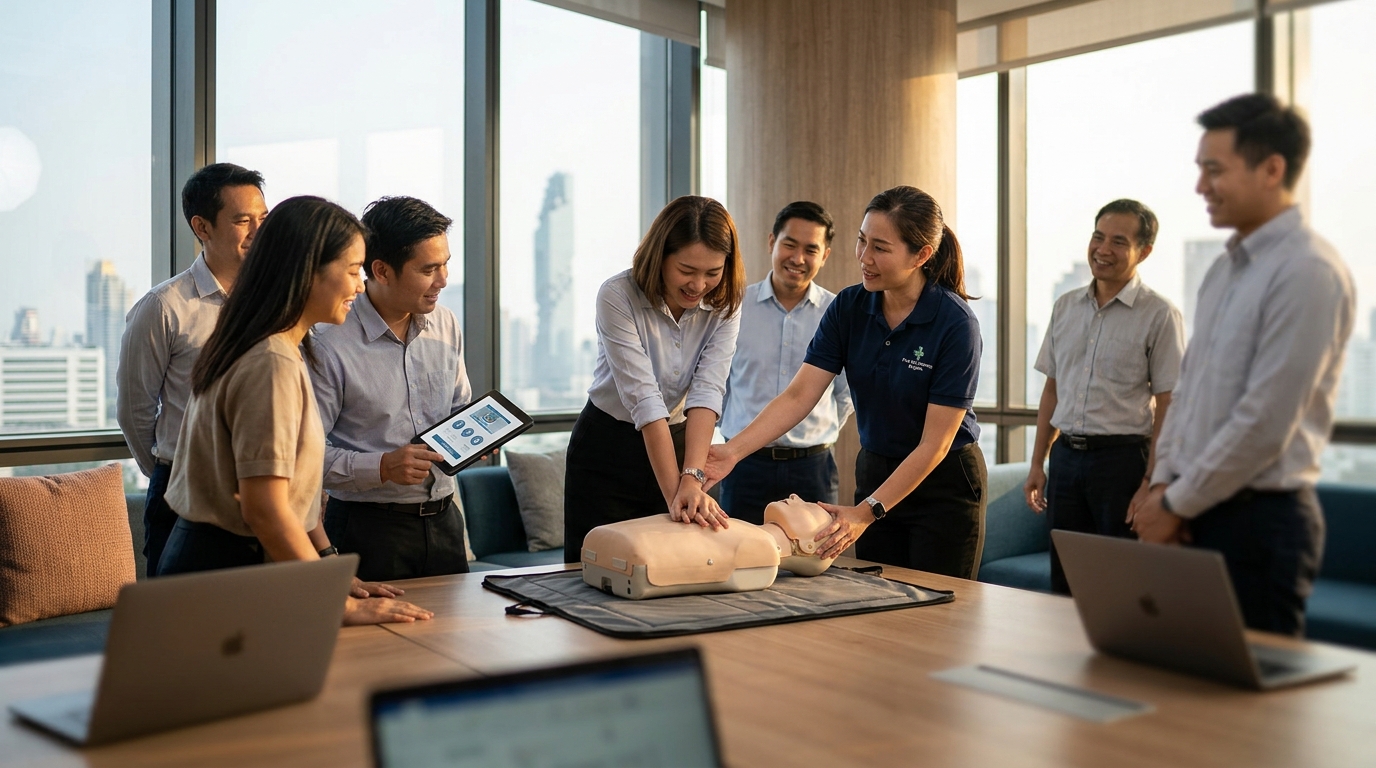
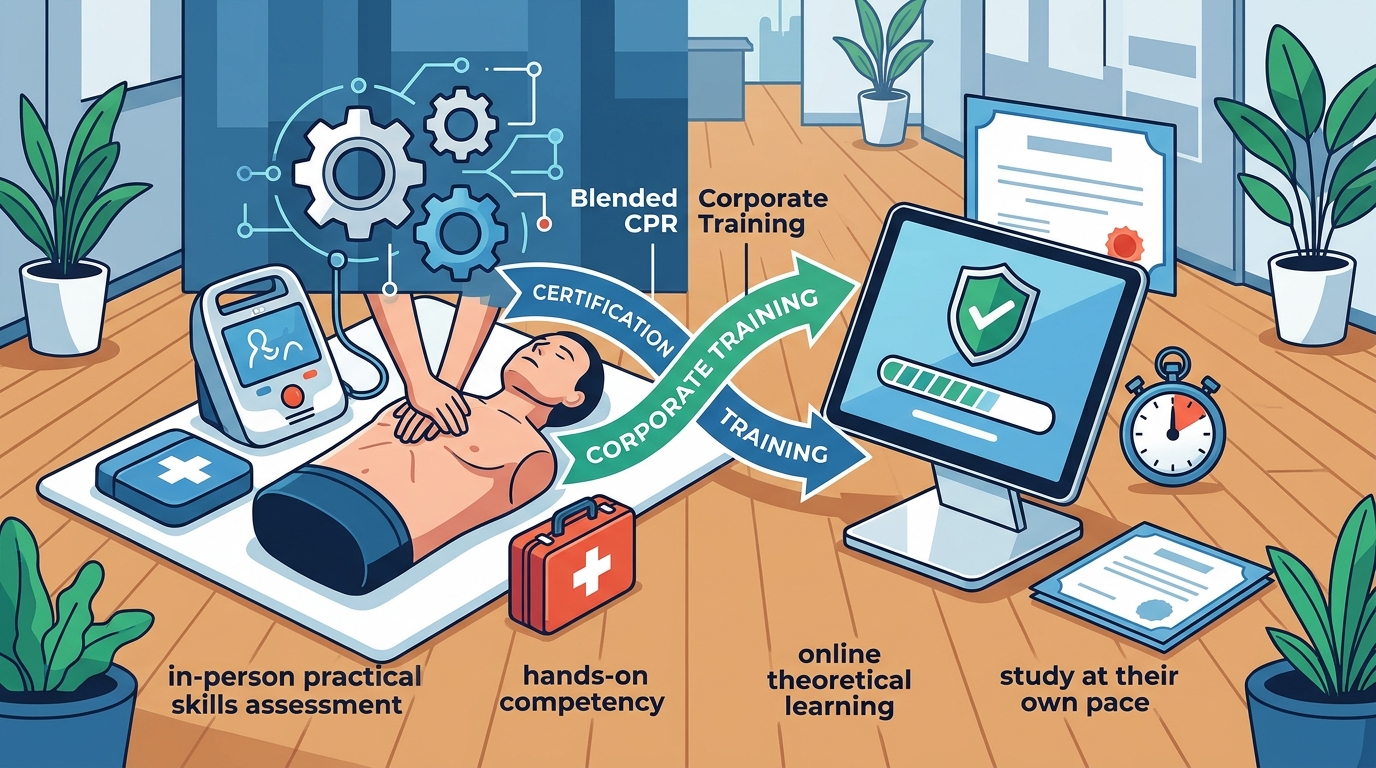
Blended CPR certification combines online theoretical learning with in-person practical skills assessment. This hybrid model allows employees to study guidelines at their own pace while ensuring hands-on competency with qualified instructors. For organizations in Thailand, this approach balances operational efficiency with the rigorous physical practice required for effective emergency response. First Aid Training Bangkok supports this methodology by integrating digital resources with face-to-face instruction to meet corporate safety standards.
The Structure of Hybrid Learning Models
A blended learning model is a training strategy that integrates digital self-paced modules with live, instructor-led practical sessions. This structure addresses the limitations of purely online or purely in-person training. Online components typically cover the cognitive aspects of emergency response, such as recognizing signs of cardiac arrest and understanding the chain of survival. The in-person segment focuses on psychomotor skills, which require physical repetition and real-time feedback.
For corporate programs, this split allows companies to reduce the total time employees spend in a classroom. Employees can complete the theoretical portion during their regular work hours or at home. The subsequent practical session is then shortened because the trainees already understand the underlying concepts. This efficiency is critical for large workforces where scheduling a full-day classroom course is logistically difficult.
Online Theory and Digital Resources
Using digital resources also allows for immediate assessment of knowledge retention. If a trainee fails a quiz, the system can provide additional resources before they proceed. This ensures that no one enters the practical session without a baseline understanding of the material. The digital component also provides a record of completion that HR departments can track for compliance purposes.
In-Person Practical Skills Assessment
The practical component is the non-negotiable core of any CPR certification. While theory can be learned online, the physical act of chest compressions and rescue breathing requires hands-on practice. Instructors observe trainees performing skills on manikins and provide immediate corrective feedback. This real-time interaction is essential for building muscle memory and confidence. First Aid Training Bangkok provides corporate CPR and first aid training that includes this critical hands-on assessment.
During the practical session, instructors also cover the use of Automated External Defibrillators (AEDs). Trainees learn how to attach pads, interpret prompts, and deliver shocks safely. This equipment familiarity is crucial because hesitation during a real emergency can be detrimental. The in-person environment allows for the use of actual AED units and high-fidelity manikins that provide feedback on compression depth and rate.
Benefits for Corporate Compliance and Safety
Blended learning offers significant advantages for corporate safety programs. It increases the number of trained employees per dollar spent by reducing instructor time on theoretical content. This allows companies to train more staff members within the same budget. Additionally, the flexibility of online modules improves employee participation rates, as staff can fit the study component into their schedules more easily.
From a compliance perspective, blended programs provide a clear audit trail. Companies can verify that employees have completed both the theoretical and practical components. This documentation is valuable for demonstrating due diligence in workplace safety. First Aid Training Bangkok helps organizations navigate these requirements by offering first aid training at the workplace that aligns with international standards.
Implementation Considerations for Employers
When implementing a blended CPR program, employers must consider the logistics of scheduling practical sessions. While the online portion is flexible, the in-person component requires a dedicated space and equipment. Companies should ensure that their training venue is equipped with sufficient manikins and AEDs for all participants. First Aid Training Bangkok can provide CPR manikins and supplies to support these practical sessions.
Employers should also consider the diversity of their workforce. Some employees may prefer fully in-person training, while others may benefit from the flexibility of blended learning. Offering a blended option can accommodate different learning preferences and schedules. It is important to communicate the requirements clearly, ensuring that employees understand the commitment to both the online and in-person components.
Key Takeaways
- Blended CPR certification combines online theory with in-person practical skills assessment.
- This model reduces total training time while maintaining high-quality hands-on instruction.
- Online modules ensure consistent delivery of theoretical knowledge and provide a compliance record.
- In-person sessions are essential for building muscle memory and confidence in using AEDs.
- Blended learning improves participation rates and allows for more efficient use of training budgets.
- Employers must plan for the logistics of practical sessions, including space and equipment.
- First Aid Training Bangkok offers comprehensive blended solutions for corporate safety programs in Thailand.
Frequently Asked Questions
Is online CPR certification valid for workplace compliance?
Online-only certification may not meet all workplace requirements, as most standards require hands-on skills assessment. Blended models, which include an in-person practical component, are generally more widely accepted for corporate compliance. Always check specific industry or local regulations to determine the required format.
How long does a blended CPR course take?
The total time varies depending on the specific program. The online portion typically takes a few hours to complete at the trainee's own pace. The in-person practical session usually lasts between two to four hours, depending on the number of participants and the depth of the course.
Can I take the online portion at my own pace?
Yes, the online theoretical component of blended learning is designed to be self-paced. This allows employees to study during their free time, making it easier to fit into a busy work schedule. The in-person session, however, is scheduled at a specific time.
What equipment is needed for the practical session?
The practical session requires CPR manikins and Automated External Defibrillators (AEDs). First Aid Training Bangkok provides all necessary equipment for their courses, ensuring that trainees practice on high-quality, realistic simulation devices.
Does First Aid Training Bangkok offer blended learning for companies?
Yes, First Aid Training Bangkok offers corporate training programs that can be structured as blended learning. They provide online resources for theory and in-person instruction for practical skills, tailored to the needs of the organization.
How often should CPR skills be refreshed?
CPR skills can fade over time, so regular refreshers are recommended. Most certifications are valid for two years, but many experts suggest practicing skills more frequently to maintain proficiency. Blended models make it easier to schedule these refreshers.
Conclusion
Blended CPR certification is an effective strategy for corporate training programs. It leverages the flexibility of online learning and the essential hands-on practice of in-person instruction. This approach ensures that employees are both knowledgeable and competent in emergency response. First Aid Training Bangkok provides the expertise and resources to implement successful blended programs in Thailand. To plan your visit, to discuss your organization's specific training needs.