
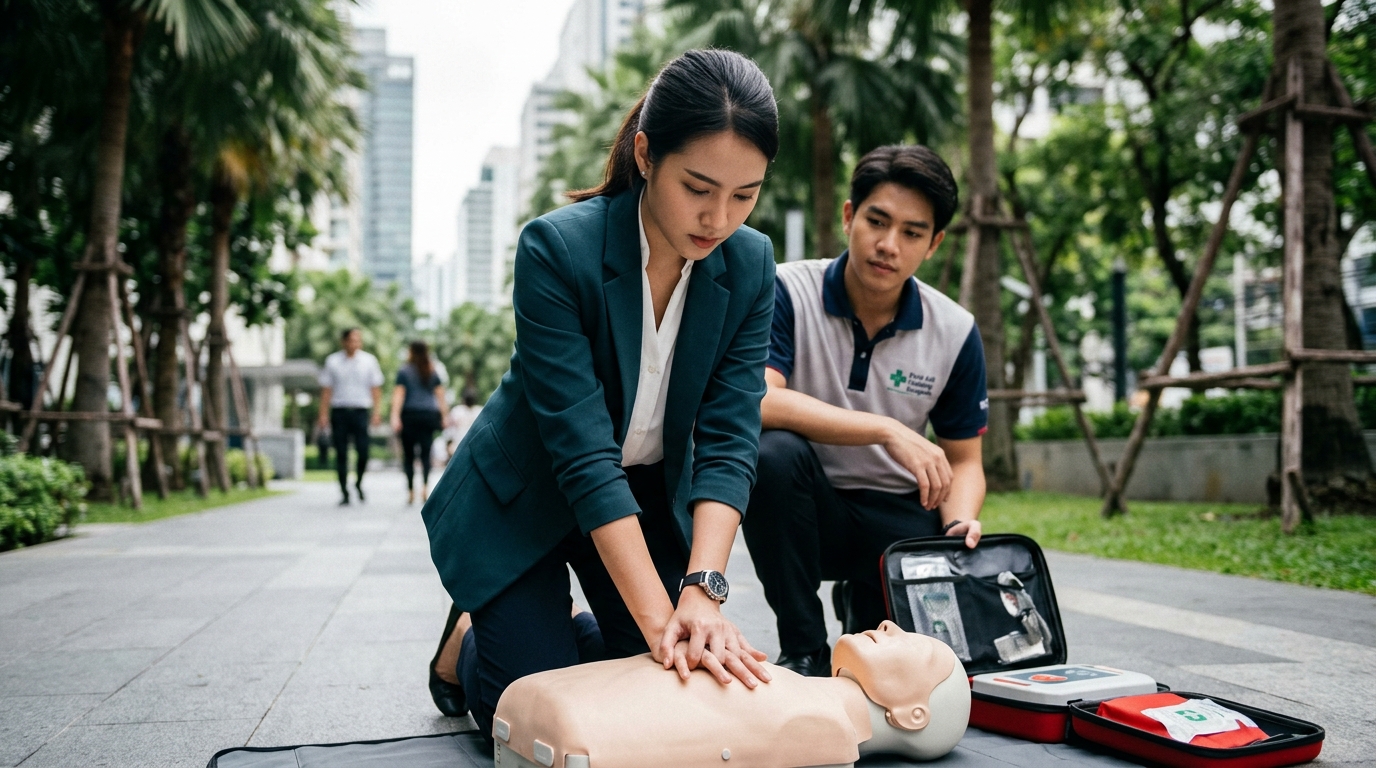
Emergency response is not a one-size-fits-all solution. In Thailand, where public safety standards have evolved significantly over the last decade, understanding the distinction between Cardiopulmonary Resuscitation (CPR) and general First Aid is critical for both corporate compliance and personal safety. According to recent global health data, immediate intervention by layperson responders can double or triple the survival rate for cardiac arrest victims. This statistic highlights why organizations like First Aid Training Bangkok have become the premier certifying body in Southeast Asia since 2009.
Defining CPR and First Aid
To navigate the landscape of emergency preparedness, one must first understand the core definitions. CPR is a life-saving technique comprising chest compressions and artificial ventilation, used when someone's breathing or heartbeat has stopped. It is a specific, high-intensity intervention reserved for cardiac or respiratory arrest scenarios.
In contrast, First Aid is the immediate assistance given to any person suffering from either a minor or serious illness or injury. It includes the care of the person until professional medical assistance can be obtained. While CPR is a subset of first aid skills, general first aid covers a much broader spectrum of medical emergencies.
At First Aid Training Bangkok, we emphasize that these are not competing disciplines but complementary ones. Our training protocols ensure that students understand when to deploy chest compressions versus when to manage bleeding, fractures, or shock. The goal is to produce confident layperson responders who are willing to handle life’s unfortunate challenges.
Scope of Practice: When to Use Which
Understanding the scope of each discipline helps in selecting the right training path. CPR is strictly for emergencies where the victim is unresponsive and not breathing normally. If you witness a collapse in a mall or office building, your immediate assessment determines if CPR is required.
First Aid, however, addresses a wider array of incidents. This includes treating burns, managing allergic reactions, stabilizing spinal injuries, and controlling severe bleeding. For example, the Stop the Bleed course offered by our team focuses specifically on hemorrhage control, a critical skill that falls under first aid but not CPR.
Many corporate clients in Bangkok initially seek only CPR certification. However, our medical advisory board, which includes critical care nurses and flight nurses, consistently recommends comprehensive first aid training. This ensures that employees are prepared for the full spectrum of workplace hazards, from office ergonomics to industrial accidents.
Corporate Training Requirements in Thailand
For businesses operating in Thailand, compliance with safety regulations is not just a legal formality but a moral imperative. Since 2009, First Aid Training Bangkok has served as the only EFR Center internationally recognized and awarded by EFR/PADI Asia Pacific. This accreditation ensures that our corporate training modules meet the highest international standards.
Corporate packages typically start from 8,900 THB for on-site training. These sessions are designed to minimize disruption to business operations while maximizing learning outcomes. We bring the training to your location in and around Bangkok, or anywhere in Thailand, ensuring accessibility for all staff members.
Our corporate clients benefit from tailored curricula that address their specific industry risks. Whether it is a construction site requiring heavy trauma care or a tech office needing basic CPR and AED usage, we customize the content to exceed expectations. With over 20,000 satisfied clients, our track record demonstrates the value of comprehensive safety education.
Key Differences at a Glance
To help you decide which certification aligns with your needs, we have compiled a detailed comparison of the core components of each training type.
| Feature | CPR Training | First Aid Training |
|---|---|---|
| Primary Focus | Restoring breathing and circulation | Managing injuries and illnesses |
| Target Scenarios | Cardiac arrest, drowning, choking | Bleeding, fractures, burns, shock |
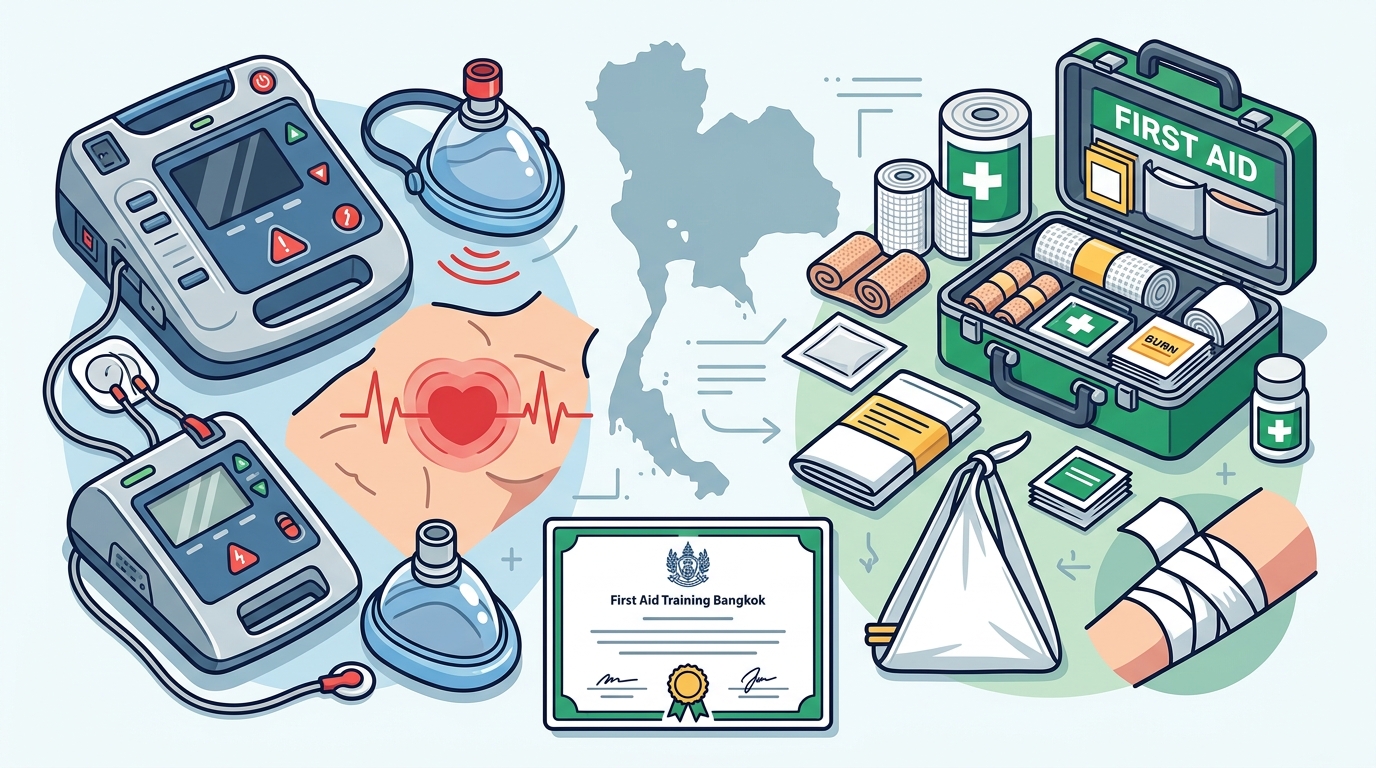
| Equipment Used | AED, CPR mask | Bandages, splints, oxygen tanks |
| Duration | Shorter (4-8 hours) | Longer (1-2 days) |
| Cost (Individual) | From 2,900 THB | From 4,900 THB |
As shown in the table, while CPR is more focused and often quicker to complete, first aid provides a broader toolkit for emergency management. For individuals seeking a complete safety profile, we recommend the Primary & Secondary Care course, which integrates both disciplines.
Frequently Asked Questions
Is CPR included in a standard First Aid course?
Yes, most comprehensive first aid courses include a module on CPR. At First Aid Training Bangkok, our Primary & Secondary Care training explicitly covers both CPR and general first aid techniques to ensure holistic preparedness.
How often should I renew my CPR certification?
Most international guidelines, including those from the American Heart Association and the European Resuscitation Council, recommend renewing CPR certification every two years. However, skills decay rapidly, so regular refreshers are advised.
Do you offer training for children?
Absolutely. We offer specialized Children First Aid Training courses designed to teach parents and caregivers how to handle pediatric emergencies, which differ significantly from adult protocols.
What is the difference between EFR and standard First Aid?
Emergency First Response (EFR) is a specific brand of training that focuses heavily on CPR and AED use, often with a background in diving or rescue. First Aid Training Bangkok is the only EFR Center in the region with international recognition, ensuring our CPR instruction is world-class.
Can I take the course online?
We offer a combination of online eLearning theory and in-person hands-on training. This hybrid model allows you to learn the concepts at your own pace before practicing skills in a supervised environment.
Is the certification recognized internationally?
Yes, our certificates are internationally recognized. As a provider adhering to the latest international guidelines, our credentials are accepted globally for professional and personal use.
What is the cost for corporate training?
Corporate training packages start from 8,900 THB. The final cost depends on the number of participants and the specific modules selected, such as AED training or advanced trauma care.
Secure Your Safety Today
Do not wait for an emergency to realize the gap in your knowledge. Whether you are an individual seeking personal empowerment or a corporate manager ensuring workplace compliance, the right training saves lives. Contact First Aid Training Bangkok today to book your session. Visit our checkout page to secure your spot in the next available class and take the first step toward becoming a confident first responder.