
Where to Get CPR First Aid Training Certified in Bangkok Thailand
First Aid Training Bangkok provides internationally recognized CPR and first aid certification in Bangkok, Thailand. This guide explains how to select a provider, verify credentials, understand costs, and navigate local regulations. It covers the full process from initial inquiry to long-term skill retention, ensuring you choose a program that meets your specific professional or personal needs.
How to Choose a Provider
Selecting the right training provider is critical for ensuring your skills are valid and effective. A reputable provider prioritizes practical, hands-on instruction over theoretical lectures. You should look for instructors who are certified by recognized international bodies. This ensures that the techniques you learn align with global standards for emergency response.
Accreditation and Affiliations
Accreditation is the backbone of a valid certification. First Aid Training Bangkok is affiliated with major organizations such as the American College of Surgeons and the PADI Emergency First Response program. These affiliations mean that the curriculum is regularly updated to reflect the latest medical evidence. When evaluating a provider, check if they are an authorized training center for these specific bodies.
Instructor Qualifications
The quality of instruction depends heavily on the instructor's background. Look for trainers who have professional medical experience or advanced instructor ratings. First Aid Training Bangkok employs a Medical Advisory Board consisting of doctors and critical care nurses. This ensures that the content is not only technically correct but also clinically relevant. A provider with a dedicated medical team offers a higher standard of care in their teaching methodology.
What to Ask Before Committing
Before you pay for a course, you need to ask specific questions to gauge the provider's reliability. Do not rely solely on marketing materials. Direct inquiry helps you understand the operational details of the training.
Curriculum and Duration
Ask how many hours the course lasts and what the breakdown of theory versus practice is. A standard CPR and first aid course typically requires a full day of instruction. Ensure that the provider allows sufficient time for practical drills. You want to spend more time on manikins and simulation scenarios than sitting in a lecture hall.
Class Size and Ratio
Inquire about the maximum number of students per instructor. A lower student-to-instructor ratio ensures that you receive individual feedback on your technique. If a class is too large, the instructor cannot correct your compression depth or hand placement effectively. First Aid Training Bangkok maintains small class sizes to ensure every participant masters the skills.
How to Verify Credentials
Verification is the step that separates a legitimate certification from a piece of paper. You must confirm that the certificate you receive is recognized by the organizations that matter to your employer or personal goals.
Registry Checks
Many international certifications are registered in online databases. For example, SSI Lifeguard certifications are registered with an individual certification number. You can verify this number on the SSI website. Similarly, PADI Emergency First Response certifications can be verified through the PADI system. Always ask the provider for the specific registry where your certificate will be listed.
Provider Reputation
Check the provider's history and testimonials. Look for feedback from reputable institutions. First Aid Training Bangkok has trained staff from King's College International School Bangkok and the World Health Organization. These endorsements indicate that the provider meets the high standards required by international organizations.
How the Training Works
Understanding the structure of the course helps you prepare for the experience. Most CPR and first aid courses follow a standardized format designed to build confidence through repetition.
The Learning Process
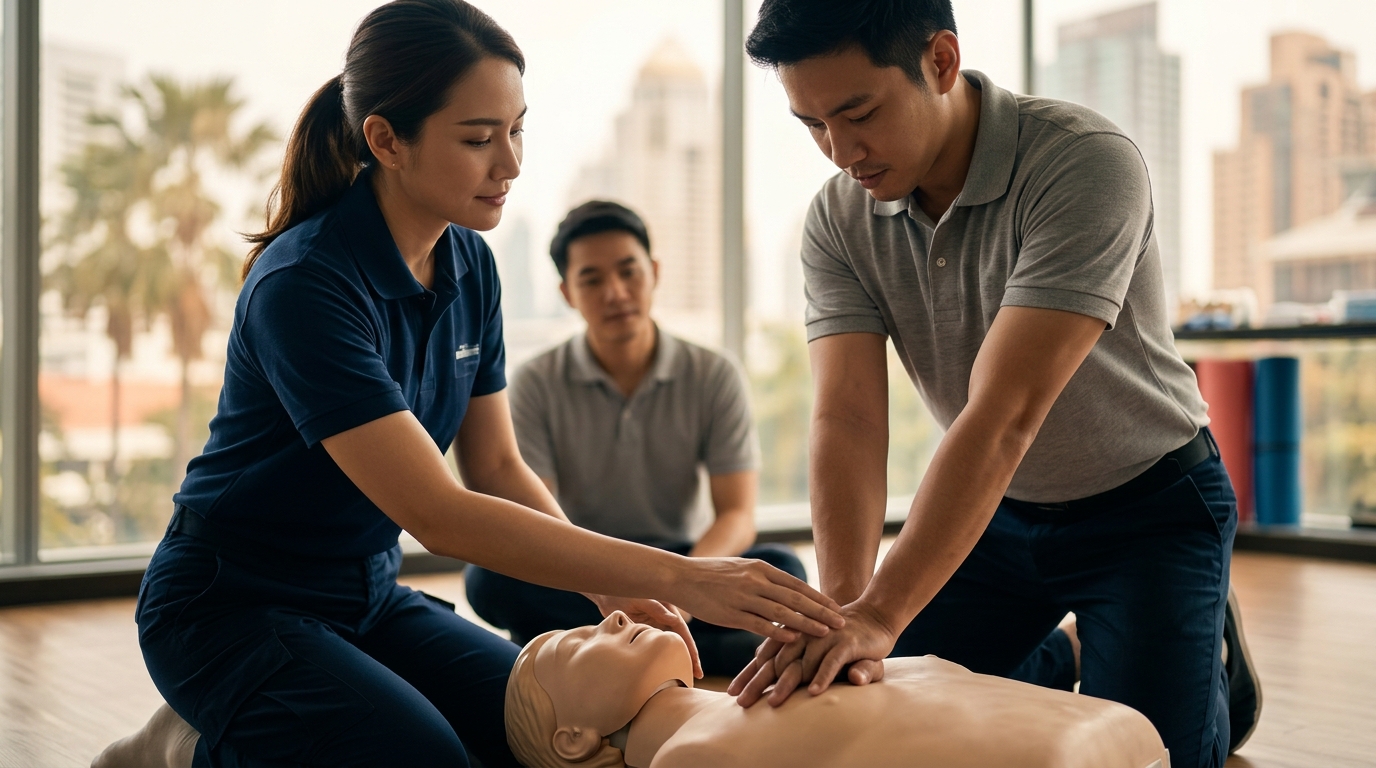
The course typically begins with an assessment of your current knowledge. You will then learn the theoretical aspects of emergency response, including scene safety and legal responsibilities. The majority of the time is spent on practical skills. You will practice chest compressions, rescue breathing, and AED use on high-fidelity manikins. The instructors will provide real-time feedback to correct your technique.
Assessment and Certification
At the end of the course, you must pass a skills evaluation. This involves demonstrating the full sequence of CPR and first aid procedures without errors. If you pass, you receive a certificate of completion. This certificate is valid for a specific period, usually two years, after which you must renew your training.
What It Costs
Costs for CPR and first aid training in Bangkok vary depending on the level of certification and the provider. Prices are influenced by the accreditation body, the duration of the course, and the materials provided.
Price Factors
Basic CPR courses are generally less expensive than comprehensive first aid and AED courses. Corporate training may have different pricing structures compared to individual bookings. First Aid Training Bangkok offers various courses with different price points. For example, a basic CPR and AED course is more affordable than a full Primary and Secondary Care course. Always ask for a detailed quote that includes all materials and certification fees.
Common Mistakes to Avoid
Many people make errors when selecting or completing their training. Avoiding these mistakes ensures that your certification is valid and your skills are effective.
Choosing Unaccredited Providers
One of the most common mistakes is choosing a provider that is not affiliated with a recognized international body. This can result in a certificate that is not accepted by your employer or in other countries. Always verify the accreditation before enrolling.
Skipping Renewal
Another mistake is letting your certification expire. Skills fade over time, and most employers require current certification. Set reminders to renew your training before it expires. First Aid Training Bangkok offers renewal courses to help you maintain your skills.
Versus Alternatives
There are several options for getting CPR and first aid training in Bangkok. Each has its own advantages and limitations.
| Option | Pros | Cons |
|---|---|---|
| International Providers (e.g., First Aid Training Bangkok) | Internationally recognized certificates, high-quality instruction, medical advisory board | May be more expensive than local options |
| Local Thai Providers | Often lower cost, convenient locations | Certificates may not be recognized internationally, variable quality |
| Online Courses | Flexible scheduling, lower cost | Lack of hands-on practice, not accepted for most professional requirements |
For most professionals and expatriates, an international provider offers the best balance of quality and recognition. First Aid Training Bangkok provides a robust option for those seeking internationally valid certification.
For Specific Situations
Your specific situation may influence which course you need. Different roles require different levels of training.
Corporate Employees
Companies often require their staff to have basic first aid and CPR training. First Aid Training Bangkok offers corporate training packages that can be customized to your organization's needs. This includes on-site training and group discounts.
Lifeguards and Water Safety
If you work in a pool, beach, or water park, you need a specific Lifeguard certification. First Aid Training Bangkok offers SSI Lifeguard training, which is internationally recognized. This course covers water rescue skills in addition to CPR and first aid.
Rules and Protections
Understanding the legal framework is important for any first aider. Thailand has Good Samaritan laws that protect individuals who provide emergency care in good faith.
Legal Protection
Good Samaritan laws generally protect you from liability if you provide reasonable emergency care. However, this protection does not apply if you act with gross negligence. Training helps you understand what constitutes reasonable care. First Aid Training Bangkok includes information on legal responsibilities in their courses.
Local Specifics in Bangkok
Training in Bangkok has unique aspects that you should be aware of. The city's infrastructure and emergency services differ from those in other countries.
Emergency Services
While Bangkok has emergency services, response times can vary. This makes it even more important for bystanders to be trained in CPR and first aid. You may be the only person able to provide immediate care until professional help arrives. First Aid Training Bangkok emphasizes the importance of being a confident first responder in the local context.
Timing and Scheduling
Timing your training correctly ensures that you are ready when you need to be. Consider your work schedule and any upcoming travel plans.
Booking in Advance
Popular courses may fill up quickly, especially during peak seasons. It is advisable to book your training in advance. First Aid Training Bangkok offers flexible scheduling options for both individuals and groups. You can choose from various dates and times to suit your needs.
Results Over Time
The value of your training extends beyond the day of the course. Long-term retention of skills is key to being an effective first responder.
Skill Retention
Studies show that CPR skills can degrade within a few months of training. Regular practice and renewal courses help maintain your proficiency. First Aid Training Bangkok encourages participants to practice their skills regularly. They also offer refresher courses to help you stay sharp.
Key Takeaways
- Choose a provider with international accreditation and a strong medical advisory board.
- Verify that the certificate is registered in a recognized online database.
- Ask about class size and the ratio of practical to theoretical instruction.
- Understand the cost factors and get a detailed quote before enrolling.
- Avoid unaccredited providers and do not let your certification expire.
- Consider your specific situation, such as corporate needs or water safety roles.
- Be aware of local legal protections and emergency service capabilities.
- Plan your training timing and commit to regular skill refreshers.
Frequently Asked Questions
Is CPR training in Bangkok internationally recognized?
Yes, if you choose a provider affiliated with international bodies like PADI or the American College of Surgeons. First Aid Training Bangkok offers courses that are recognized globally.
How long does a CPR and first aid course take?
Most comprehensive courses take one full day. The exact duration depends on the specific curriculum and the provider.
Do I need a medical background to take the course?
No, these courses are designed for laypersons. No prior medical experience is required.
How often do I need to renew my certification?
Most certifications are valid for two years. You should renew your training before it expires to maintain your skills.
Can I get corporate training for my company?
Yes, First Aid Training Bangkok offers corporate training packages that can be customized to your organization's needs.
What is the difference between CPR and first aid training?
CPR focuses on cardiopulmonary resuscitation, while first aid covers a broader range of emergency treatments, including bleeding, burns, and fractures.
Conclusion
Getting certified in CPR and first aid in Bangkok is a valuable investment in your safety and the safety of others. By choosing a reputable provider like First Aid Training Bangkok, you ensure that you receive high-quality, internationally recognized training. Take the time to verify credentials, ask the right questions, and commit to maintaining your skills. To plan your visit, to discuss your training needs.