
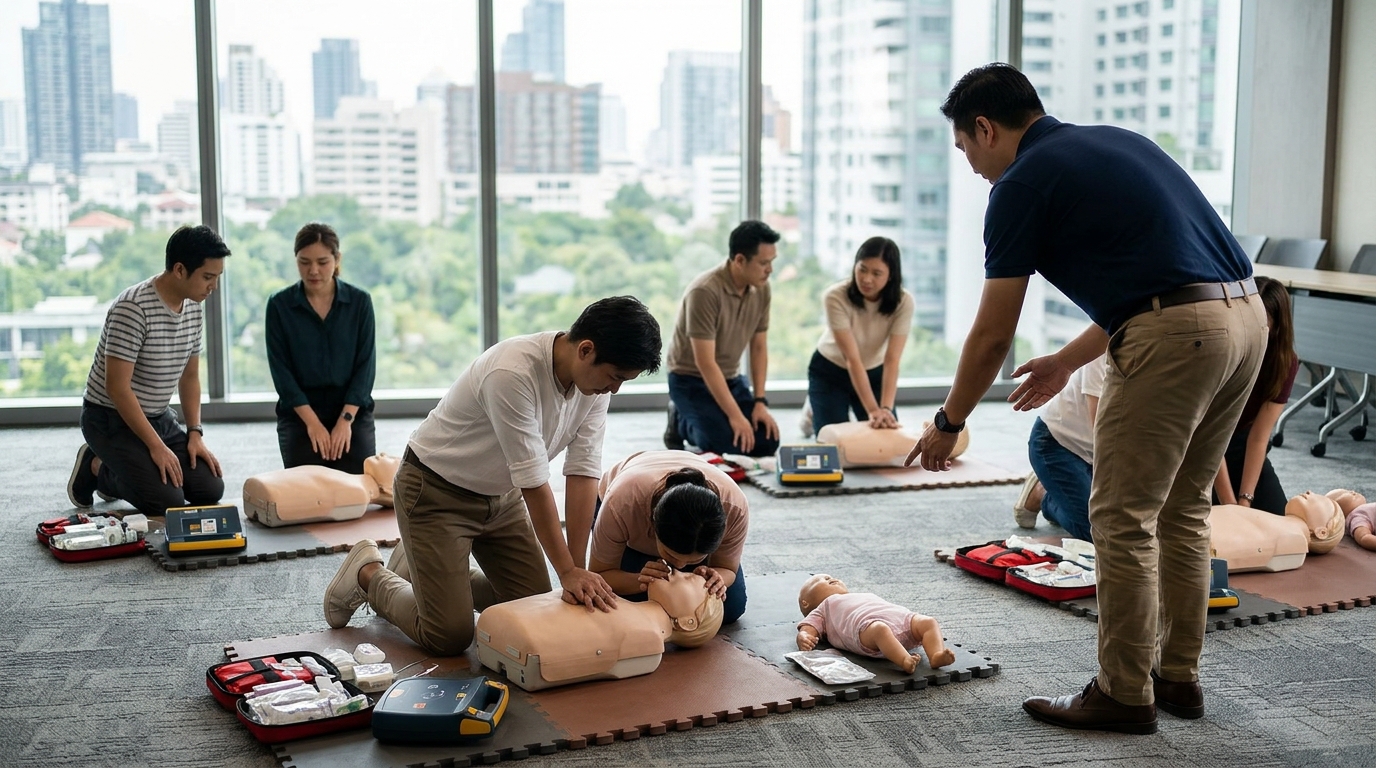
Selecting the right CPR and first aid training provider in Bangkok requires verifying international accreditation, instructor qualifications, and practical skill assessment. You should prioritize providers that offer hands-on practice with modern equipment and issue recognized certificates. This ensures your skills are current and valid for travel or workplace training requirements.
Verify International Accreditation and Standards
Accreditation is the foundation of a valid certification. A reputable provider aligns its curriculum with international guidelines established by recognized bodies. For example, the International Liaison Committee on Resuscitation (ILCOR) sets global standards for basic life support. Courses that follow these protocols ensure that your skills match international expectations. First Aid Training Bangkok aligns its curriculum with these global standards to ensure consistency in training quality.
Check if the provider is affiliated with major organizations like the American Heart Association (AHA) or the Emergency First Response (EFR) program. These affiliations guarantee that the training materials and assessment methods meet rigorous quality controls. Without proper accreditation, a certificate may only be valid locally, limiting its usefulness for international travel or corporate training requirements.
Assess Instructor Qualifications and Experience
The quality of instruction depends heavily on the instructor's background. An effective CPR instructor is a certified professional with practical experience in emergency response or healthcare. Look for instructors who hold advanced ratings, such as Instructor Trainer status, which allows them to teach others. This level of expertise ensures that you receive accurate feedback on your technique.
Experience matters because CPR is a physical skill that requires precise execution. Instructors with years of teaching experience can identify common errors in chest compressions and airway management. They can correct these mistakes in real-time, preventing bad habits from forming. First Aid Training Bangkok employs a team of experienced instructors who focus on realistic, low-stress training environments to help students build confidence.
Evaluate Practical Training and Equipment
Hands-on practice is the core of effective CPR training. A good provider provides high-quality manikins and Automated External Defibrillator (AED) trainers for every student. You should expect to perform chest compressions and use AEDs repeatedly until the movements become second nature. The equipment should be modern and well-maintained to simulate real-world conditions accurately.
Class size is another critical factor. Smaller groups allow for more individual attention and practice time. In large classes, students may spend too much time waiting for equipment or receiving feedback. A provider that balances theory with ample practical sessions ensures that you leave the course with muscle memory. This practical focus is essential for responding effectively in a high-stress emergency.
Understand Certification Validity and Renewal
CPR skills degrade over time, so certifications have an expiration date. Most international certifications are valid for two years. You should understand the renewal process and the cost of recertification before enrolling. Some providers offer discounted rates for renewals, while others charge the full price again. Knowing this upfront helps you budget for ongoing training.
Also, verify the format of the certificate. A physical card or a digital verification number is standard for international recognition. Ensure that the certificate includes your name, the course type, and the expiration date clearly. This documentation is often required by employers, schools, or travel agencies. First Aid Training Bangkok provides certificates that are valid for 24 months, helping participants maintain current skills.

Key Takeaways
- Verify that the provider follows international guidelines like ILCOR or AHA standards.
- Check instructor qualifications, including advanced ratings and practical experience.
- Ensure the course includes ample hands-on practice with modern manikins and AEDs.
- Confirm the certification validity period and the process for renewal.
- Consider class size to ensure you receive individual feedback and practice time.
- Look for providers that offer both theory and practical assessment components.
Frequently Asked Questions
Is CPR training mandatory in Thailand?
CPR training is not legally mandatory for all citizens in Thailand. However, it is required for specific professions, such as lifeguards, dive instructors, and healthcare workers. Many international schools and corporate offices also require staff to hold valid first aid certifications for safety compliance.
How long does a CPR course take?
A standard CPR and AED course typically takes about 3.5 hours to complete. Comprehensive first aid courses that include injury treatment and illness management usually take one full day, ranging from 7 to 8 hours. The duration depends on the depth of the curriculum and the amount of practical practice included.
Can I take CPR training online?
Some providers offer online theory components, but practical skills must be assessed in person. Hybrid courses allow you to study theory online and then attend a local session for hands-on practice. Fully online courses without practical assessment are generally not recommended for certification purposes.
What should I wear to a CPR class?
You should wear comfortable clothing that allows for floor-based activities. Since you will be practicing chest compressions on manikins, avoid restrictive clothing. Closed-toe shoes are recommended for safety during practical sessions. The provider usually supplies all necessary training equipment, including manikins and AED trainers.
How much does CPR training cost in Bangkok?
Prices vary depending on the provider and the course level. Basic CPR and AED courses are generally more affordable than comprehensive first aid courses. Corporate training may have different pricing structures based on group size. It is best to request a quote from the provider to get accurate pricing for your specific needs.
Conclusion
Choosing the right CPR and first aid provider in Bangkok is a critical step in ensuring your safety and the safety of others. By verifying accreditation, instructor expertise, and practical training quality, you can select a course that provides lasting skills. First Aid Training Bangkok offers a range of courses designed to empower individuals and organizations with essential emergency care skills. To plan your training, contact our team for more information on available schedules and course details. Learn more: Contact First Aid Training.