
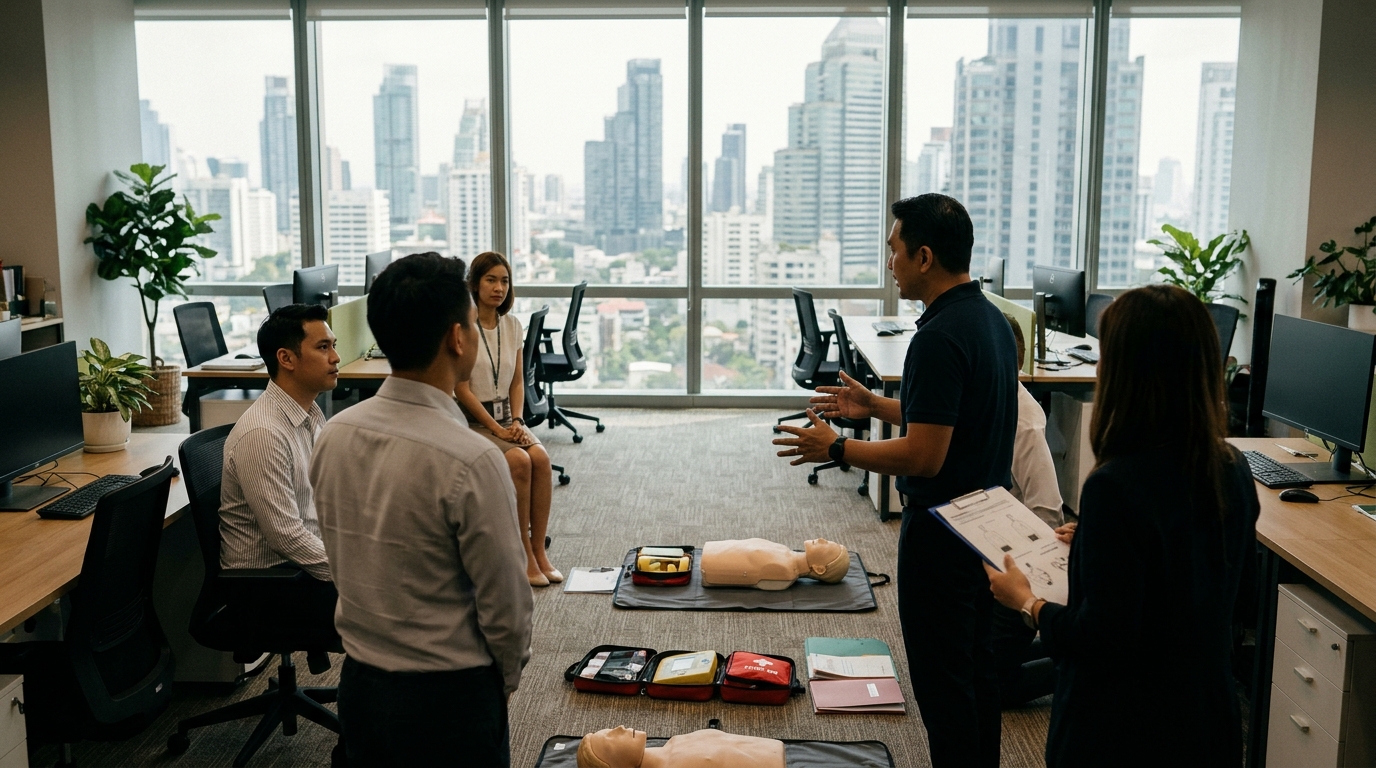
Standardized CPR courses often fail to address the specific risks and workflows of individual workplaces. Customizing training ensures that your staff can respond effectively to the emergencies most likely to occur in your specific office environment. First Aid Training Bangkok helps organizations in Bangkok tailor their safety programs to fit their unique operational needs.
1. Assess Your Specific Workplace Hazards
Identify the unique risks present in your office layout and operations. Every office has different potential hazards, from electrical equipment to crowded meeting rooms. A generic course may not cover the specific scenarios your team faces. By conducting a risk assessment, you can determine which emergency skills are most critical for your staff to master.
2. Integrate AED Usage into Daily Workflows
Ensure employees know exactly where the AED is located and how to use it. Automated External Defibrillators (AEDs) are portable devices that deliver a shock to the heart during cardiac arrest. Training should include practical drills that map the location of your office AEDs. This reduces response time and builds muscle memory for using the device under pressure.
3. Focus on Choking and Airway Obstruction
Prioritize airway management skills given the prevalence of food and drink in offices. Many office emergencies involve choking during lunch breaks or meetings. Standard CPR training covers this, but customized sessions can focus heavily on the Heimlich maneuver and airway clearance techniques. This ensures that staff can quickly identify and treat obstructions before they become life-threatening.
4. Train for High-Stress Environments

5. Align Training with Local Emergency Protocols
Ensure your team knows how to interface with Bangkok's local emergency services. Understanding the local emergency response system is crucial for effective first aid. Training should cover how to call for help, what information to provide, and how to guide paramedics to the scene. This local context is often missing from generic international courses.
6. Schedule Regular Refresher Courses
Maintain skills through periodic updates rather than one-time training. First aid skills can fade quickly without practice. Scheduling annual or bi-annual refresher courses keeps the knowledge fresh in your employees' minds. This ongoing commitment demonstrates your organization's dedication to safety and compliance.
7. Provide Clear Post-Training Support Resources
Equip staff with easy-to-access guides and equipment for ongoing reference. After the training, employees need quick access to first aid kits and instructional materials. Providing a well-stocked first aid station with clear signage and quick-reference guides ensures that staff can act confidently even if they have not practiced recently.
Choosing the Right Approach
Select the customization strategy that addresses your most significant risk factor. If your office has high foot traffic, focus on crowd management and AED access. If you have a large kitchen or cafeteria, prioritize choking and burn treatment. A tailored approach ensures that your training is relevant and effective.
Frequently Asked Questions
How often should office staff retake CPR training?
It is recommended to retake CPR and first aid training every two years to maintain certification and skill proficiency. Regular refresher courses help keep emergency response skills sharp and up to date with current guidelines.
Can online CPR training replace hands-on practice?
Online training can provide theoretical knowledge, but it cannot replace the physical practice required for effective CPR. Hands-on practice with manikins and AEDs is essential for building the muscle memory needed in a real emergency.
What is the difference between CPR and First Aid training?
CPR focuses specifically on restoring circulation and breathing during cardiac arrest, while First Aid training covers a broader range of emergency treatments, including bleeding, burns, and fractures. Most comprehensive courses include both skills.
Is AED training mandatory for all office staff in Bangkok?
While not always legally mandatory for every single employee, having trained staff is a best practice for workplace safety. Many organizations choose to train a designated group of first aiders to ensure coverage during all working hours.
How long does a customized corporate CPR course take?
Most corporate CPR and first aid courses can be completed in a single day, depending on the depth of customization and the number of participants. In-house training allows for flexible scheduling that minimizes disruption to your business operations.
Conclusion
Customizing your CPR training ensures that your office staff are prepared for the specific emergencies they are most likely to encounter. By focusing on your unique risks and providing ongoing support, you create a safer workplace for everyone. First Aid Training Bangkok offers tailored corporate training programs designed to meet the specific needs of businesses in Bangkok. To plan your visit, contact our team to discuss a customized training solution for your organization.