

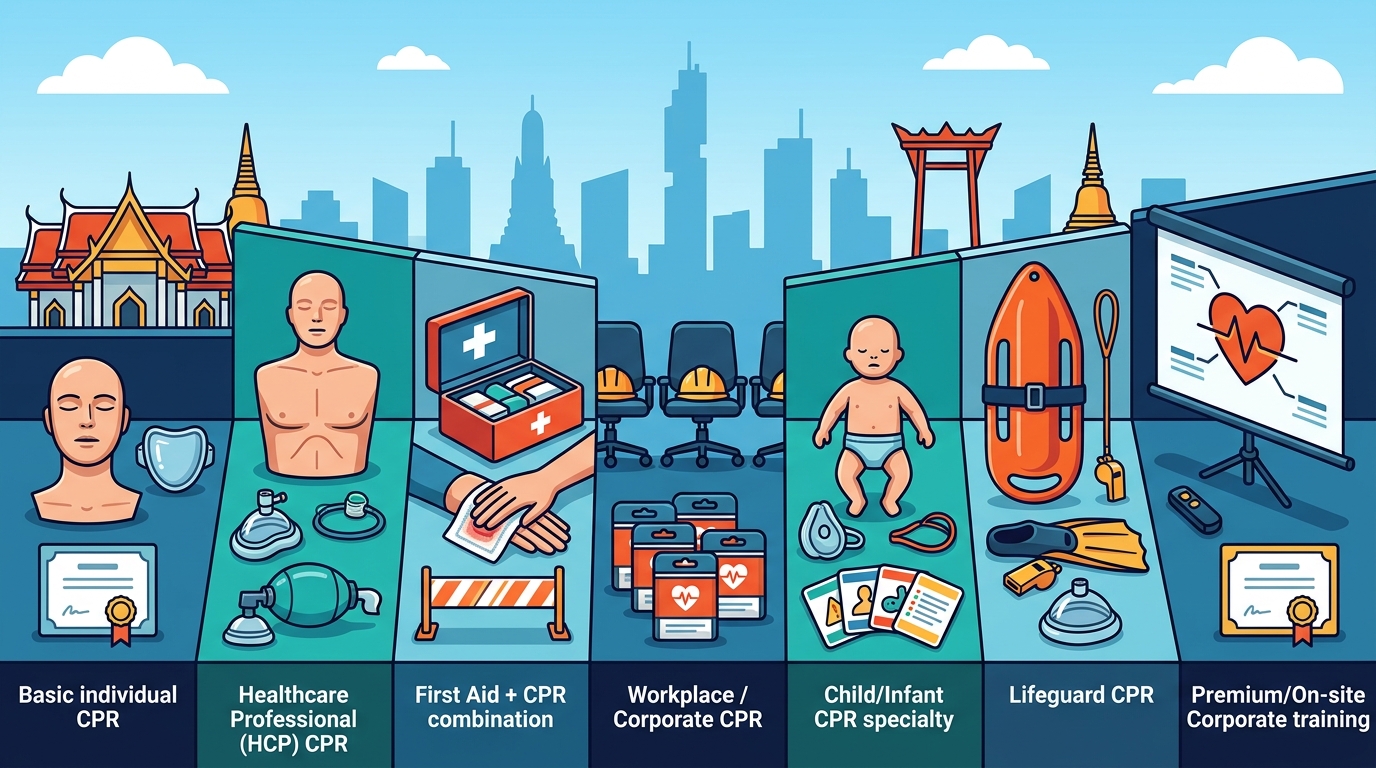
Choosing the right CPR course in Bangkok depends on your specific role, budget, and certification needs. Prices vary significantly based on whether you are an individual seeking basic skills or a corporation requiring on-site compliance training. First Aid Training Bangkok offers a transparent range of options to fit different professional and personal requirements.
1. Basic CPR and AED Certification
Best for individuals needing a quick, affordable introduction to life-saving skills.
This entry-level option focuses specifically on cardiopulmonary resuscitation and the use of Automated External Defibrillators. It is ideal for parents, students, or travelers who want to learn the core mechanics of chest compressions and shock delivery without the broader scope of general first aid. The course is designed to be completed in a single day, making it a convenient choice for those with limited time.
2. Primary and Secondary Care: CPR and First Aid
Ideal for those who want comprehensive emergency response skills beyond just cardiac arrest.
This course combines CPR and AED training with a full first aid curriculum, covering injuries, illnesses, and trauma management. It provides a more robust skill set for individuals who may encounter a variety of emergencies, such as cuts, burns, or choking. The price reflects the additional instructional time and materials required to cover these broader medical topics.
3. Primary and Secondary Care with AED
The most comprehensive individual package for total emergency preparedness.
This tier includes all the skills from the standard first aid course plus dedicated AED training and certification. It is the preferred choice for individuals who want to be fully equipped to handle both medical emergencies and cardiac events. The curriculum ensures that participants are confident in using defibrillator equipment, which is increasingly common in public spaces and workplaces.
4. Children First Aid Training
Specialized training for parents, nannies, and childcare providers.
This course is tailored specifically for the unique anatomical and physiological needs of infants and children. It covers pediatric CPR, choking, and common childhood injuries. The pricing is comparable to standard adult first aid courses but focuses entirely on pediatric scenarios, making it essential for anyone working with or caring for young children.
5. Corporate On-Site Training
Cost-effective for organizations looking to train multiple employees at once.
First Aid Training Bangkok offers on-site corporate training that brings the instructors to your office or facility. This option is priced per group rather than per individual, which can significantly reduce the cost per employee for larger teams. It is a practical solution for companies that want to ensure workplace safety compliance without sending staff away from their desks.
6. Lifeguard Training
Advanced certification for professionals working in aquatic environments.
Lifeguard training is a multi-day program that includes water rescue skills, first aid, and CPR. It is priced higher than standard first aid courses due to the extended duration and the specialized nature of the skills taught. This certification is required for professional lifeguards in pools, beaches, and water parks, and it provides international recognition for those in the hospitality and tourism sectors.
7. First Aid Instructor Training
For professionals who wish to teach and certify others in first aid and CPR.
This is the highest tier of training, designed for individuals who want to become certified instructors. The price reflects the extensive curriculum, which includes teaching methodologies, assessment techniques, and advanced clinical skills. It is a significant investment for those looking to build a career in safety training or to establish their own training programs.
Choosing the Right Option
Select your course based on your primary role and the specific emergencies you are most likely to encounter. For general public safety, the basic CPR and AED course is the most accessible entry point. For workplace compliance, corporate on-site training offers the best value for larger groups. Always verify that the certification you choose meets the specific requirements of your employer or professional body.
Frequently Asked Questions
How long is a CPR certification valid in Thailand?
Most CPR and first aid certifications in Thailand are valid for two years. After this period, you must complete a recertification course to renew your credentials. The recertification process is typically shorter and less expensive than the initial training.
Can I take CPR training online in Bangkok?
While some theoretical components can be completed online, practical skills like chest compressions and AED use require hands-on practice. First Aid Training Bangkok offers live online classes for certain modules, but full certification generally requires in-person practical assessment.
What is the difference between CPR and First Aid training?
CPR training focuses specifically on cardiac arrest and the use of defibrillators. First aid training covers a broader range of injuries and illnesses, including bleeding, burns, and fractures. Many courses combine both to provide a complete emergency response skill set.
Do I need a medical background to take these courses?
Is the certification recognized internationally?
Certifications from First Aid Training Bangkok are aligned with international standards and are recognized by many employers and organizations worldwide. However, specific acceptance may vary by country and industry, so it is best to confirm with your employer or professional body.
Conclusion
Investing in CPR and first aid training is a valuable step toward personal and professional safety. First Aid Training Bangkok provides a range of pricing options to suit various needs, from basic individual courses to comprehensive corporate programs. To find the right course for your situation, for a personalized consultation.