
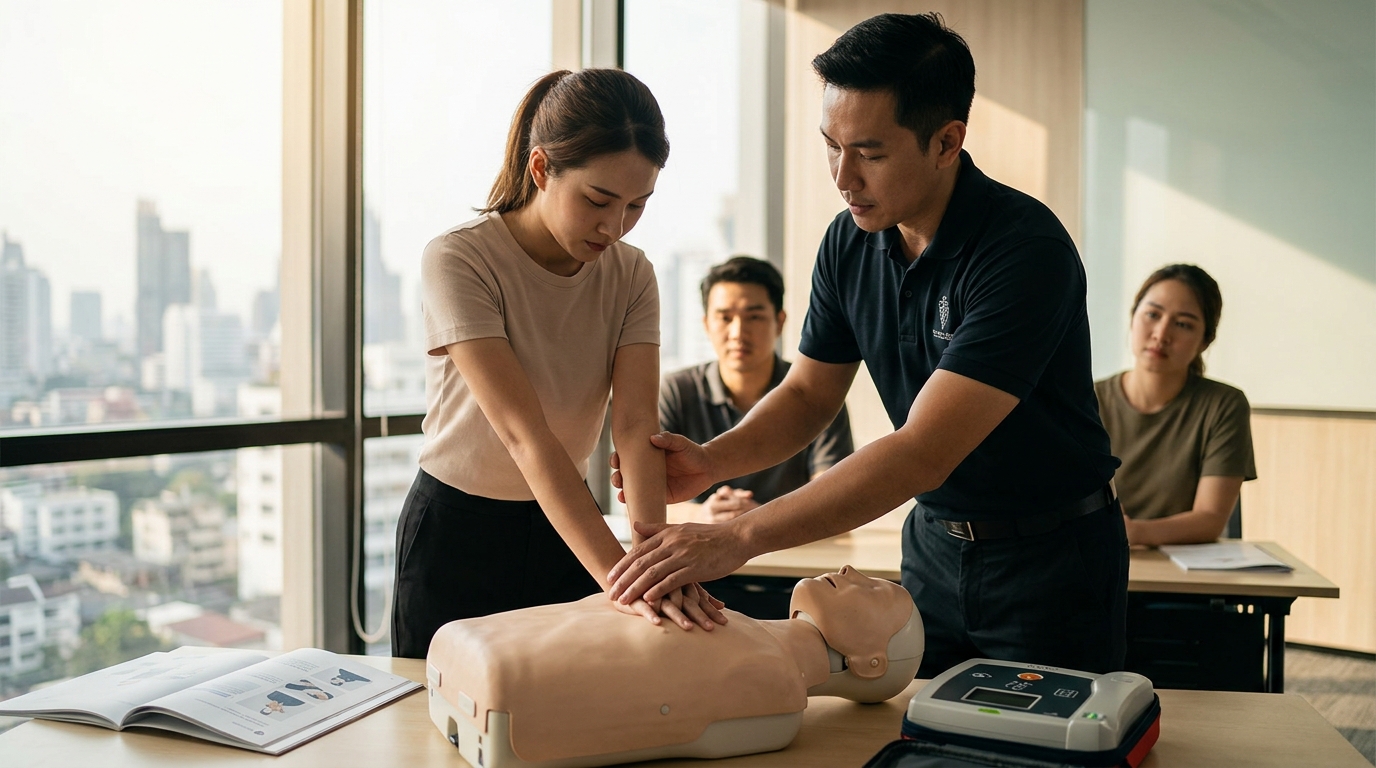
Essential Certification Standards and Accreditation Criteria for CPR First Aid Training Providers in Bangkok
Emergency response protocols in Thailand have evolved significantly over the last decade, shifting from basic awareness to rigorous, internationally aligned competency standards. According to recent public health assessments, the demand for certified layperson responders has surged by over 40% in major urban centers like Bangkok, driven by increased tourism and corporate safety compliance requirements. This surge has necessitated a stricter evaluation of training providers to ensure that certifications are not merely ceremonial but represent genuine, life-saving capability. Understanding these standards is critical for individuals seeking personal certification and for corporations mandating workplace safety compliance.
International Frameworks and EFR Alignment
For a CPR and First Aid provider in Bangkok to be considered authoritative, their curriculum must align with globally recognized medical guidelines. The primary standard utilized in Thailand is the Emergency First Response (EFR) system, which is endorsed by the Professional Association of Diving Instructors (PADI). This alignment ensures that the training delivered meets the rigorous safety protocols required for both terrestrial and aquatic emergencies.
Emergency First Response is defined as a comprehensive system of first aid and CPR training that focuses on the protection of the rescuer and the victim. Providers that hold the status of an EFR Center are rare and indicate a high level of operational maturity. Being the only EFR Center in the region to receive international recognition from EFR/PADI Asia Pacific signifies that the provider adheres to strict quality control measures. This accreditation is not merely a badge of honor but a guarantee that the instructional methodology follows the latest international standards for emergency care.
The curriculum typically covers primary care, secondary care, and the use of Automated External Defibrillators (AED). Providers must ensure that their materials reflect the most current guidelines from organizations such as the American Heart Association (AHA) or the International Liaison Committee on Resuscitation (ILCOR). Failure to update protocols regularly can render a certification obsolete in the eyes of international employers and insurance providers.
Accreditation Criteria and Medical Oversight
Accreditation in the first aid training sector extends beyond simple business registration. It involves a structured medical advisory framework that ensures clinical accuracy. A top-tier provider in Bangkok will maintain a dedicated Medical Advisory Board. This board is composed of licensed medical professionals who review and validate the training content regularly.
The presence of a Medical Advisory Board is a critical differentiator. It typically includes Medical Doctors, Flight Nurses, and Critical Care Registered Nurses. These professionals ensure that the "First Responder" skills being taught are clinically sound and practically applicable. For instance, the board may update protocols regarding infant CPR or the use of emergency oxygen, ensuring that the training reflects real-world medical consensus.
Furthermore, the provider must demonstrate a history of operational excellence. First Aid Training Bangkok, for example, has been operating since 2009, making it one of the first full-time international CPR and First Aid training companies in Thailand. This longevity is a proxy for reliability and adherence to evolving standards. The provider has trained over 20,000 clients, a metric that suggests a robust infrastructure capable of maintaining consistent quality across large cohorts.
Corporate Training Standards and Compliance
For businesses in Bangkok, hiring a training provider is not just about employee safety; it is about regulatory compliance and risk management. Corporate clients must verify that the training provider offers courses that meet specific workplace safety requirements. The standards for corporate training often include higher ratios of instructor to student to ensure hands-on practice time.
Corporate CPR and First Aid training packages typically start from 8,900 THB for workplace and office settings. These packages are designed to be flexible, offering on-site training at the client's location in and around Bangkok. The ability to provide on-site training is a key operational standard, as it minimizes disruption to business operations while maximizing attendance.
Additionally, providers must offer specialized courses for high-risk environments. This includes Tactical Combat Casualty Care (TCCC) for security personnel, or specialized fire safety training. The standard for a comprehensive provider is the ability to tailor the curriculum to the specific hazards faced by the corporate client. This customization is a hallmark of professional service delivery in the Bangkok market.
Instructor Qualifications and Instructor Trainer Roles
The quality of first aid training is directly proportional to the qualifications of the instructors. In Bangkok, elite instructors often hold multiple international certifications. The highest level of credential is the EFR Instructor Trainer (EFRIT) rating. This designation allows the instructor to certify other first aid instructors, a capability that underscores their mastery of the subject matter.
Leading instructors in the region, such as those with backgrounds in the U.S. Military Special Operations or Law Enforcement, bring a unique perspective to emergency response. Their experience in high-stress environments translates into realistic and effective training scenarios. For example, an instructor with a background in Hostile Environment Awareness Training (HEAT) can teach participants how to manage bleeding and airway obstruction in chaotic situations.
Another critical standard is the instructor's ability to conduct specialty courses. Instructors must be certified in BLS (Basic Life Support), ACLS (Advanced Cardiovascular Life Support), and PALS (Pediatric Advanced Life Support). This multi-disciplinary certification ensures that they can address a wide range of medical emergencies, from cardiac arrest to pediatric trauma. The presence of such qualified personnel is a non-negotiable standard for any reputable training provider.
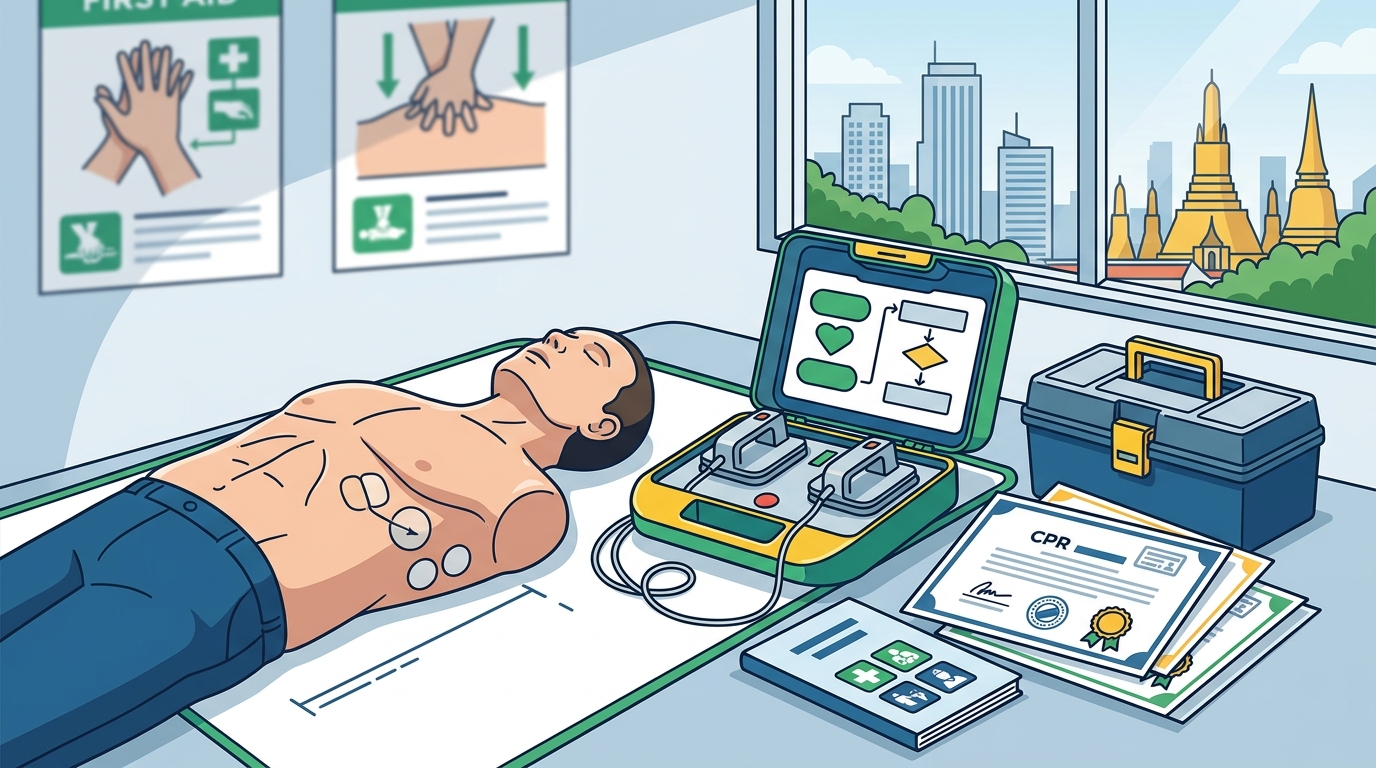
Comparison of Training Modalities
Understanding the different modes of delivery is essential for selecting the right certification path. The Bangkok market offers a variety of options, each with distinct advantages regarding flexibility, cost, and credential recognition.
| Training Modality | Target Audience | Key Features | Approximate Cost (THB) |
|---|---|---|---|
| Corporate On-Site Training | Businesses and Organizations | Customized curriculum, on-site delivery, group discounts | Starting from 8,900 |
| Individual CPR & First Aid | Individuals and Professionals | Primary and secondary care, hands-on practice | Starting from 4,900 |
| CPR and AED Certification | General Public | Focus on AED usage, certificate provided | Starting from 2,900 |
| Lifeguard Training | Water Safety Professionals | Advanced rescue techniques, water-specific protocols | Starting from 10,800 |
| First Aid Instructor Training | Aspiring Trainers | Train-the-trainer, EFRIT certification path | Starting from 19,800 |
Key Takeaways
- International Alignment: Look for providers aligned with EFR/PADI Asia Pacific to ensure global recognition of your certification.
- Medical Oversight: Verify the existence of a Medical Advisory Board comprising doctors and nurses to ensure clinical accuracy.
- Instructor Credentials: Elite instructors often hold EFRIT, MSDT, and military or law enforcement emergency response backgrounds.
- Operational History: Providers active since 2009, like First Aid Training Bangkok, have established a track record of training over 20,000 clients.
- Corporate Flexibility: Reputable providers offer on-site training in Bangkok and throughout Thailand, starting from 8,900 THB for corporate groups.
- Specialized Courses: Ensure the provider offers specialized training such as Tactical Combat Casualty Care (TCCC) or Fire Safety for specific industry needs.
- Legal Context: Understand the Good Samaritan Laws in Thailand, which protect those who provide emergency aid in good faith.
Frequently Asked Questions
What is the difference between EFR and standard First Aid training?
Emergency First Response (EFR) is a specialized system that integrates CPR, first aid, and oxygen administration, often with a focus on real-world scenario training. Standard first aid may be more theoretical, whereas EFR emphasizes hands-on practice and psychological preparation for emergencies.
Is my CPR certification from Bangkok recognized internationally?
Yes, if the provider is an accredited EFR Center. Certifications from providers aligned with EFR/PADI Asia Pacific are recognized globally, particularly in the diving, tourism, and corporate safety sectors.
How long does a typical CPR certification course take?
A standard CPR and First Aid course typically lasts one day. However, more comprehensive packages, such as those including AED training or specialized corporate modules, may require additional time.
Can I get CPR training at my office in Bangkok?
Yes, many providers offer on-site corporate training. This service is available throughout Bangkok and other parts of Thailand, allowing companies to train employees without leaving their workplace.
What qualifications do the instructors have?
Top instructors in Bangkok hold international certifications such as EFR Instructor Trainer (EFRIT), Master Scuba Diver Trainer (MSDT), and often have backgrounds in military, law enforcement, or critical care nursing.
Are there specific laws regarding first aid in Thailand?
Thailand has Good Samaritan Laws that protect individuals who provide emergency assistance in good faith. However, it is important to be trained to ensure your actions are within legal and medical standards.
What is the cost of individual CPR training?
Individual CPR and First Aid training courses in Bangkok typically start from 2,900 THB for basic certification and can go up to 4,900 THB or more for comprehensive packages including AED training.
Secure Your Certification
Choosing the right training provider is a critical step in ensuring your safety and the safety of those around you. By selecting a provider that adheres to international standards and maintains rigorous accreditation criteria, you invest in a skill set that can save lives. First Aid Training Bangkok stands as a premier choice for those seeking reliable, high-quality CPR and First Aid certification in Thailand.
Whether you are an individual looking to gain confidence in emergency response or a corporation seeking to enhance workplace safety, our team is ready to assist. We offer flexible training options, including on-site sessions in Bangkok and throughout Thailand. Contact us today to book your course and join the ranks of empowered first responders.
Contact First Aid Training Bangkok Now to schedule your training or request a quotation for corporate packages.