
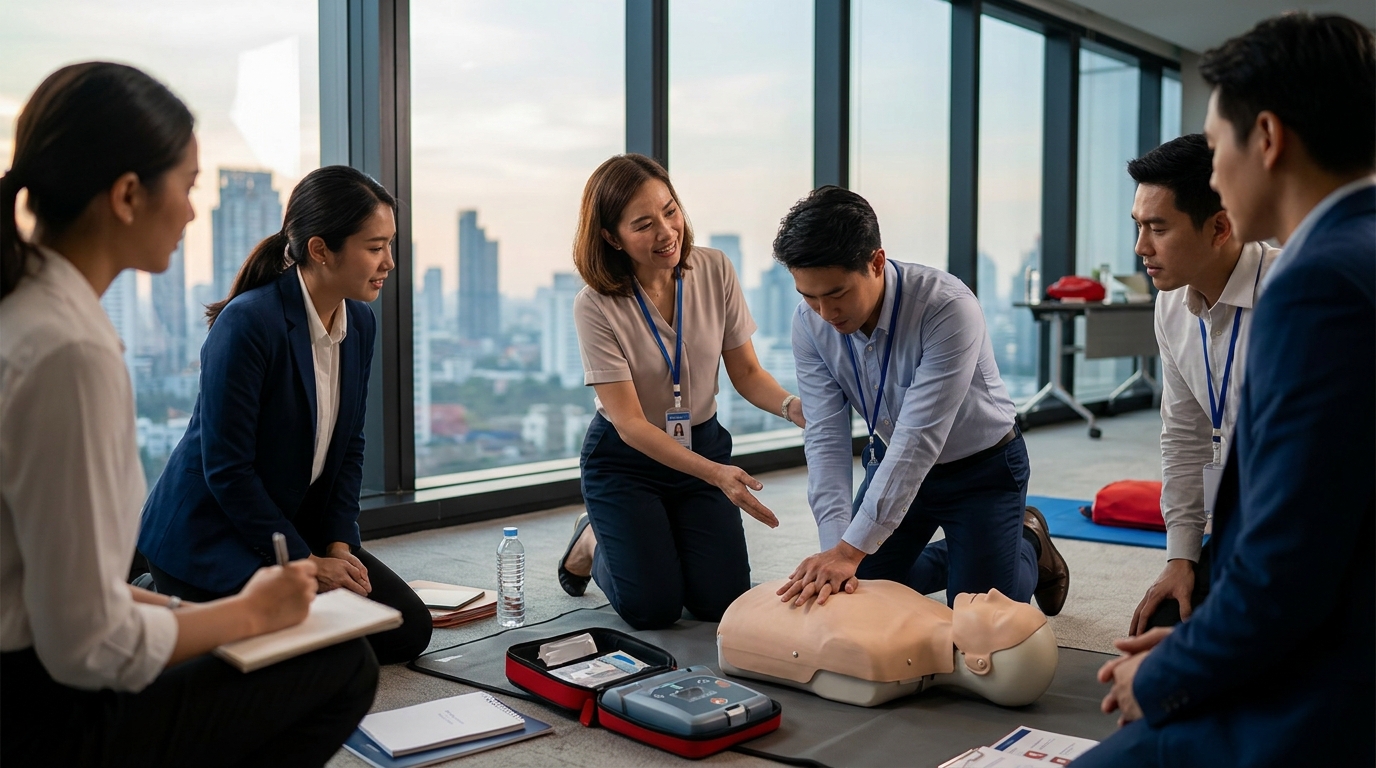
First Aid Training Bangkok offers internationally recognized CPR and first aid courses in Bangkok, Thailand. The best course for you depends on your specific role, whether you need individual certification, corporate compliance, or specialized skills like AED use. This guide covers AHA-aligned certification standards, modern CPR and AED techniques, language options, and transparent pricing to help you choose the right program.
AHA Certification Standards
Understanding the accreditation behind your training is critical for ensuring your skills are recognized globally. First Aid Training Bangkok operates as an Emergency First Response (EFR) training center. EFR is a division of the Professional Scuba Diving Instructors (PADI) organization, which aligns its curricula with the guidelines of the American Heart Association (AHA) and the International Liaison Committee on Resuscitation (ILCOR).
AHA certification is a standard benchmark in emergency medical training. While First Aid Training Bangkok is not a direct AHA training center, its EFR courses are designed to meet or exceed AHA guidelines for Basic Life Support (BLS). This alignment ensures that the skills you learn are consistent with international best practices. For professionals working in healthcare, hospitality, or education, this alignment provides a level of confidence that the training meets rigorous global standards.
Why Accreditation Matters
Accreditation ensures that the training materials, instructor qualifications, and assessment methods meet specific quality controls. EFR instructors are trained to a high standard and are required to maintain their own certifications. This creates a consistent learning environment where students receive the same high-quality instruction regardless of the specific class they attend. When choosing a provider in Bangkok, look for clear accreditation from recognized bodies like PADI or EFR to ensure your certificate holds weight internationally.
CPR and AED Techniques
Modern CPR training focuses on high-quality chest compressions and the effective use of Automated External Defibrillators (AEDs). CPR is a life-saving technique that maintains blood flow to the brain and heart during cardiac arrest. An AED is a portable device that analyzes heart rhythm and delivers a shock if needed. These two skills work together to maximize survival rates.
First Aid Training Bangkok emphasizes hands-on practice with manikins and AED trainers. Students learn the correct hand placement, compression depth, and rate. The 2025 guideline updates have refined infant CPR techniques, moving away from the two-finger method toward the two-thumb encircling technique for better perfusion. This update is integrated into the current training curriculum to ensure students are learning the most effective, evidence-based methods.
Key Skills Covered
- Adult CPR: Chest compressions at a rate of 100-120 per minute with a depth of at least 2 inches.
- Child and Infant CPR: Adjusted compression depths and techniques, including the updated two-thumb method for infants.
- AED Operation: How to attach pads, follow voice prompts, and clear the patient before a shock is delivered.
- Choking Response: Abdominal thrusts and back blows for adults, children, and infants.
Language Options
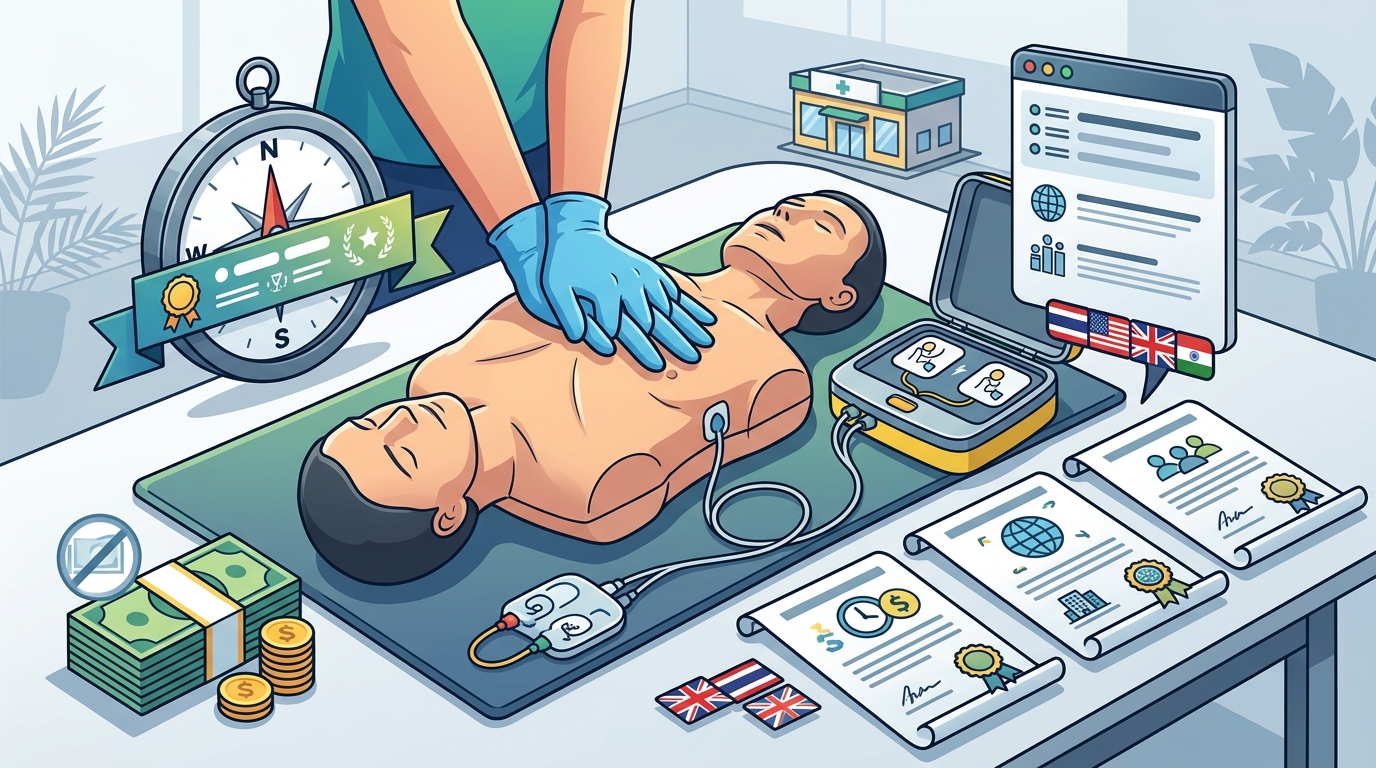
Choosing the right language option ensures that you fully understand the critical steps during an emergency. Misunderstanding instructions during a high-stress situation can lead to errors. By training in your native language, you build muscle memory and confidence that translates directly to real-world scenarios. The instructors are experienced in teaching international audiences and adapt their teaching style to accommodate different learning preferences.
Pricing and Course Options
Transparent pricing helps you budget for training without surprises. First Aid Training Bangkok offers a range of courses with clear price points. Individual courses are generally more affordable than corporate packages, which include on-site delivery and customized content. Below is a reference table for current individual course pricing.
| Course Name | Original Price (THB) | Current Price (THB) | Key Features |
|---|---|---|---|
| CPR and AED Training Course | 4,500 | 2,900 | Basic CPR, AED use, certificate |
| Primary & Secondary Care: CPR & First Aid | 6,690 | 4,900 | Comprehensive first aid, CPR, certificate |
| Primary & Secondary Care with AED | 7,200 | 4,900 | Comprehensive first aid, CPR, AED, certificate |
| Children First Aid Training | 6,690 | 4,900 | Pediatric focus, CPR, first aid |
| First Aid Instructor Training | 22,800 | 19,800 | Train the trainer, instructor certification |
Corporate training starts from 8,900 THB and can be customized for group sizes and specific workplace hazards. Recertification courses are available at a lower price point, starting from 2,999 THB, allowing you to keep your skills current without the full cost of a new course. Always confirm the latest prices and availability directly with the provider before booking.
Key Takeaways
- First Aid Training Bangkok offers EFR-certified courses aligned with AHA guidelines.
- Current training includes updated 2025 infant CPR techniques, such as the two-thumb encircling method.
- Courses are available in both English and Thai to suit international and local audiences.
- Individual CPR and AED courses start at 2,900 THB, offering a cost-effective entry point.
- Comprehensive Primary and Secondary Care courses are available for 4,900 THB.
- Corporate training is available on-site with customized content and pricing starting from 8,900 THB.
- Recertification is affordable, starting from 2,999 THB, to maintain skill proficiency.
- Hands-on practice with manikins and AED trainers is a core component of all courses.
Frequently Asked Questions
Is the CPR certificate from First Aid Training Bangkok internationally recognized?
The courses are EFR-certified and aligned with AHA guidelines. This alignment ensures that the skills and certificate are recognized by many international organizations and employers. However, specific acceptance may vary by employer or regulatory body, so it is best to confirm with your specific requirements.
How long does the CPR and AED course take?
The CPR and AED Training Course is typically a one-day program. It covers the essential skills for responding to cardiac arrest and using an AED. The exact duration may vary slightly depending on the number of participants and the depth of practical exercises.
Do I need to bring anything to the class?
The provider supplies all necessary training materials, including manikins and AED trainers. It is recommended to wear comfortable clothing that allows for floor-based skills practice. No prior experience is required for the basic courses.
Can I take the course in Thai?
Yes, First Aid Training Bangkok offers courses in both English and Thai. You can specify your preferred language when booking. For corporate groups with mixed languages, bilingual instruction can often be arranged.
What is the difference between the CPR and AED course and the Primary and Secondary Care course?
The CPR and AED course focuses specifically on cardiac arrest and defibrillation. The Primary and Secondary Care course is more comprehensive, covering a wider range of first aid skills including bleeding control, shock, and other common injuries, in addition to CPR and AED use.
How often should I recertify my CPR skills?
It is generally recommended to recertify every two years to maintain proficiency. First Aid Training Bangkok offers recertification courses at a reduced price to help you stay current with the latest guidelines and techniques.
Do you offer on-site training for companies?
Yes, First Aid Training Bangkok provides on-site corporate training. This allows your team to learn in a familiar environment, minimizing disruption to your work schedule. Pricing for corporate training starts from 8,900 THB and can be customized based on group size and specific needs.
Conclusion
Choosing the right CPR and first aid training in Bangkok requires considering accreditation, technique currency, language, and cost. First Aid Training Bangkok provides a robust option with EFR-certified courses aligned with AHA guidelines, updated 2025 techniques, and flexible language options. Whether you are an individual seeking personal preparedness or a corporate entity looking to enhance workplace safety, their structured programs offer a clear path to gaining essential life-saving skills. To plan your visit or book a course, for more information.