

Certification Standards for English and Thai CPR Courses in Bangkok
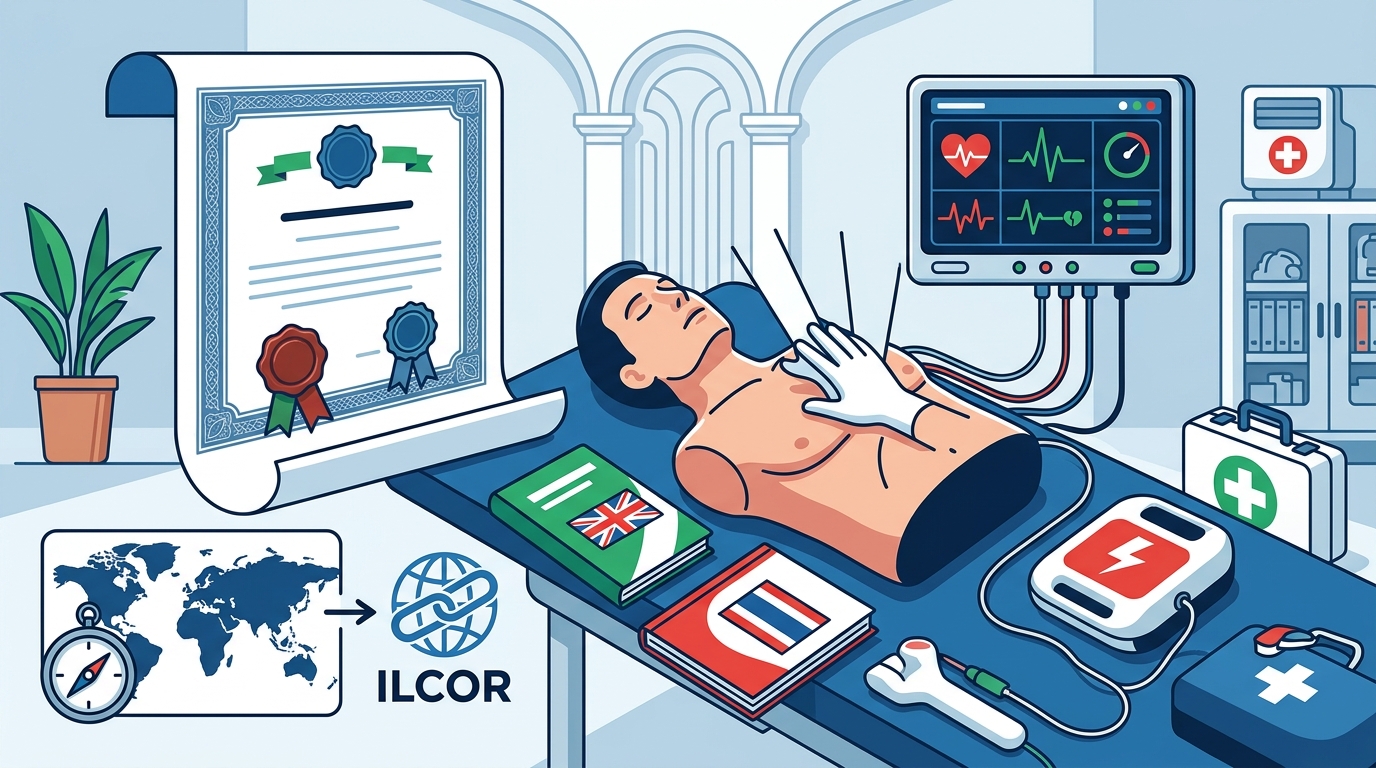
When selecting a CPR course in Bangkok, the primary certification standard to expect is alignment with the International Liaison Committee on Resuscitation (ILCOR) guidelines. ILCOR is the global body that establishes the scientific consensus for resuscitation protocols. In Thailand, reputable providers like First Aid Training Bangkok deliver training that meets these international benchmarks, ensuring that skills learned in English or Thai are recognized globally. This alignment guarantees that the techniques you practice are based on current medical evidence rather than outdated local practices. according to CPR Renewal Recertification
The Role of ILCOR in Global Resuscitation Standards
Understanding the source of CPR guidelines is the first step in evaluating a course. The International Liaison Committee on Resuscitation (ILCOR) is the organization responsible for developing the consensus on science for resuscitation. It brings together major resuscitation councils from around the world to review the latest research. When a training provider states that their curriculum follows ILCOR protocols, they are indicating that their teaching methods are synchronized with the global standard of care.
For individuals living in Bangkok, this international alignment is critical. It means that a certificate earned in Thailand is not isolated to the local region. Instead, it reflects the same core competencies taught in North America, Europe, and Australia. This standardization ensures that a responder trained in Bangkok can effectively assist a colleague or family member in another country. The consistency of these guidelines reduces confusion and ensures that critical actions, such as compression depth and rate, remain uniform across borders.
Emergency First Response and International Recognition
Many high-quality training centers in Bangkok utilize the Emergency First Response (EFR) curriculum. EFR is a widely recognized program that focuses on practical, hands-on skills for lay rescuers. The curriculum is designed to be performance-based, meaning that students must demonstrate proficiency in skills like chest compressions and AED use to pass. This approach ensures that the certification is not just a piece of paper, but a validation of practical ability.
First Aid Training Bangkok is a sanctioned center for EFR, which allows them to issue internationally recognized certificates. These certificates are valid for two years and are accepted in over 175 countries. For expatriates and travelers, this portability is a significant advantage. It provides a level of confidence that the training meets a rigorous, standardized framework. The focus on real-world scenarios, such as treating a choking victim or managing a cardiac arrest, ensures that the skills are applicable in diverse environments, from office buildings to remote locations.
Language Accessibility and Instructional Quality
Language is a critical factor in the effectiveness of emergency training. In Bangkok, courses are offered in both English and Thai to accommodate the diverse population. However, the standard of instruction should remain consistent regardless of the language used. A high-quality course ensures that the terminology, procedures, and safety protocols are accurately translated and clearly explained. This prevents misunderstandings that could lead to errors during an actual emergency.
First Aid Training Bangkok offers bilingual instruction, allowing students to learn in the language they are most comfortable with. This accessibility is important because stress during an emergency can impair cognitive function. Learning in your native language helps you retain the steps of the Chain of Survival more effectively. The instructors are trained to deliver the same high standard of care in both languages, ensuring that no student is disadvantaged by a language barrier. This commitment to inclusive education is a hallmark of a professional training provider.
Verification of Instructor Credentials and Affiliations
When evaluating a CPR course, it is essential to verify the credentials of the instructors. Instructors should hold current certifications from recognized bodies and have experience in emergency medical services or related fields. First Aid Training Bangkok employs a team of elite instructors, including those with military and law enforcement backgrounds. This diverse experience ensures that students are exposed to realistic and challenging training scenarios.
Additionally, the provider should have a Medical Advisory Board to ensure that the curriculum stays current with the latest medical guidelines. This board reviews the training materials and provides feedback to the instructors. By checking for these affiliations and credentials, you can be confident that the course is being delivered by qualified professionals. This level of oversight is a key indicator of a reputable training organization that prioritizes quality and safety.
Key Takeaways
- ILCOR is the global standard for resuscitation guidelines, and reputable Bangkok courses align with these protocols.
- Emergency First Response (EFR) is a widely recognized curriculum that offers internationally valid certifications.
- Certificates from EFR are valid for two years and are accepted in over 175 countries.
- Bilingual instruction in English and Thai ensures that all students can learn effectively in their preferred language.
- Instructor credentials and Medical Advisory Board oversight are critical indicators of training quality.
- Performance-based assessments ensure that students demonstrate practical proficiency before receiving certification.
Frequently Asked Questions
Is a CPR certificate from Bangkok recognized internationally?
Yes, if the course follows ILCOR guidelines and is issued by a recognized provider like Emergency First Response, the certificate is generally accepted in over 175 countries. Always verify the specific accreditation of the provider.
What is the difference between CPR and First Aid training?
CPR focuses specifically on cardiopulmonary resuscitation and AED use for cardiac arrest. First Aid training covers a broader range of emergency care, including treating injuries, illnesses, and managing shock.
How long is a CPR certification valid?
Most international CPR certifications, including those from EFR, are valid for two years from the date of completion. Recertification is required to maintain current status.
Can I take a CPR course in Thai if I do not speak English?
Yes, many providers in Bangkok, including First Aid Training Bangkok, offer courses in both English and Thai. This ensures that the training is accessible to all residents and visitors.
Do I need prior experience to enroll in a CPR course?
No, most CPR and First Aid courses are designed for lay rescuers with no prior medical experience. The training is performance-based and focuses on practical skills.
Conclusion
Choosing the right CPR course in Bangkok requires looking beyond the language of instruction to the underlying certification standards. By selecting a provider that aligns with ILCOR guidelines and offers internationally recognized credentials, you ensure that your skills are both effective and portable. First Aid Training Bangkok provides these high-standard courses in both English and Thai, empowering you to save lives with confidence. To begin your training, to schedule a session.