
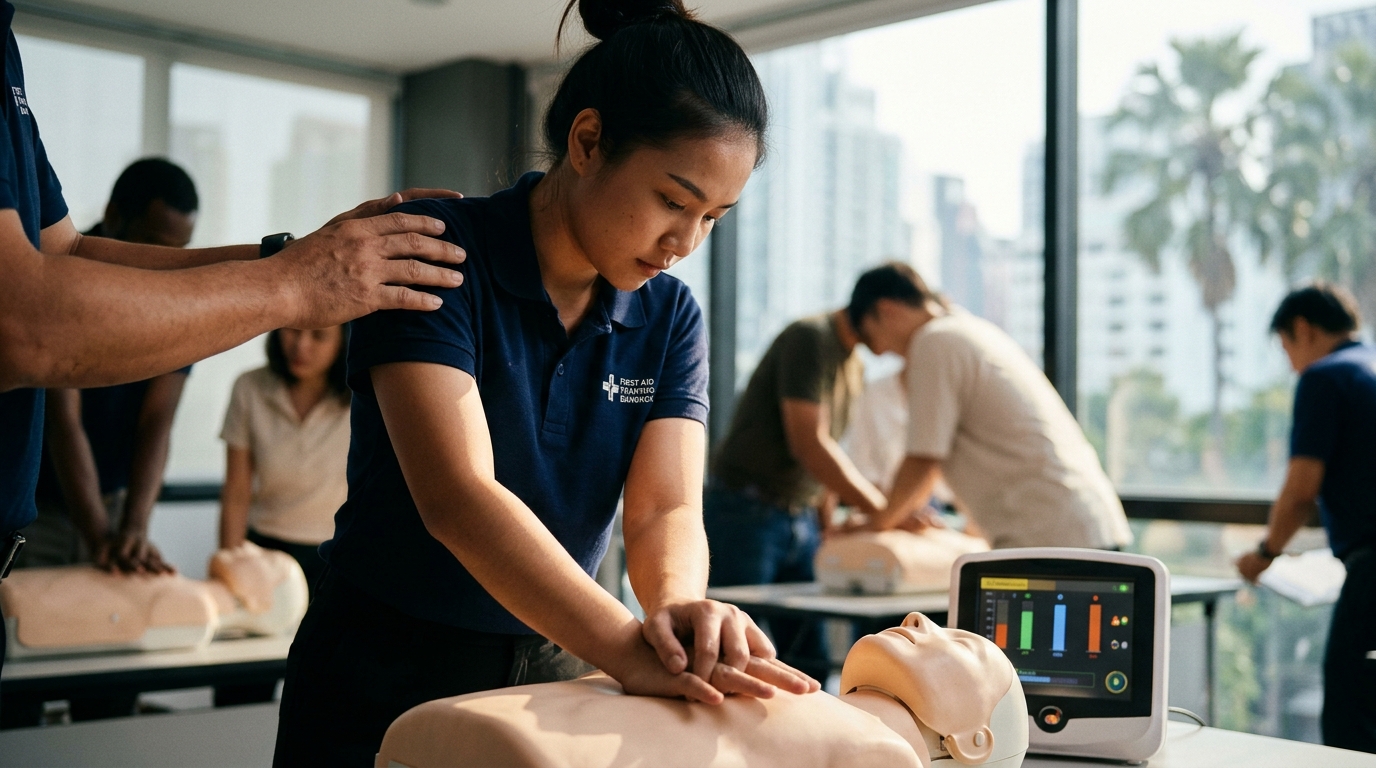
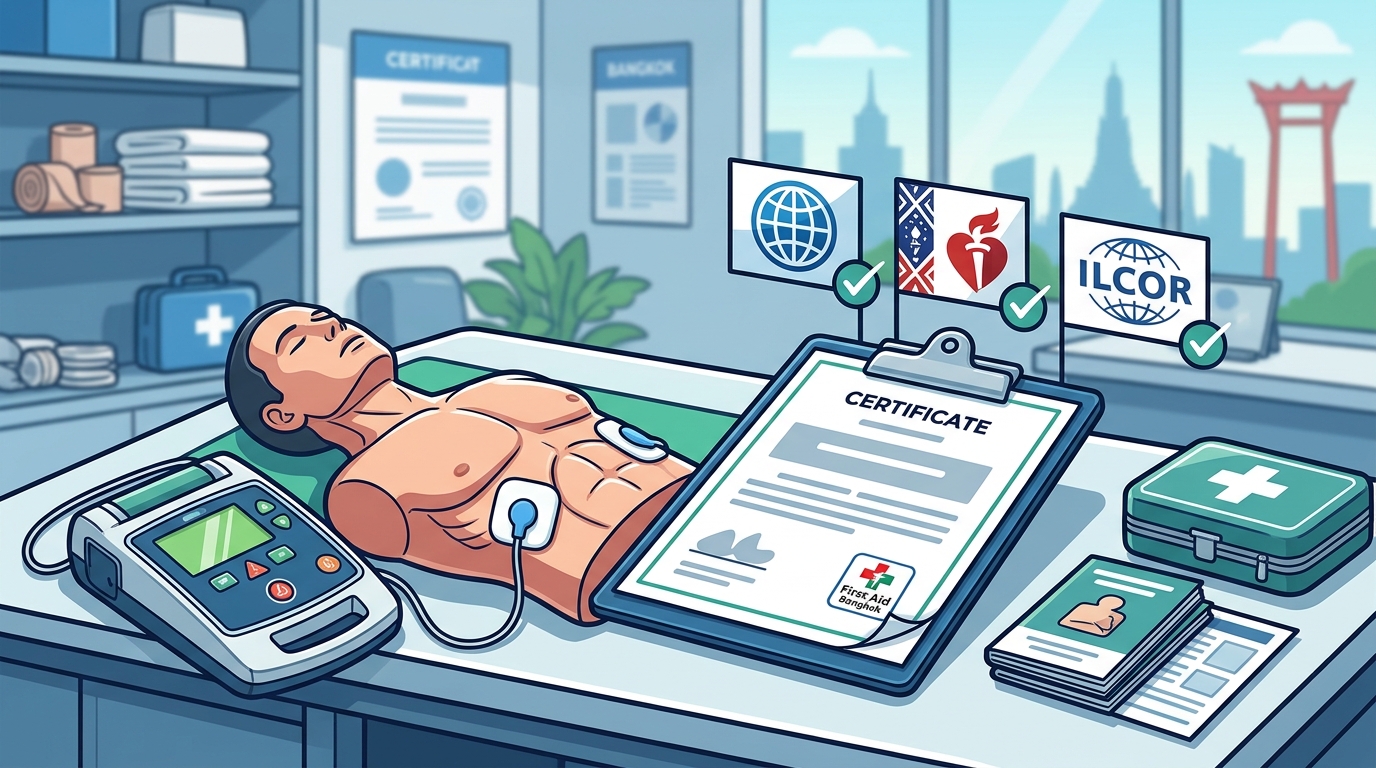
Valid one-day CPR courses in Bangkok must align with international resuscitation guidelines, specifically those from the International Liaison Committee on Resuscitation (ILCOR) and the American Heart Association (AHA). First Aid Training Bangkok ensures its programs meet these rigorous standards, providing internationally recognized certifications that are accepted by global employers and professional bodies. This alignment guarantees that your skills are current and compliant with global safety expectations.
Global Resuscitation Guidelines and Their Impact
International resuscitation guidelines are the foundation of modern CPR training. These guidelines are developed by the International Liaison Committee on Resuscitation (ILCOR), which coordinates with major organizations like the American Heart Association (AHA) and the European Resuscitation Council. For a one-day course to be considered valid in a global hub like Bangkok, it must reflect the latest evidence-based practices from these bodies. This ensures that the techniques taught are not just locally relevant but universally applicable.
The 2025 updates to these guidelines are particularly significant for infant care. The new standards emphasize the two-thumb encircling technique and the heel-of-one-hand technique over the older two-finger method. This change is driven by research showing that the newer methods provide better perfusion pressure and reduce rescuer fatigue. By integrating these updates, training providers in Bangkok ensure that participants are learning the most effective methods for saving lives in pediatric emergencies.
First Aid Training Bangkok continuously updates its curriculum to reflect these global shifts. This commitment to evidence-based training means that students receive instruction that is current and scientifically sound. The implication for learners is that their certification is not just a piece of paper but a validation of skills that meet the highest international standards.
Accreditation Bodies and Course Validation
Accreditation is the process by which a training provider is recognized by a governing body for meeting specific quality standards. In the context of CPR and first aid, this often involves affiliation with organizations like the Emergency First Response (EFR) program, which is part of the PADI system. EFR courses are designed to provide comprehensive emergency patient care skills and basic life support (BLS) training. For a course to be valid, it must be delivered by instructors who are certified by these recognized bodies.
First Aid Training Bangkok is an EFR Center, which means its instructors are qualified to deliver courses that meet the standards set by PADI and EFR. This affiliation is crucial for individuals who need their certification for professional purposes, such as scuba diving or international travel. The EFR certification is widely recognized and accepted by employers and regulatory bodies worldwide. This recognition adds a layer of credibility to the training, ensuring that the skills learned are respected in professional settings.
Other accreditation bodies, such as the American College of Surgeons Committee on Trauma and the National Association of Emergency Medical Technicians (NAEMT), also play a role in validating training standards. These organizations focus on specific aspects of emergency care, such as trauma and tactical combat casualty care. By aligning with these bodies, training providers can offer specialized courses that meet the needs of different industries and professions.
Workplace Compliance and Employer Requirements
Workplace compliance refers to the legal and regulatory requirements that employers must meet to ensure the safety of their employees. In many industries, having trained first aiders on staff is a legal requirement. For a one-day CPR course to be valid for workplace purposes, it must meet the specific standards set by local labor laws and industry regulations. In Thailand, this often involves aligning with the Occupational Safety and Health Administration (OSHA) guidelines or similar local bodies.
First Aid Training Bangkok offers corporate training programs that are designed to meet these compliance requirements. These programs are tailored to the specific needs of different industries, from hospitality to healthcare. By providing training that is compliant with local regulations, employers can ensure that they are meeting their legal obligations and creating a safer work environment. The implication for businesses is that investing in compliant training not only protects employees but also reduces liability and improves overall safety culture.
For individuals, understanding the compliance requirements of their specific industry is essential. For example, a lifeguard may need a different certification than an office worker. First Aid Training Bangkok provides guidance on which courses are most appropriate for different roles, ensuring that individuals are certified for the specific risks they face in their work or daily life.
Certification Validity and Recertification Cycles
Certification validity refers to the period during which a CPR or first aid certificate is considered current and acceptable. Most international certifications, including those from EFR and AHA, are valid for two years. After this period, participants must undergo recertification to maintain their credentials. This cycle ensures that skills remain sharp and that participants are up-to-date with the latest guidelines and techniques.
Understanding the validity period of your certification is crucial for planning your training schedule. First Aid Training Bangkok provides clear information on the validity of its courses and the requirements for recertification. This transparency helps participants manage their credentials effectively and ensures that they are always ready to respond to emergencies.
Key Takeaways
- Valid one-day CPR courses in Bangkok must align with international guidelines from ILCOR and AHA.
- Accreditation by recognized bodies like EFR and PADI adds credibility and global acceptance to your certification.
- Workplace compliance requires training that meets local labor laws and industry-specific regulations.
- Certifications are typically valid for two years, after which recertification is required to maintain credentials.
- First Aid Training Bangkok offers courses that are updated to reflect the latest 2025 guideline changes, including new infant CPR techniques.
- Choosing a provider with a strong accreditation portfolio ensures that your skills are recognized by employers and regulatory bodies worldwide.
Frequently Asked Questions
What is the difference between CPR and First Aid certification?
CPR (Cardiopulmonary Resuscitation) is a specific set of techniques used to restore circulation in a person who has stopped breathing. First Aid certification covers a broader range of emergency care skills, including CPR, AED use, and treatment of injuries and illnesses. Most one-day courses in Bangkok combine both to provide a comprehensive skill set.
Are one-day CPR courses in Bangkok internationally recognized?
Yes, if they are delivered by accredited providers like First Aid Training Bangkok and align with international guidelines from ILCOR and AHA. These certifications are widely accepted by employers and professional bodies worldwide.
How long is a CPR certification valid in Thailand?
Most CPR and first aid certifications in Thailand are valid for two years. After this period, you must complete a recertification course to maintain your credentials.
Do I need a CPR certification for my job in Bangkok?
It depends on your industry. Many roles in healthcare, hospitality, and education require first aid and CPR certification. Check with your employer or industry regulator to confirm specific requirements.
What are the 2025 updates to infant CPR guidelines?
The 2025 updates recommend the two-thumb encircling technique and the heel-of-one-hand technique for infant chest compressions. These methods are preferred over the older two-finger technique because they provide better perfusion pressure and reduce rescuer fatigue.
Can I take a one-day CPR course online?
While some theoretical components can be completed online, practical skills like chest compressions and AED use require hands-on training. First Aid Training Bangkok offers in-person courses that provide the necessary practical experience.
Conclusion
Meeting the right certification standards is essential for ensuring that your one-day CPR course in Bangkok is valid and recognized. By choosing a provider that aligns with international guidelines and holds proper accreditation, you can be confident that your skills are current and compliant. First Aid Training Bangkok is committed to delivering high-quality, evidence-based training that meets the needs of individuals and organizations alike. To plan your visit or enroll in a course, .