
How to Choose the Right CPR and First Aid Training Provider for Your Company in Bangkok
Workplace safety is no longer just a compliance checkbox. It is a critical component of corporate responsibility and operational continuity. According to recent occupational health data, companies that invest in certified emergency response training see a significant reduction in liability risks and an increase in employee confidence during medical crises. In Bangkok, where international business hubs and local enterprises coexist, the demand for high-quality CPR and First Aid training has surged. Selecting the right provider requires more than just finding the lowest price. It demands a partner who understands international standards, offers flexible delivery methods, and holds legitimate accreditation. This guide outlines the essential criteria for evaluating training providers in Thailand, ensuring your team receives life-saving skills that are both recognized and effective. (About Us First Aid)
Why Corporate CPR Certification Matters
Emergency situations do not adhere to a business schedule. Cardiac arrest can happen in a boardroom, a factory floor, or a hotel lobby. The difference between life and death often hinges on the actions taken in the first four minutes. CPR is the immediate intervention that keeps blood flowing to the brain and heart until advanced medical help arrives. (First Aid training and)
For companies in Bangkok, having a workforce trained in CPR and First Aid is not just about saving lives. It is about fulfilling the duty of care. Thailand has seen a steady increase in workplace safety regulations, and international companies operating in Southeast Asia are held to global safety benchmarks. Employees who are certified are not only better equipped to handle medical emergencies but also demonstrate a culture of preparedness that enhances the company's reputation. (Articles Learn Lifesaving Skills)
Furthermore, the psychological impact of training cannot be overstated. Employees who know how to respond to choking, severe bleeding, or cardiac events feel more secure in their work environment. This sense of security translates to higher morale and reduced anxiety during unexpected incidents. By prioritizing CPR training, your company invests in its most valuable asset: its people.
Verifying Accreditation and International Standards
Not all CPR certificates are created equal. When selecting a provider, the first step is to verify their accreditation. In Thailand, the gold standard for emergency response training is often linked to international organizations such as the American Heart Association (AHA) or the European Resuscitation Council (ERC). However, a particularly respected framework in the region is the Emergency First Response (EFR) system, which is widely recognized for its practical, scenario-based approach.
Look for providers that are officially recognized centers. For instance, being an EFR Center recognized by EFR/PADI Asia Pacific is a significant indicator of quality. This accreditation ensures that the training materials, instructor qualifications, and assessment methods meet rigorous international criteria. It also means that the certificates issued are valid globally, which is crucial for multinational corporations with staff moving between countries.
Additionally, ensure that the provider follows the latest international guidelines. CPR protocols are updated regularly based on new scientific evidence. A provider that uses outdated materials is failing its clients. Ask your potential provider which guidelines they follow. Do they adhere to the most recent updates from major health organizations? This attention to detail reflects their commitment to excellence and accuracy.
Training Delivery: On-Site vs. Classroom
Flexibility is a key factor in corporate training. Companies in Bangkok often have diverse schedules and locations. A top-tier provider should offer multiple delivery options to accommodate these needs. The three primary modes of training are on-site, classroom, and blended learning.
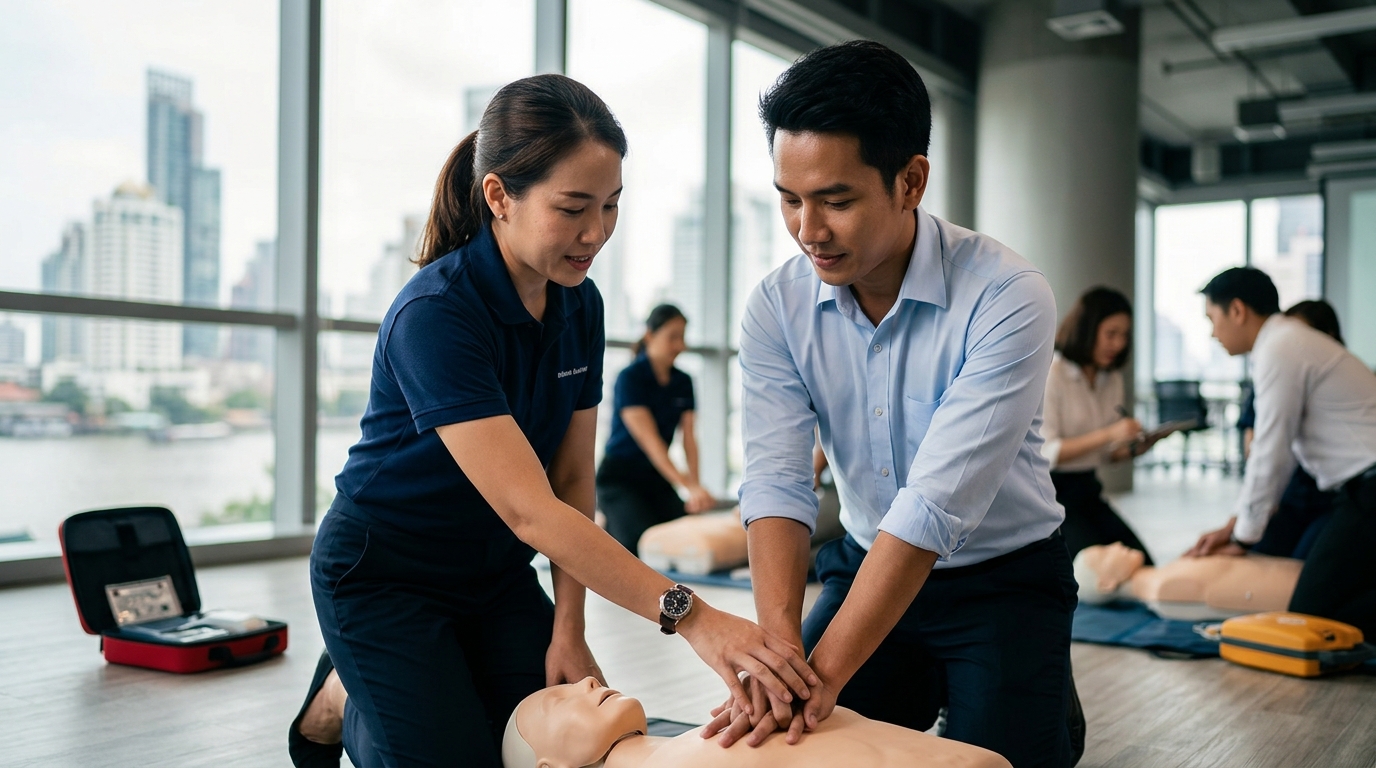
On-site training is often the most convenient option for large corporations. The provider comes to your office, hotel, or factory, setting up the necessary equipment and conducting the training in a familiar environment. This minimizes downtime and allows employees to learn together as a team. It is particularly effective for building a cohesive safety culture within the organization.
Classroom training at a dedicated facility offers a structured learning environment. This option is ideal for smaller groups or individuals who prefer a traditional classroom setting. It allows for focused instruction and immediate feedback from instructors.
Blended learning combines online eLearning theory with in-person hands-on practice. This approach is efficient for the theoretical component, allowing employees to learn at their own pace before attending a shorter, practical session. This method is increasingly popular for its convenience and effectiveness, especially for busy professionals.
When evaluating providers, ask about their flexibility. Can they accommodate last-minute schedule changes? Do they offer training in both English and Thai? Language barriers can significantly impact learning outcomes, so bilingual instruction is a valuable asset in Bangkok's diverse business landscape.
Evaluating Instructor Qualifications
The quality of training is directly dependent on the quality of the instructors. Instructors should not only be certified but also experienced in corporate environments. They need to be able to engage adult learners, manage group dynamics, and deliver complex medical concepts in an accessible way.
Look for instructors with advanced credentials. For example, an EFR Instructor Trainer (EFRIT) has the highest level of certification within the Emergency First Response system. This indicates that they are qualified to train other instructors, ensuring a deep understanding of the curriculum. Additionally, instructors with backgrounds in healthcare, such as nurses or paramedics, bring practical, real-world experience to the classroom.
Consider the instructor's ability to create a low-stress learning environment. CPR training can be intense, and a supportive atmosphere helps participants retain information better. Testimonials and reviews can provide insight into the instructor's teaching style and effectiveness. A provider with a strong reputation for positive feedback is likely to deliver a high-quality experience.
Customizing Courses for Your Industry
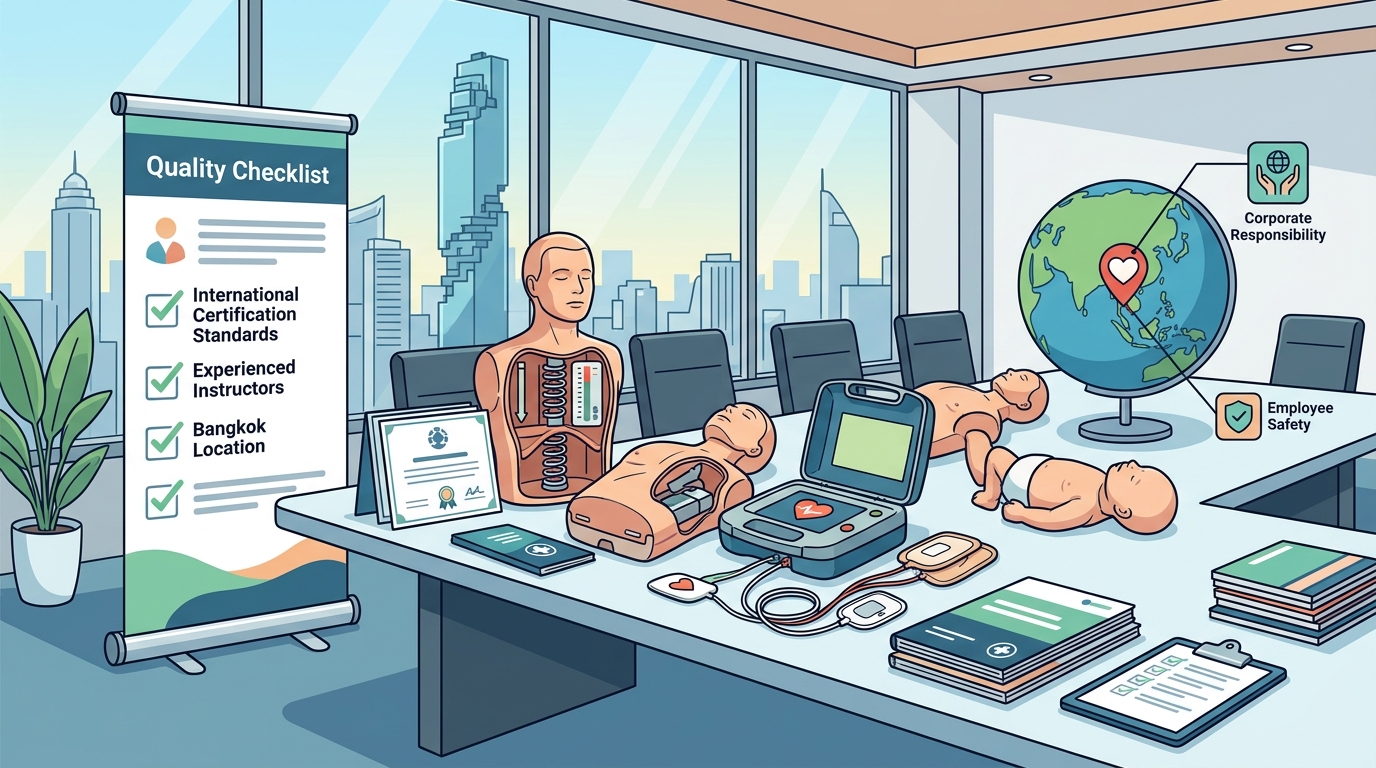
Different industries have different risks. A construction site has different hazards than a corporate office. A good training provider will offer customized courses tailored to your specific needs. This might include specialized modules for workplace injuries, natural disaster preparedness, or tactical casualty care.
For example, companies in tourist-heavy areas might benefit from courses that include water safety or drowning prevention. Industrial firms might need training on handling chemical spills or heavy machinery accidents. Ask your provider if they can tailor the content to address the specific risks your employees face. This level of customization ensures that the training is relevant and immediately applicable.
Additionally, consider the level of training required. Do you need basic CPR and First Aid for all staff, or do you need advanced training for a designated safety team? Providers like First Aid Training Bangkok offer a range of courses, from beginner to advanced, allowing you to select the appropriate level for each group.
Cost, Logistics, and Post-Training Support
While cost is a factor, it should not be the primary driver in your decision. The cheapest option may not provide the quality or accreditation you need. Instead, look for value. Consider what is included in the price: materials, certificates, equipment usage, and post-training support.
Transparent pricing is essential. Reputable providers will provide clear quotes without hidden fees. They should also offer flexible payment options and discounts for bulk bookings or repeat clients. For example, corporate packages often start at competitive rates, making it easier to budget for annual training requirements.
Logistics are also important. Can the provider deliver the training at your preferred time? Do they have the necessary equipment, such as CPR manikins and AED trainers, to conduct the session effectively? A provider with a well-maintained inventory ensures a smooth and professional training experience.
Comparing Training Options
| Course Type | Target Audience | Key Features | Approximate Cost (THB) |
|---|---|---|---|
| Corporate First Aid | Office Staff | Workplace safety, CPR, AED | From 8,900 |
| Individual CPR & First Aid | General Public | Primary & Secondary Care | 4,900 |
| CPR & AED Certification | Individuals | Certificate included | 2,900 |
| Lifeguard Training | Pool/Beach Staff | Water rescue, First Aid | 10,800 |
Key Takeaways
- Accreditation is Critical: Choose a provider recognized by international bodies like EFR/PADI Asia Pacific to ensure global validity of certificates.
- Verify Instructor Credentials: Look for EFR Instructor Trainers or medical professionals with extensive field experience.
- Flexibility Matters: Opt for providers offering on-site, classroom, or blended learning options to suit your company's schedule.
- Customization Adds Value: Ensure the provider can tailor courses to address specific industry risks and hazards.
- Language Support: Select providers offering bilingual instruction in English and Thai to accommodate diverse teams.
- Proven Track Record: Partner with companies that have trained thousands of clients and have a history of excellence since 2009.
- Medical Advisory Board: Prefer providers with a dedicated medical advisory board to ensure up-to-date protocols.
Frequently Asked Questions
How long does a standard CPR and First Aid course take?
A standard CPR and First Aid course typically lasts one day, approximately 6 to 8 hours. This includes both theoretical instruction and practical hands-on practice.
Are the certificates recognized internationally?
Yes, if you choose a provider accredited by international organizations like EFR or AHA, the certificates are recognized globally. This is essential for multinational companies.
Can the training be conducted at our office in Bangkok?
Absolutely. Many providers offer on-site training services throughout Bangkok and Thailand. This is often the most convenient option for corporate groups.
What is the difference between CPR and First Aid?
CPR (Cardiopulmonary Resuscitation) focuses on restoring heart and lung function during cardiac arrest. First Aid covers a broader range of emergencies, including injuries, choking, and shock. Most corporate courses combine both.
Do you offer training in Thai?
Yes, reputable providers in Bangkok offer bilingual instruction in both English and Thai to ensure all employees understand the material clearly.
How often should employees be recertified?
Most international guidelines recommend recertification every two years. However, some companies choose annual refreshers to maintain high safety standards.
What equipment is used during training?
Training uses high-quality CPR manikins, AED trainers, and first aid supplies. Providers ensure all equipment is sanitized and up to date.
Secure Your Team's Safety Today
Don't wait for an emergency to happen before you prepare your team. Investing in high-quality CPR and First Aid training is an investment in your company's future and your employees' well-being. Contact First Aid Training Bangkok today to discuss your company's needs and schedule a consultation. Our team of expert instructors is ready to empower your workforce with the skills to save lives.