

Corporate safety compliance is no longer just a regulatory checkbox. It is a critical component of workplace risk management and employee welfare. Recent industry data indicates that over 60% of multinational corporations now mandate verified emergency response training for all staff members. This shift reflects a growing recognition that immediate, competent intervention during medical emergencies can significantly reduce liability and save lives. However, navigating the landscape of online CPR certification providers requires careful scrutiny to ensure the credentials meet legal and operational standards.
Understanding Corporate CPR Compliance Standards
Before selecting a provider, organizations must define what "compliance" actually means in their jurisdiction. In Thailand, where First Aid Training Bangkok operates, regulations often align with international standards set by bodies like the American Heart Association (AHA) or the European Resuscitation Council (ERC). These guidelines emphasize that CPR skills degrade rapidly without practice.
Cardiopulmonary Resuscitation is a lifesaving procedure performed when the heart stops beating. It combines chest compressions with artificial ventilation to maintain blood flow and oxygenation. For corporate compliance, the definition of validity often hinges on whether the certification is recognized by local occupational health and safety authorities. Many companies require that the training provider holds specific accreditations to ensure the certificate holds weight during insurance audits or legal reviews.
Furthermore, the legal landscape surrounding Good Samaritan laws in Thailand has evolved to protect those who attempt to help in emergencies. Understanding these legal protections is crucial for employers encouraging staff to participate in training. Employees need to know that their certification provides not just skills, but also a framework of legal confidence. For more details on these regulations, you can explore the About Us section of leading training providers.
Online vs. Hybrid Models: What Works for Business?
The debate between purely online and hybrid models is central to corporate decision-making. Purely online courses offer unparalleled convenience. Employees can complete theoretical modules at their own pace. This flexibility reduces downtime for large teams. However, critics argue that CPR is a psychomotor skill. It requires muscle memory and tactile feedback that screens cannot provide.
Hybrid learning has emerged as the industry standard for high-stakes compliance. This model combines online theory with mandatory in-person skills assessment. The American Heart Association recommends this approach for healthcare and professional responders. For corporate environments, it ensures that every certified employee has physically demonstrated chest compressions and AED usage.
First Aid Training is the practical application of emergency care to a sick or injured person until full medical treatment is available. While online modules teach the "what" and "why," only hands-on practice teaches the "how." Providers like First Aid Training Bangkok specialize in this hybrid approach, offering online eLearning theory followed by in-person hands-on training. This ensures that the certification is both convenient and credible.
Key Criteria for Selecting a Provider
Not all online certificates are created equal. Corporate buyers must evaluate providers based on specific operational metrics. The first criterion is accreditation. Does the provider partner with recognized global bodies? Look for affiliations with organizations such as PADI or EFR. These partnerships often indicate a rigorous adherence to international protocols.
The second criterion is the quality of the skills assessment. A valid corporate certification must include a verified practical exam. Providers that outsource this step to unverified local centers pose a compliance risk. The third criterion is support and logistics. Can the provider handle bulk bookings for large corporations? Do they offer on-site training in major business hubs?
Finally, consider the cost structure. While online-only courses may appear cheaper, the hidden costs of non-compliance or invalid certificates are far higher. Corporate CPR and First Aid training typically starts from 8,900 THB for comprehensive packages. This investment covers certified instructors, high-quality manikins, and recognized documentation. For individual needs, primary care courses may start from 4,900 THB, offering a scalable solution for different departmental budgets.
Comparing Top Certification Providers
Choosing the right partner requires a clear comparison of services. Below is a breakdown of how leading providers typically structure their offerings for corporate clients.
| Provider Type | Compliance Level | Flexibility | Cost Efficiency | Best For |
|---|---|---|---|---|
| Purely Online Platforms | Low to Medium | High | High | Basic awareness training |
| Hybrid Providers (e.g., First Aid Training Bangkok) | High | Medium | Medium | Corporate compliance & safety |
| Local In-Person Only | High | Low | Low | Small teams with fixed schedules |
| Specialized Tactical Providers | Specialized | Low | Low | High-risk industries |
Providers like First Aid Training Bangkok stand out by offering specialized courses such as Tactical Combat Casualty Care (TCCC) and Stop the Bleed. These are increasingly relevant for corporations operating in high-risk regions or with executive protection needs. Their status as the only EFR Center internationally recognized by EFR/PADI Asia Pacific adds a layer of prestige and assurance that generic online platforms cannot match.
Implementation Strategy for HR Teams
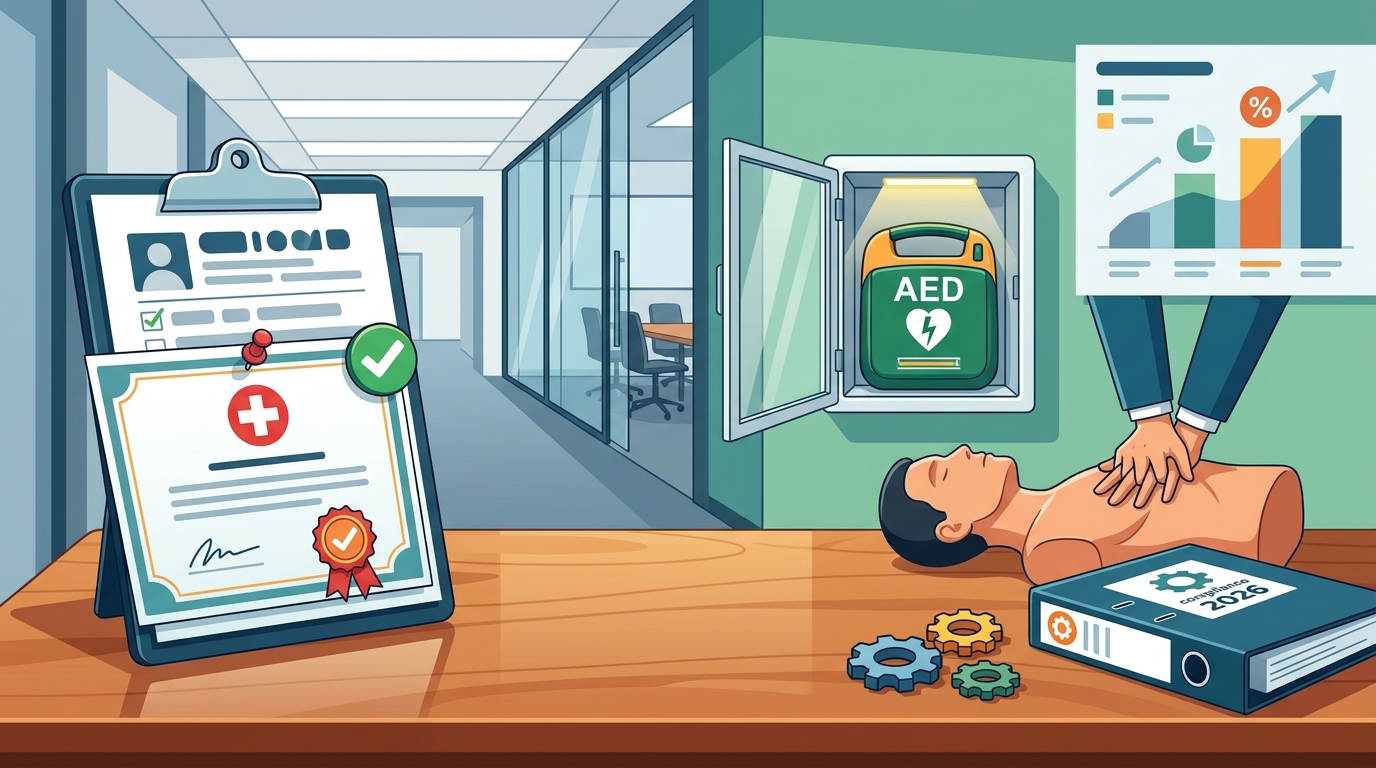
Implementing a corporate CPR program requires more than just buying certificates. It demands a strategic rollout. Start by auditing your current compliance gaps. Identify which departments require advanced training versus basic awareness. Next, engage with providers who offer corporate packages. First Aid Training Bangkok offers tailored solutions for workplace safety, ensuring that training aligns with your specific operational environment.
Communication is key. Explain to employees that this training is an investment in their safety, not just a regulatory hurdle. Highlight the benefits of the hybrid model. Emphasize that the in-person component is brief but critical for skill retention. Finally, establish a renewal schedule. CPR certifications typically expire after two years. Regular refreshers keep skills sharp and ensure continuous compliance.
For those interested in deeper knowledge, exploring the Blog section of reputable providers can offer insights into best practices and emerging trends in emergency care. This resource helps HR teams stay ahead of regulatory changes and industry standards.
Key Takeaways
- Hybrid learning is the gold standard for corporate CPR compliance, balancing convenience with verified skills.
- Always verify provider accreditation, such as EFR/PADI recognition, to ensure certificate validity.
- Corporate training costs typically start around 8,900 THB, offering high value for bulk bookings.
- First Aid Training Bangkok has been a leading provider since 2009, serving over 20,000 clients.
- Legal protections for Good Samaritans in Thailand encourage employee participation in emergency response.
- Specialized courses like TCCC are available for high-risk corporate environments.
- Regular renewal every two years is essential for maintaining a compliant and safe workplace.
Frequently Asked Questions
Is online-only CPR certification valid for corporate compliance?
Purely online certification is often insufficient for strict corporate compliance because it lacks verified hands-on skills assessment. Most reputable organizations require a hybrid model where theory is completed online, but practical skills are evaluated in person.
How much does corporate CPR training cost in Thailand?
Corporate CPR and First Aid training packages typically start from 8,900 THB. This price usually includes certified instruction, materials, and recognized documentation. Individual courses may be priced lower, starting from 2,900 THB for basic CPR and AED training.
What is the difference between EFR and standard First Aid?
Emergency First Response (EFR) is a specialized curriculum focused on life-threatening emergencies, including CPR and AED use, often with a focus on infection control. Standard First Aid covers a broader range of minor injuries and illnesses. EFR is often preferred for corporate safety due to its rigorous life-saving focus.
Does First Aid Training Bangkok offer on-site training?
Yes, they provide on-site CPR certifications and First Aid courses at your location in and around Bangkok, as well as throughout Thailand. This service is ideal for large corporations seeking to minimize employee downtime.
How often must CPR certification be renewed?
CPR certifications are generally valid for two years. After this period, employees must undergo refresher training to maintain their credentials and ensure their skills remain current with the latest international guidelines.
Are the certificates internationally recognized?
Certificates from accredited providers like First Aid Training Bangkok are internationally recognized. They follow the latest international standards and are often accepted by global organizations and insurance providers.
What is the role of the Medical Advisory Board?
A Medical Advisory Board ensures that the training content reflects the most current medical evidence and protocols. Providers with their own board, such as First Aid Training Bangkok, guarantee that skills taught are medically accurate and up-to-date.
Secure Your Team's Certification
Don't leave your corporate safety to chance. Ensure your team is equipped with the skills and confidence to save lives. Contact First Aid Training Bangkok today to schedule your corporate compliance training. Visit our Courses page to explore tailored packages for your organization.