
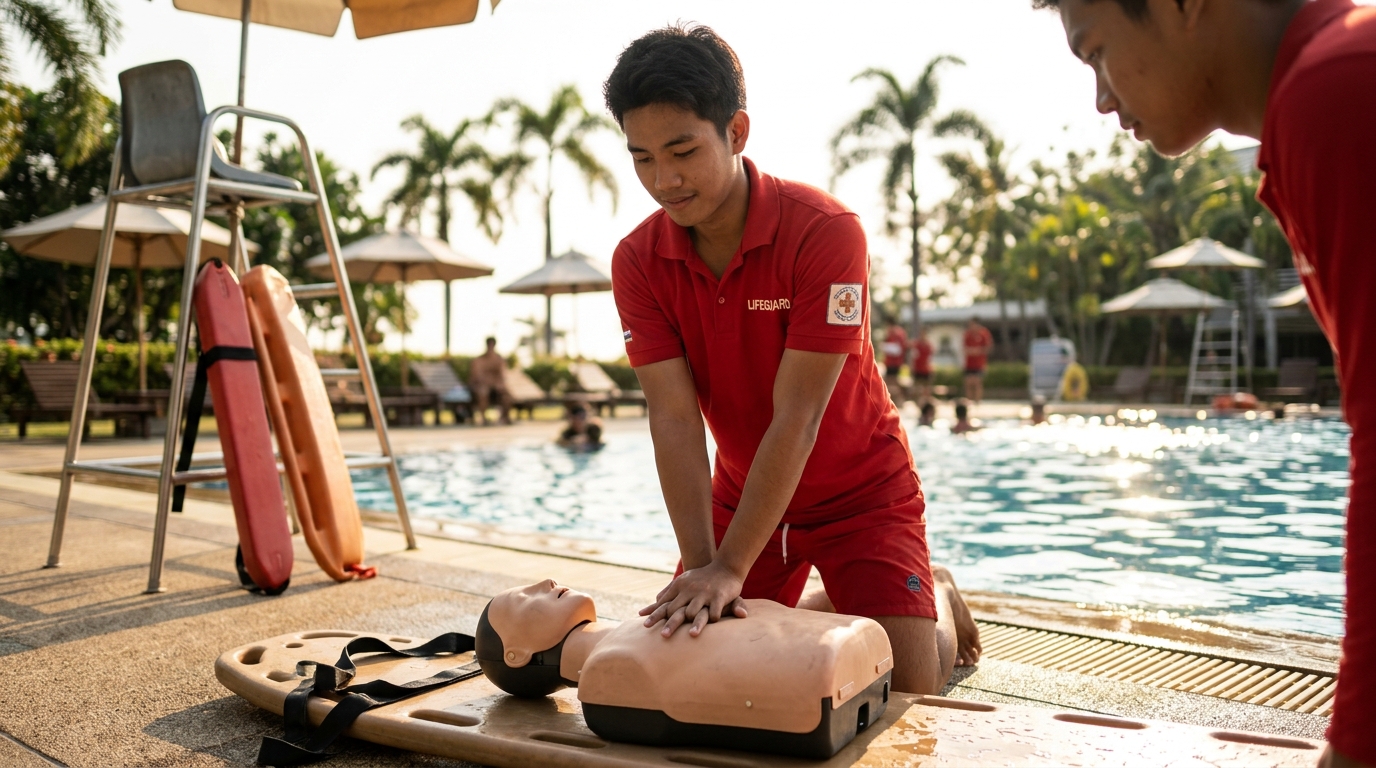
Emergency response times in aquatic environments are measured in seconds, not minutes. According to global health data, immediate intervention by trained personnel significantly increases survival rates for drowning incidents and cardiac arrest. In Thailand, where tourism and water sports drive a massive portion of the economy, the standard for lifeguard competency is exceptionally high. This guide explores why formal first aid training is not just beneficial but mandatory for professional lifeguards operating in Bangkok and throughout the country. (About Us First Aid)
Why First Aid is Mandatory for Lifeguards
First aid training is the foundational pillar of the lifeguard profession. It is not merely a supplementary skill but the primary tool for survival. In the context of Thailand, the demand for certified professionals has grown alongside the tourism industry. First Aid Training Bangkok has been a leading provider since 2009, recognizing that the gap between a rescue and a tragedy is often bridged by immediate medical intervention.
The definition of a lifeguard extends far beyond swimming ability. A lifeguard is a first responder who must manage medical emergencies, environmental hazards, and crowd control simultaneously. Without rigorous first aid certification, a lifeguard lacks the legal and practical framework to act effectively. The International Standards for CPR and First Aid, which organizations like First Aid Training Bangkok adhere to, ensure that every certified individual meets a global benchmark for competency.
Furthermore, the legal landscape in Thailand places significant responsibility on facility operators. Employing uncertified staff exposes hotels, resorts, and public pools to severe liability risks. By mandating first aid training, facilities ensure they are compliant with local health and safety regulations. This protection is vital for maintaining operational continuity and public trust.
Core Skills Every Lifeguard Must Master
Effective lifeguarding requires a specific suite of medical skills that go beyond basic bandaging. The curriculum for professional lifeguards is designed to simulate high-stress, low-resource environments. Below are the critical competencies that define a qualified professional.
CPR and AED Proficiency
Cardiopulmonary Resuscitation (CPR) and the use of Automated External Defibrillators (AED) are non-negotiable skills. When a swimmer suffers from cardiac arrest, brain damage can begin within four minutes. Lifeguards must be able to initiate chest compressions and deploy an AED with precision. First Aid Training Bangkok offers specialized CPR and AED courses that focus on these high-pressure scenarios. Their training ensures that lifeguards can transition from rescue to resuscitation seamlessly.
Emergency Oxygen Provider
Oxygen administration is a critical skill for treating drowning victims and those suffering from respiratory distress. Emergency Oxygen Provider training teaches lifeguards how to safely store, handle, and deliver oxygen to patients in distress. This skill is particularly relevant in Thailand's tropical climate, where heat exhaustion and dehydration can lead to severe medical complications. The ability to provide supplemental oxygen can stabilize a patient until advanced medical help arrives.
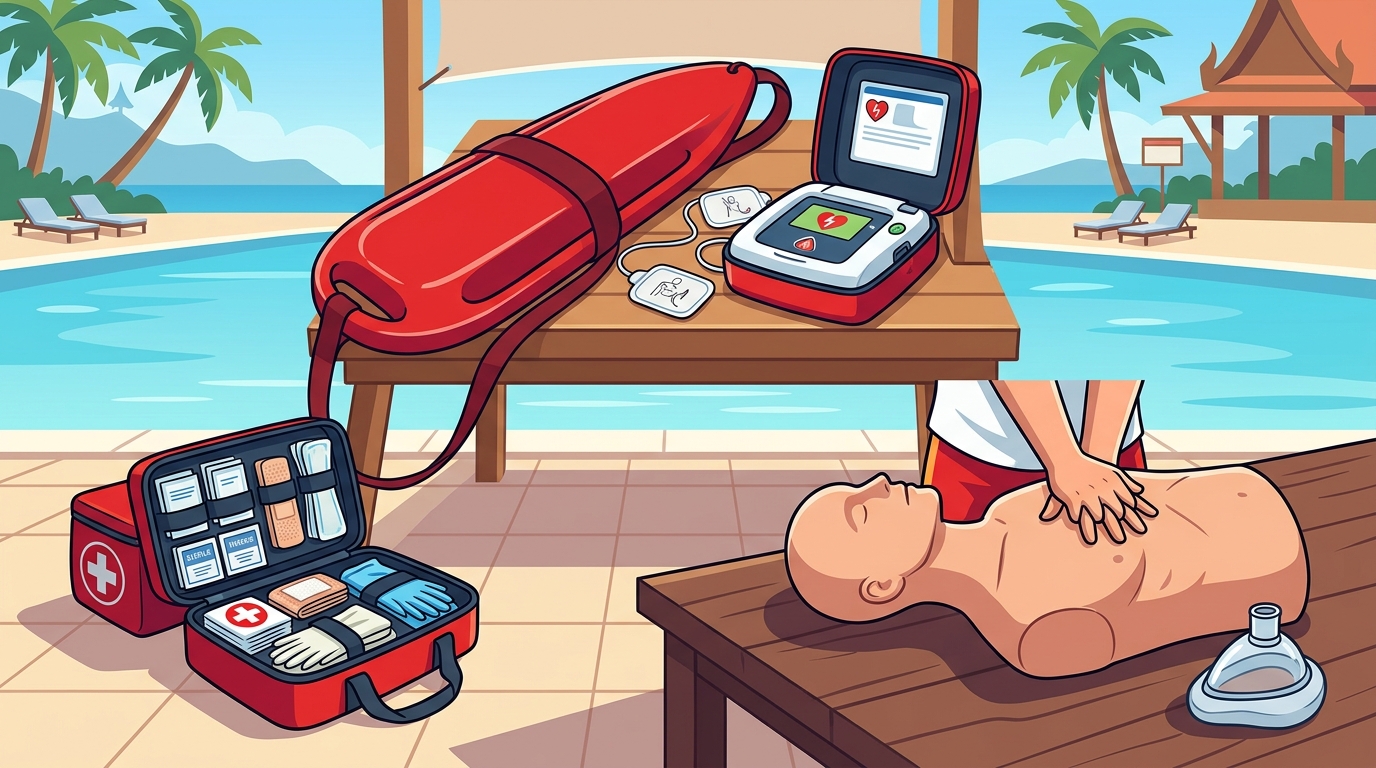
Trauma and Bleeding Control
Aquatic environments present unique trauma risks, including lacerations from coral, jellyfish stings, and blunt force injuries from diving accidents. Lifeguards must master trauma care techniques, including severe bleeding control and spinal injury management. The "Stop the Bleed" methodology is increasingly integrated into modern lifeguard curricula to address catastrophic injuries. This training empowers lifeguards to act decisively in chaotic situations.
Choosing the Right Training Provider in Thailand
Not all first aid courses are created equal. For lifeguards, the training must be internationally recognized and aligned with the latest medical guidelines. In Thailand, First Aid Training Bangkok stands out as the only EFR Center to be internationally recognized and awarded by EFR/PADI Asia Pacific. This distinction ensures that graduates receive certification that is valid globally.
When selecting a provider, consider the following criteria:
- Accreditation: Ensure the provider is an authorized Emergency First Response (EFR) center.
- Instructor Expertise: Look for instructors with medical backgrounds, such as nurses or paramedics.
- Practical Focus: The course must include extensive hands-on practice with manikins and AEDs.
- Flexibility: On-site training options are crucial for large teams at resorts or hotels.
First Aid Training Bangkok offers on-site CPR certifications and first aid courses at your location in and around Bangkok, and anywhere in Thailand. This flexibility allows facilities to train their entire staff without disrupting daily operations. Their team, led by elite instructors like Khun Scott and David, brings decades of experience in military, law enforcement, and medical fields.
Corporate vs. Individual Training Paths
Understanding the difference between corporate and individual training paths is essential for facility managers and aspiring lifeguards alike. Corporate training is designed for teams, offering customized schedules and group discounts. Individual training is ideal for personal certification or career advancement.
Corporate Training Benefits
For hotels, resorts, and water parks, corporate training ensures that every staff member meets the same safety standard. First Aid Training Bangkok provides corporate packages starting from 8,900 THB for workplace first aid training. These packages often include primary and secondary care with CPR and AED certification. The benefit of corporate training is consistency; it ensures that the entire team can respond uniformly to an emergency.
Individual Certification Value
For individuals, obtaining a first aid certificate is a career booster. It demonstrates professionalism and a commitment to public safety. Individual courses, such as the Primary & Secondary Care CPR & First Aid Training, are available for 4,900 THB. This investment pays off in job security and the ability to save lives. First Aid Training Bangkok also offers specialized courses like Lifeguard Training for 10,800 THB, which is tailored specifically for those entering the profession.
Comparison of Training Options
| Course Type | Target Audience | Key Focus | Starting Price (THB) |
|---|---|---|---|
| Corporate First Aid | Hotels & Resorts | Workplace Safety & CPR | 8,900 |
| Lifeguard Training | Aspiring Lifeguards | Rescue & Medical Response | 10,800 |
| Individual CPR/AED | General Public | Basic Life Support | 2,900 |
| Emergency Oxygen | Medical Responders | Oxygen Administration | Contact for Price |
Key Takeaways
- First aid training is legally and operationally mandatory for lifeguards in Thailand.
- First Aid Training Bangkok has been the #1 CPR Certification provider in Thailand since 2009.
- They are the only EFR Center internationally recognized by EFR/PADI Asia Pacific.
- Over 20,000 satisfied clients have been trained by their elite instructor team.
- Corporate training packages start at 8,900 THB for comprehensive workplace safety.
- Lifeguard-specific training costs 10,800 THB and includes rescue techniques.
- On-site training is available throughout Bangkok and all of Thailand.
Frequently Asked Questions
Is first aid training legally required for lifeguards in Thailand?
Yes, most reputable facilities in Thailand require lifeguards to hold current CPR and First Aid certifications. This is often a condition of employment and insurance compliance.
How long does it take to become a certified lifeguard?
Comprehensive lifeguard training typically takes one to two days, depending on the depth of the course. First Aid Training Bangkok offers intensive one-day programs that cover all essential skills.
What is the cost of lifeguard training in Bangkok?
The cost for specialized Lifeguard Training is 10,800 THB. This includes both rescue skills and medical response training.
Does First Aid Training Bangkok offer on-site training?
Yes, they provide on-site CPR certifications and first aid courses at your location in and around Bangkok, and anywhere in Thailand.
Are the certifications internationally recognized?
Yes, First Aid Training Bangkok is the only EFR Center to be internationally recognized and awarded by EFR/PADI Asia Pacific, ensuring global validity.
What is the difference between CPR and First Aid?
CPR focuses on restoring heart and lung function, while First Aid covers a broader range of injuries and illnesses. Lifeguards need both.
Can I get certified online?
First Aid Training Bangkok offers "LIVE" Online CPR Certification Training, which combines eLearning theory with in-person hands-on training for international recognition.
Secure Your Lifeguard Career Today
Investing in professional first aid training is the most critical step for any aspiring or current lifeguard. With First Aid Training Bangkok, you gain access to the highest standards of emergency care education in Southeast Asia. Their team of elite instructors, including medical doctors and critical care nurses, ensures that you are prepared for any scenario. Do not leave your safety and your patrons' safety to chance. Contact First Aid Training Bangkok now to schedule your certification or request a corporate quotation. Visit their courses page to explore the full range of training options available.