
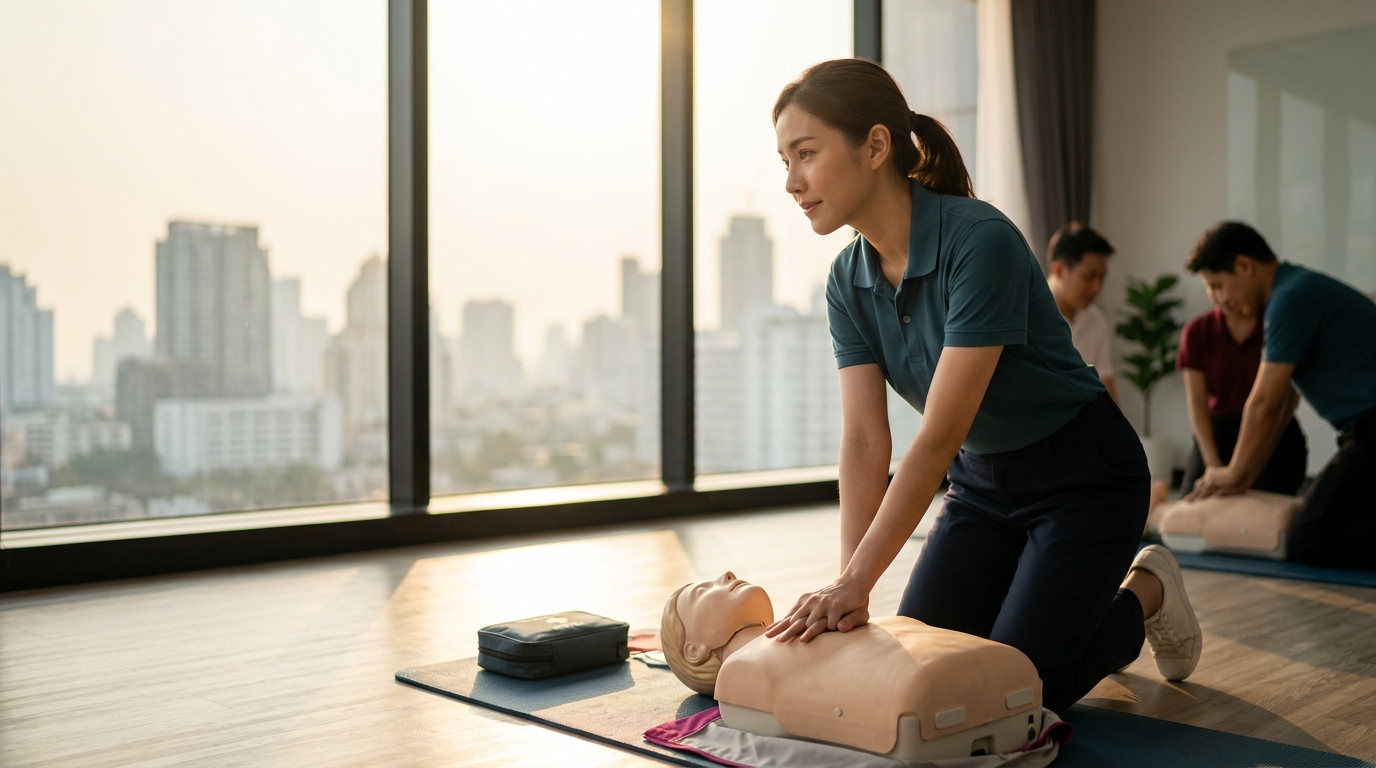
Emergency situations do not wait for convenience, yet finding the right training provider in Bangkok can feel overwhelming. According to recent industry data, over 20,000 individuals in Thailand have been trained by leading local providers since 2009, highlighting a massive shift toward proactive safety education. This guide helps you navigate the options to find the perfect fit for your personal or corporate needs. (First Aid training and)
Understanding Corporate vs. Individual Needs
Your selection process begins with identifying who will be taking the course. Corporate entities have different regulatory and operational requirements compared to individual learners. Companies often need to comply with workplace safety standards, requiring certified first aiders on-site at specific ratios. Individuals, on the other hand, might seek certification for diving, travel, or personal preparedness.
First Aid Training Bangkok has established itself as a primary provider for both sectors. For businesses, they offer tailored Corporate CPR and First Aid Training that can be delivered directly to your office. This eliminates downtime and ensures that your team learns in a familiar environment. For individuals, the focus shifts to accessibility and specific skill sets, such as Individual CPR and First Aid courses designed for quick certification.
Core Course Types and Certifications
Not all first aid courses are created equal. The "best" course depends entirely on the level of intervention you are expected to perform. Below are the primary categories available in the Bangkok market.
Basic CPR and AED Training
This is the foundational level for most laypersons. It covers chest compressions, rescue breaths, and the use of an Automated External Defibrillator (AED). This course is essential for anyone working in public-facing roles or managing public spaces. The CPR and AED Training Course with Certificate is a popular entry point for individuals seeking quick, recognized certification.
Advanced First Aid and Primary Care
For those who need to handle more complex medical emergencies, advanced courses cover airway management, shock, and severe bleeding. These courses often include both primary and secondary care components. The Primary & Secondary Care: CPR & First Aid Training provides a deeper dive into patient assessment and ongoing care until professional help arrives.
Specialized Safety Courses
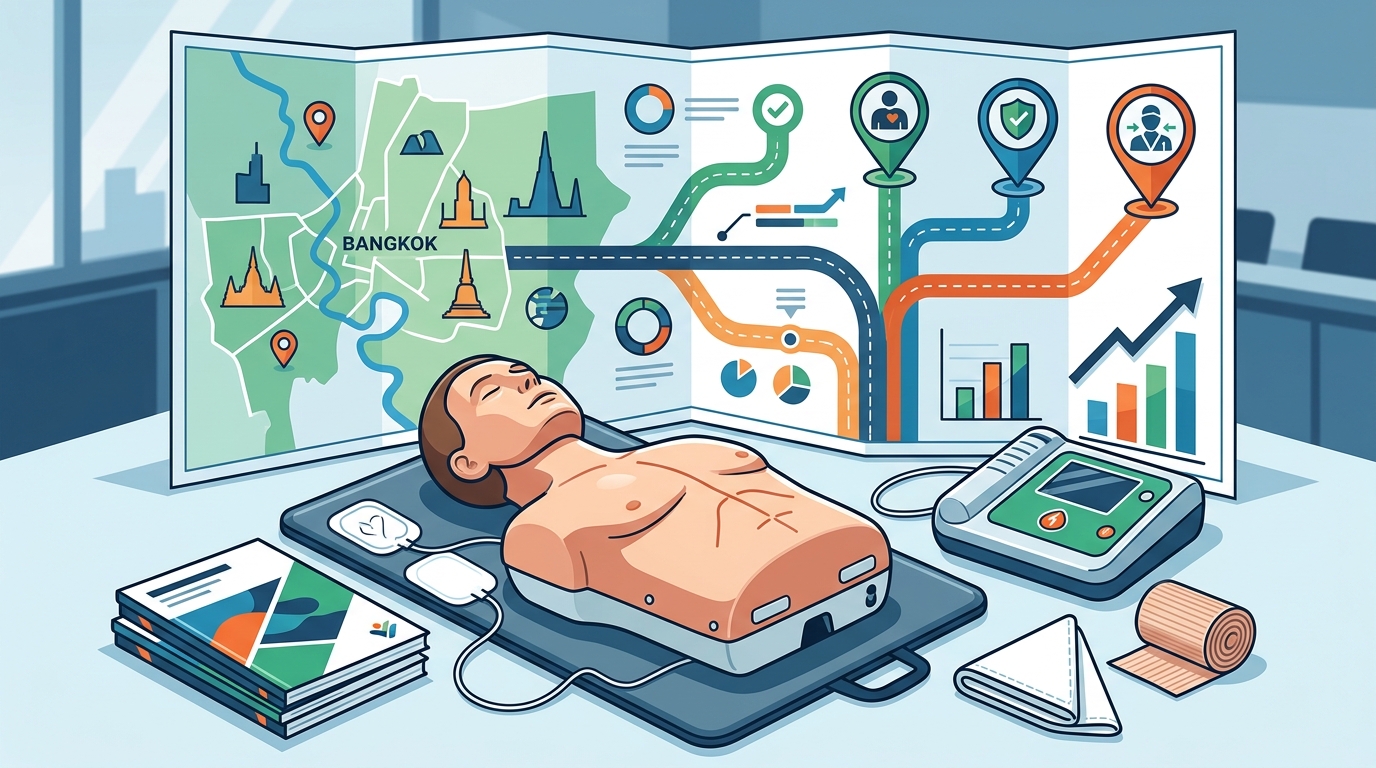
Specific industries require specialized training. For example, lifeguards need Lifeguard Training that includes water rescue techniques. Other specialized courses include Fire Safety Training and tactical care for high-risk environments. These courses are critical for compliance in specific operational sectors.
Pricing Models and Value Assessment
Cost is a significant factor in choosing a provider. However, the lowest price does not always equate to the best value. You must consider the quality of instruction, the realism of the training manikins, and the recognition of the certificate.
| Course Type | Target Audience | Approximate Price (THB) | Key Features |
|---|---|---|---|
| Corporate First Aid | Businesses & Offices | From 8,900฿ | On-site delivery, customized scenarios |
| Individual CPR & First Aid | General Public | 4,900฿ | Primary & Secondary care, hands-on |
| CPR & AED Only | Quick Certification | 2,900฿ | Focus on cardiac arrest response |
| Lifeguard Training | Pool & Beach Staff | 10,800฿ | Water rescue, spinal immobilization |
| Instructor Training | Aspiring Trainers | 19,800฿ | Train-the-trainer, certification |
When evaluating these prices, consider that high-quality equipment such as realistic CPR manikins and AED trainers significantly enhances the learning experience. Cheap courses often cut corners on these resources, leading to poor skill retention.
The Importance of Instructor Expertise
The quality of your training is directly tied to the instructor's background. In Bangkok, the best providers employ instructors with diverse, high-level medical and tactical backgrounds. First Aid Training Bangkok, for instance, utilizes a Medical Advisory Board to ensure all training aligns with the latest international guidelines.
Look for instructors who hold credentials such as EFR Instructor Trainer (EFRIT) or have backgrounds in critical care nursing, paramedicine, or military special operations. These instructors bring real-world crisis management experience to the classroom. They can teach not just the mechanics of CPR, but the psychological aspects of handling a medical emergency. This depth of knowledge is crucial for building confidence in responders.
Delivery Methods: On-Site vs. Online
Convenience plays a major role in your decision. Traditional classroom settings require travel and fixed schedules. However, modern training providers offer flexible options.
On-Site Training: Ideal for corporations. The provider comes to your location, saving time and allowing for customized scenarios based on your specific workplace risks. This is particularly effective for team building and ensuring high participation rates.
Online and Hybrid Options: For individuals or remote teams, LIVE Online CPR Certification Training offers a blend of eLearning theory and practical assessment. This method is growing in popularity due to its flexibility, though it requires a reliable internet connection and a quiet space for the practical components.
Frequently Asked Questions
How long does a standard first aid course take?
Most basic CPR and First Aid courses are designed to be completed in one day, typically lasting between 6 to 8 hours. Advanced courses or lifeguard training may require multiple days to ensure all skills are mastered.
Is the certification recognized internationally?
Yes, courses provided by accredited centers like First Aid Training Bangkok follow international standards set by organizations such as the American Heart Association and the European Resuscitation Council. The certificates are widely recognized globally, especially for diving and travel.
Can I get a course for my children?
Absolutely. Children First Aid Training is available and tailored to the specific needs of pediatric emergencies. This is ideal for parents, teachers, and childcare providers.
What is the difference between CPR and First Aid?
CPR (Cardiopulmonary Resuscitation) specifically addresses cardiac arrest and breathing cessation. First Aid is a broader term that includes CPR but also covers injuries, illnesses, and other medical emergencies like choking or bleeding.
Do you provide equipment for purchase?
Yes, the provider offers a range of First Aid Kits and AED accessories for those who wish to equip their homes or offices after training.
How do I book a corporate training session?
You can contact the training team directly via their Contact Us page or by phone. They will assess your needs and propose a tailored schedule and curriculum.
Are there courses for tactical or military personnel?
Yes, specialized courses such as Tactical Combat Casualty Care (TCCC) are available for those requiring high-level trauma care skills.
Take the Next Step in Safety
Choosing the right first aid course is an investment in the safety of yourself and those around you. Whether you need corporate compliance, personal certification, or specialized tactical training, the right provider makes all the difference. First Aid Training Bangkok offers a comprehensive suite of courses designed to empower you with life-saving skills.
Do not wait for an emergency to act. Visit the Training section to explore available courses, or contact the team today to schedule your session. Empower yourself to save lives with confidence and expertise.