
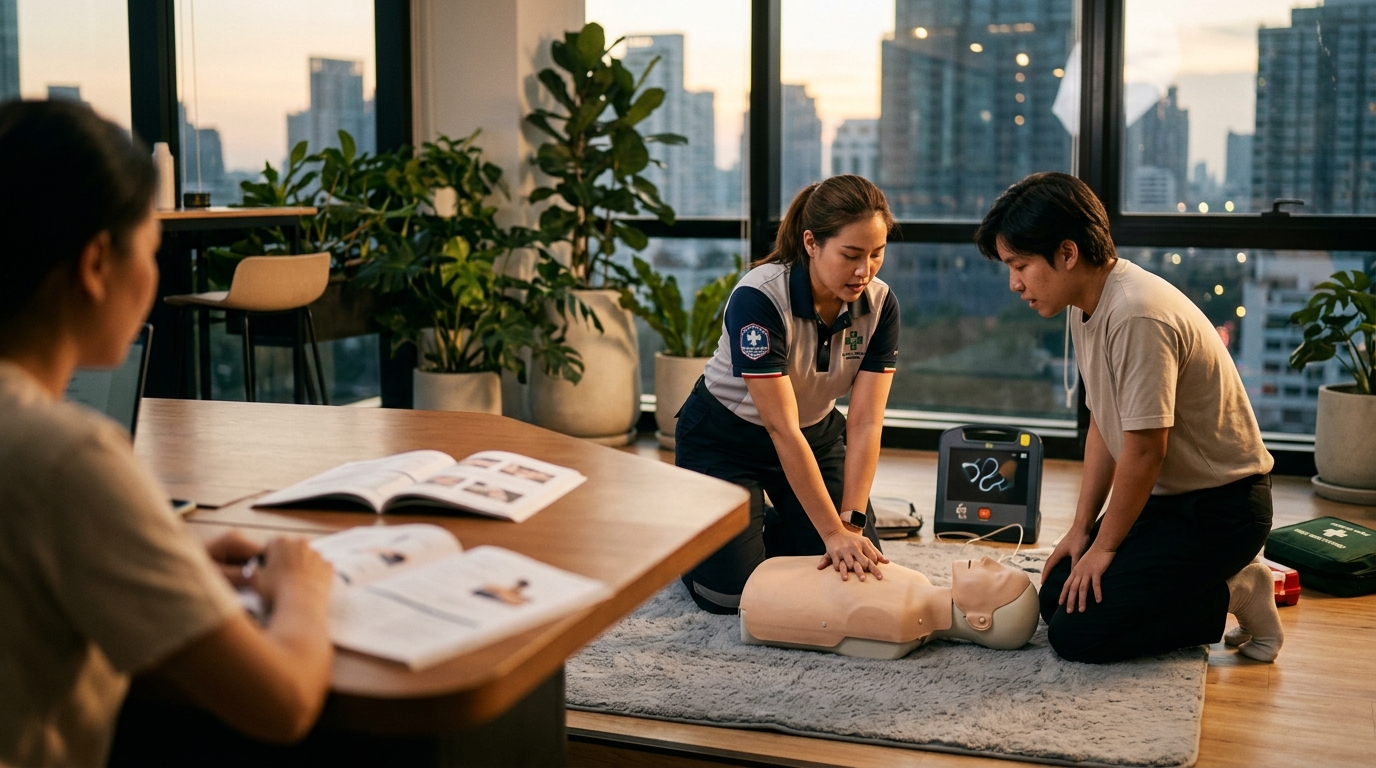
Emergency response capability is no longer a luxury for corporate compliance alone. According to recent public health data, the survival rate for out-of-hospital cardiac arrest in urban centers like Bangkok has improved significantly where bystander intervention is present. However, the cost of obtaining that critical certification varies widely depending on the provider, the depth of the curriculum, and the delivery method. Understanding these financial variables is essential for individuals and organizations planning their safety budgets.
Corporate Training Packages and Bulk Rates
For businesses operating in Thailand, ensuring staff safety is often a regulatory or insurance requirement. Corporate training offers a structured approach to emergency preparedness. First Aid Training Bangkok has established itself as a leading provider for these needs since 2009. Their corporate packages are designed to accommodate various workplace sizes and specific risk profiles.
The standard corporate offering typically starts at 8,900 THB. This price point generally covers essential modules such as workplace first aid, basic CPR, and the use of an Automated External Defibrillator (AED). For organizations requiring more advanced protocols, such as primary and secondary care combined with AED training, the investment remains competitive at the same entry level. This flat-rate structure allows HR managers and safety officers to budget predictably without hidden fees.
When training a large group, the cost-per-person drops significantly. The provider emphasizes on-site training, which eliminates travel costs for employees and minimizes downtime. This approach is particularly effective for multinational corporations and international schools in Bangkok. The curriculum follows the latest international guidelines, ensuring that the certification is recognized globally. This is crucial for companies with a mobile workforce or those seeking to maintain international safety standards.
Individual Certification Fees
Individuals seeking certification for personal development, diving prerequisites, or professional licensure have several tiered options. The pricing structure is transparent, allowing students to choose the level of intervention they wish to master.
At the most accessible level, a standalone CPR and AED training course with certification is available for 2,900 THB. This course is ideal for those who need a basic understanding of life-saving techniques without the complexity of full first aid protocols. It is a popular choice for tourists, expatriates, and professionals who require a quick credential.
For those seeking a more comprehensive skill set, the Primary and Secondary Care course is priced at 4,900 THB. This module covers a wider range of medical emergencies, including choking, bleeding control, and shock management, in addition to CPR. Another option at this price point includes the AED training component, ensuring that the participant is fully equipped to handle cardiac emergencies in public spaces.
Specialized courses for children’s first aid are also available at 4,900 THB. This is particularly relevant for parents, teachers, and childcare workers who need to address the unique physiological differences between pediatric and adult emergencies. The curriculum is tailored to the specific needs of infants and young children, providing peace of mind for caregivers.
Specialized Safety Course Pricing
Beyond standard CPR, there is a growing demand for specialized safety training. These courses address niche but critical scenarios, such as lifeguarding, tactical combat casualty care, and disaster response. The pricing for these advanced modules reflects the intensive nature of the instruction and the expertise of the instructors.
Lifeguard training is a comprehensive program costing 10,800 THB. This course prepares individuals for professional roles in aquatic environments, combining water rescue skills with on-land medical response. It is a rigorous program that requires significant time commitment and physical exertion.
For those interested in high-risk environments, courses such as Tactical Combat Casualty Care (TCCC) and Stop the Bleed are available. These are often priced on a contact basis due to the customized nature of the training. They are designed for military personnel, security professionals, and humanitarian workers. The cost reflects the specialized equipment and the high-level instructor qualifications required to deliver this content effectively.
First Aid Instructor Training is another advanced option, priced at 19,800 THB. This "train the trainer" program allows experienced professionals to become certified instructors themselves. It is a significant investment but offers a pathway to a career in safety education. The program includes mentorship from elite instructors like Khun Scott, who holds the prestigious EFR Instructor Trainer rating.
Analyzing Value: Price vs. Quality
When evaluating CPR training costs in Thailand, it is essential to look beyond the sticker price. The quality of instruction, the recognition of the certification, and the practicality of the training are critical factors. First Aid Training Bangkok distinguishes itself through its medical advisory board and international accreditation.
The provider is the only EFR Center in the region to be internationally recognized and awarded by EFR/PADI Asia Pacific. This accreditation ensures that the training meets global standards. The instructors are not just trainers; they are medical professionals, including doctors, flight nurses, and critical care nurses. This medical advisory board ensures that the skills taught are current and evidence-based.
Furthermore, the provider has trained over 20,000 clients since 2009. This longevity and volume of service indicate a high level of trust and reliability. The cost of training is an investment in potential lives saved. In the event of an emergency, the confidence gained from high-quality training can make the difference between life and death. The legal protections offered by Good Samaritan laws in Thailand also provide a framework for responders to act without fear of liability, adding value to the certification.
Service Comparison Matrix
The following table summarizes the core training offerings, pricing, and target audiences to assist in decision-making.
| Course Type | Price (THB) | Key Components | Target Audience |
|---|---|---|---|
| Corporate First Aid | 8,900+ | Workplace safety, CPR, AED | Businesses, Offices |
| Individual CPR & AED | 2,900 | Basic CPR, AED usage | General Public |
| Primary & Secondary Care | 4,900 | Comprehensive First Aid, CPR | Parents, Teachers |
| Lifeguard Training | 10,800 | Water rescue, Medical response | Aspiring Lifeguards |
| Instructor Training | 19,800 | Teaching methodology, Certification | Prospective Instructors |
Key Takeaways
- Corporate Entry Point: Corporate training packages start at 8,900 THB, offering a cost-effective solution for workplace safety compliance.
- Individual Accessibility: Basic CPR and AED certification is available for individuals at 2,900 THB, making it an affordable entry point for personal safety.
- Comprehensive Care: Primary and Secondary Care courses are priced at 4,900 THB, providing a broader scope of emergency medical skills.
- Specialized Training: Advanced courses like Lifeguard Training (10,800 THB) and Instructor Training (19,800 THB) cater to professional development needs.
- International Accreditation: The provider is the only EFR Center in the region with international recognition from EFR/PADI Asia Pacific.
- Medical Expertise: Training is overseen by a medical advisory board including doctors and critical care nurses, ensuring high-quality instruction.
- Proven Track Record: With over 20,000 clients trained since 2009, the provider has a long history of delivering reliable safety education.
Frequently Asked Questions
How much does basic CPR training cost in Thailand?
Basic CPR and AED training for individuals typically starts at 2,900 THB. This course provides a certificate and covers the essential skills needed to respond to cardiac emergencies.
Is corporate CPR training more expensive than individual training?
Corporate training packages start at 8,900 THB. While the upfront cost is higher, it is designed for groups and includes comprehensive workplace safety modules, making it cost-effective per person for larger teams.
What is included in the Primary and Secondary Care course?
This course, priced at 4,900 THB, covers a wide range of medical emergencies including bleeding control, shock, and fractures, in addition to CPR. It is ideal for those who want to be fully prepared for various first aid scenarios.
Are the CPR certificates internationally recognized?
Yes, the certificates are internationally recognized. The provider follows the latest international guidelines and is accredited by EFR/PADI Asia Pacific, ensuring global validity.
Can I get CPR training at my office location?
Yes, on-site training is available throughout Bangkok and Thailand. This service eliminates travel time for employees and allows for customized training schedules.
What is the cost of Lifeguard training?
Lifeguard training is priced at 10,800 THB. This comprehensive course prepares individuals for professional lifeguarding roles, combining water rescue skills with medical response.
How do I become a CPR instructor in Thailand?
Becoming an instructor requires completing the First Aid Instructor Training program, which costs 19,800 THB. This "train the trainer" course provides the necessary certification and mentorship to teach others.
Book Your Training Today
Investing in CPR training is an investment in the safety of your community, your workplace, and your family. With options ranging from affordable individual courses to comprehensive corporate packages, there is a solution for every need. First Aid Training Bangkok offers the expertise, accreditation, and convenience you need to become a confident first responder.
Do not wait for an emergency to realize the importance of preparedness. Contact First Aid Training Bangkok today to schedule your course or request a quotation. Visit their Contact Page to speak with their team directly. You can also explore their full range of training courses or learn more about their mission and history. For those interested in the equipment used in training, check out their equipment section.