
Emergency response capabilities are not innate; they are learned skills that require precise physical conditioning and mental preparation. According to the World Health Organization, cardiovascular diseases remain the leading cause of death globally, accounting for an estimated 17.9 million lives each year. This statistic underscores why a one-day CPR training course is not merely a certification checkbox but a critical intervention tool. However, many participants approach these intensive sessions with misconceptions that undermine their learning. This guide outlines the most frequent errors made during one-day CPR and First Aid training and provides actionable strategies to ensure you leave the classroom fully prepared to save a life.
Underestimating the Physical Demand
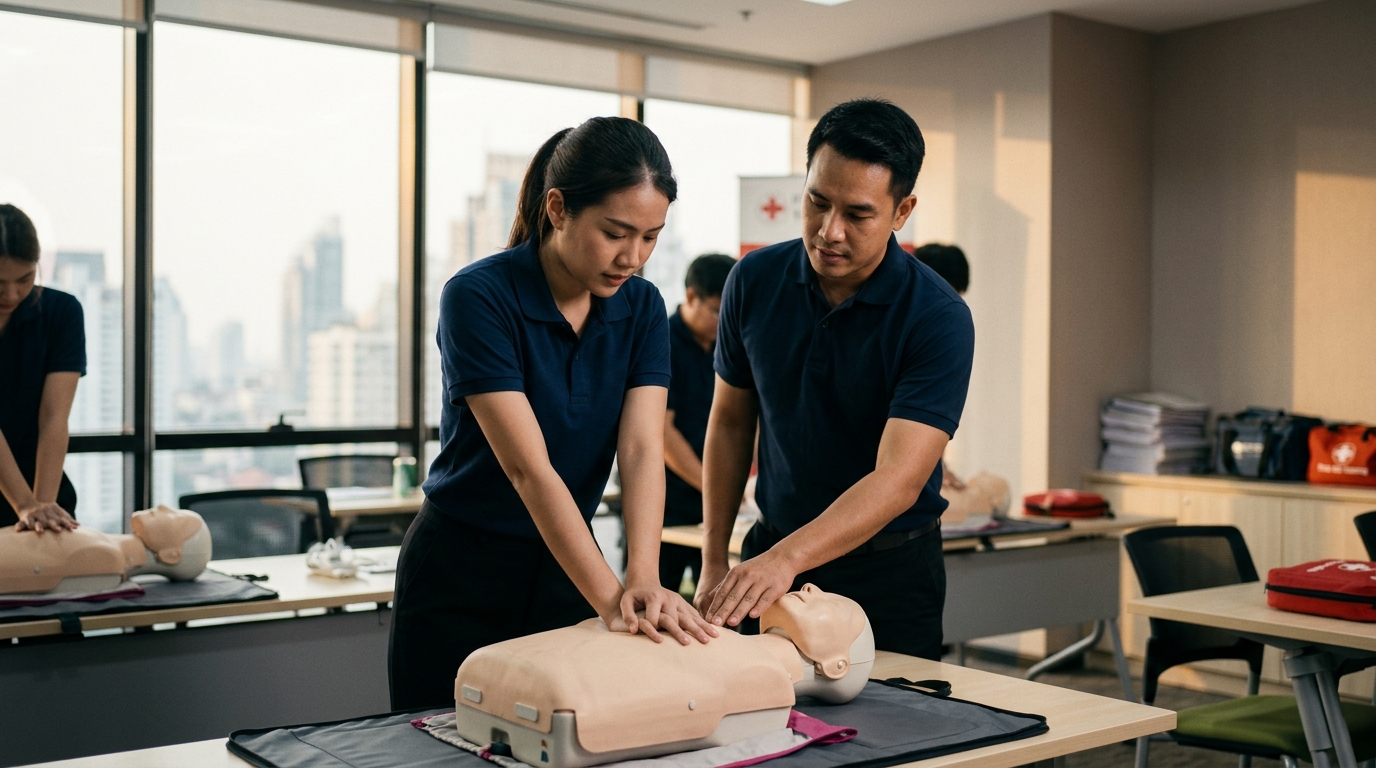
One of the most common mistakes participants make is viewing CPR as a purely cognitive task. In reality, high-quality chest compressions are physically exhausting. The American Heart Association emphasizes that effective CPR requires compressing the chest at least 2 inches deep for adults at a rate of 100 to 120 compressions per minute. Maintaining this rhythm and depth for two full minutes without fatigue is challenging for even the fittest individuals.
Many students arrive at First Aid Training Bangkok unprepared for the physical toll. This leads to shallow compressions in the later stages of the exercise, which drastically reduces blood flow to the brain and heart. To avoid this, treat your training session like a workout. Wear comfortable clothing that allows for movement, and practice the compression rhythm at home before attending the class. Understanding that CPR is a physical endurance test will help you pace yourself and maintain quality throughout the entire session.
Ignoring Proper Hand Placement
Correct hand placement is the difference between effective circulation and potential injury. A frequent error is placing hands too high on the sternum or too far to the side on the ribs. Incorrect placement can lead to rib fractures or internal organ damage, which complicates resuscitation efforts. The correct location is the center of the chest, on the lower half of the sternum.
During our corporate and individual training courses, we emphasize the "two-nipple line" technique for quick identification. Instructors will guide you through this process, but you must actively engage with the feedback. Do not rely solely on visual cues from the instructor. Feel the sternum with your fingers to ensure you are centered. If you are unsure, ask for immediate correction. Proper positioning ensures that the force of your compression is directed into the heart, effectively pumping blood to vital organs.
Skipping the Breathing Ratio
For untrained individuals, hands-only CPR is often recommended, but those seeking comprehensive certification must master the 30:2 ratio. This means 30 chest compressions followed by 2 rescue breaths. A common mistake is rushing through the compressions to get to the breaths, or vice versa, disrupting the critical blood flow.
Another error is failing to create a proper seal during rescue breaths. If air leaks out, the lungs do not inflate, and oxygen is not delivered. At First Aid Training Bangkok, we teach the head-tilt/chin-lift maneuver to open the airway effectively. You must pinch the nose shut and cover the mouth completely with yours. Practice this seal on the manikin until it feels secure. Remember, airway management is the foundation of oxygenation. Without a clear airway, no amount of compressions will sustain life.
Neglecting AED Integration
Automated External Defibrillators (AEDs) are life-saving devices that analyze heart rhythm and deliver shocks if needed. Many students focus so heavily on manual CPR that they treat the AED as an afterthought. This is a critical error. The combination of CPR and early defibrillation significantly increases survival rates.
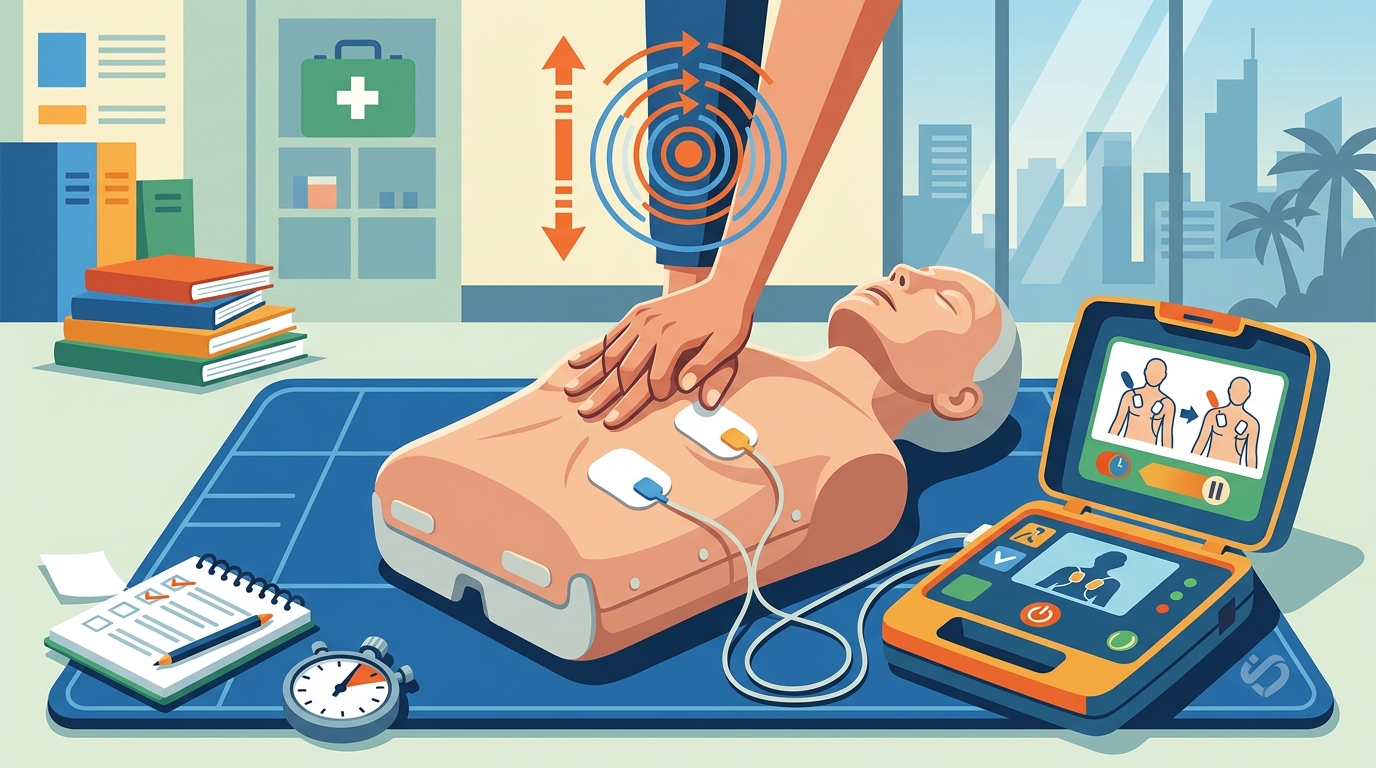
Participants often hesitate to turn on the AED or are confused by the voice prompts. It is essential to understand that the AED guides you through every step. You must learn to attach the pads correctly: one on the upper right chest and the other on the lower left side. During our AED certification training, we simulate scenarios where you must switch seamlessly from compressions to pad application. Do not wait for the instructor to tell you when to use the AED. In a real emergency, the device is likely already there. Familiarity with the device reduces panic and saves crucial seconds.
Fear of Legal Liability
A significant psychological barrier for many potential trainees is the fear of being sued if they make a mistake during a rescue. This fear often leads to hesitation or refusal to act. It is important to clarify that Good Samaritan laws in many jurisdictions, including Thailand, protect individuals who act in good faith to assist someone in a medical emergency.
At First Aid Training Bangkok, we address these concerns directly in our curriculum. We explain that the legal risk of inaction far outweighs the risk of action. If you attempt CPR and break ribs, you have given the victim a chance to live. If you do nothing, the outcome is almost certainly fatal. Understanding the legal protections for first responders empowers you to act confidently. We provide detailed briefings on local regulations and international standards to ensure you feel legally secure in your decision to help.
Choosing the Wrong Training Provider
Not all CPR courses are created equal. Some providers offer "certificate mills" where students pay a fee without receiving adequate hands-on practice. This is a dangerous mistake. CPR is a psychomotor skill that requires repetition and correction. Without proper feedback, you may leave the course with incorrect techniques that fail in a real emergency.
When selecting a provider, look for accreditation and experienced instructors. First Aid Training Bangkok is the only EFR Center to be internationally recognized and awarded by EFR/PADI Asia Pacific. Our instructors, including certified EFR Instructor Trainers, ensure that every student receives personalized feedback. We do not just teach you to pass a test; we teach you to save lives. Choose a provider that prioritizes competency over convenience.
Comparison of Training Approaches
| Feature | Standard Online Course | Hybrid E-Learning | Full In-Person Training |
|---|---|---|---|
| Hands-on Practice | None | Limited (1 session) | Extensive (Full day) |
| Instructor Feedback | Automated | During skills check | Continuous & Corrective |
| International Certification | Varies | Yes (if accredited) | Yes (EFR/PADI) |
| Realistic Scenario Training | No | Partial | Yes (High fidelity) |
| Cost (THB) | Low | Medium | Starting from 8,900 THB |
Key Takeaways
- Physical Stamina: CPR is physically demanding; prepare your body as well as your mind.
- Hand Placement: Center of the chest, lower half of the sternum is the only correct location.
- Rhythm Matters: Maintain 100-120 compressions per minute to ensure effective blood flow.
- AED Integration: Use the AED as soon as it is available; it guides you through the process.
- Legal Protection: Good Samaritan laws protect those who act in good faith during emergencies.
- Provider Choice: Choose accredited providers like First Aid Training Bangkok for valid international certification.
- Continuous Learning: Skills degrade over time; recertify every two years to stay proficient.
Frequently Asked Questions
How long does a one-day CPR course last?
A comprehensive one-day CPR and First Aid course typically lasts between 6 to 8 hours. This duration allows for sufficient theory, hands-on practice with manikins, and assessment. At First Aid Training Bangkok, we ensure that every student gets adequate practice time regardless of class size.
Is CPR training required for corporate compliance in Thailand?
While not always legally mandatory for all private sectors, many corporations in Thailand adopt CPR training as a standard safety protocol. It demonstrates corporate social responsibility and ensures workplace safety. Our corporate training packages are designed to meet these organizational needs efficiently.
What is the difference between CPR and First Aid?
CPR (Cardiopulmonary Resuscitation) specifically addresses cardiac arrest and breathing cessation. First Aid is a broader term that includes CPR but also covers treatment for injuries, illnesses, and other medical emergencies. Our courses combine both to provide a complete emergency response skill set.
Do I need to be fit to take a CPR course?
No, you do not need to be an athlete to take a CPR course. However, the training is physically active. Instructors will modify techniques if you have physical limitations, but the core principles of compression depth and rate must be met. We focus on proper body mechanics to reduce strain.
How long is my CPR certification valid?
CPR certifications are generally valid for two years. After this period, skills may degrade, and guidelines may have been updated. It is recommended to take a refresher course before expiration to maintain competency and certification validity.
Can I get certified online?
While online theory components are available, hands-on skills assessment is required for valid certification. A fully online course cannot replace the physical practice needed to master CPR. We offer a hybrid model where you complete theory online and attend a skills session.
What equipment do I need to bring?
You do not need to bring any equipment. First Aid Training Bangkok provides all necessary manikins, AED trainers, and learning materials. Just bring a positive attitude and a willingness to learn.
Ready to Save a Life?
Don't let common mistakes prevent you from gaining the skills to save a life. Join First Aid Training Bangkok for world-class CPR and First Aid certification. Our internationally recognized courses are designed to empower you with confidence and competence. Contact us today to book your session and start your journey to becoming a certified first responder.