
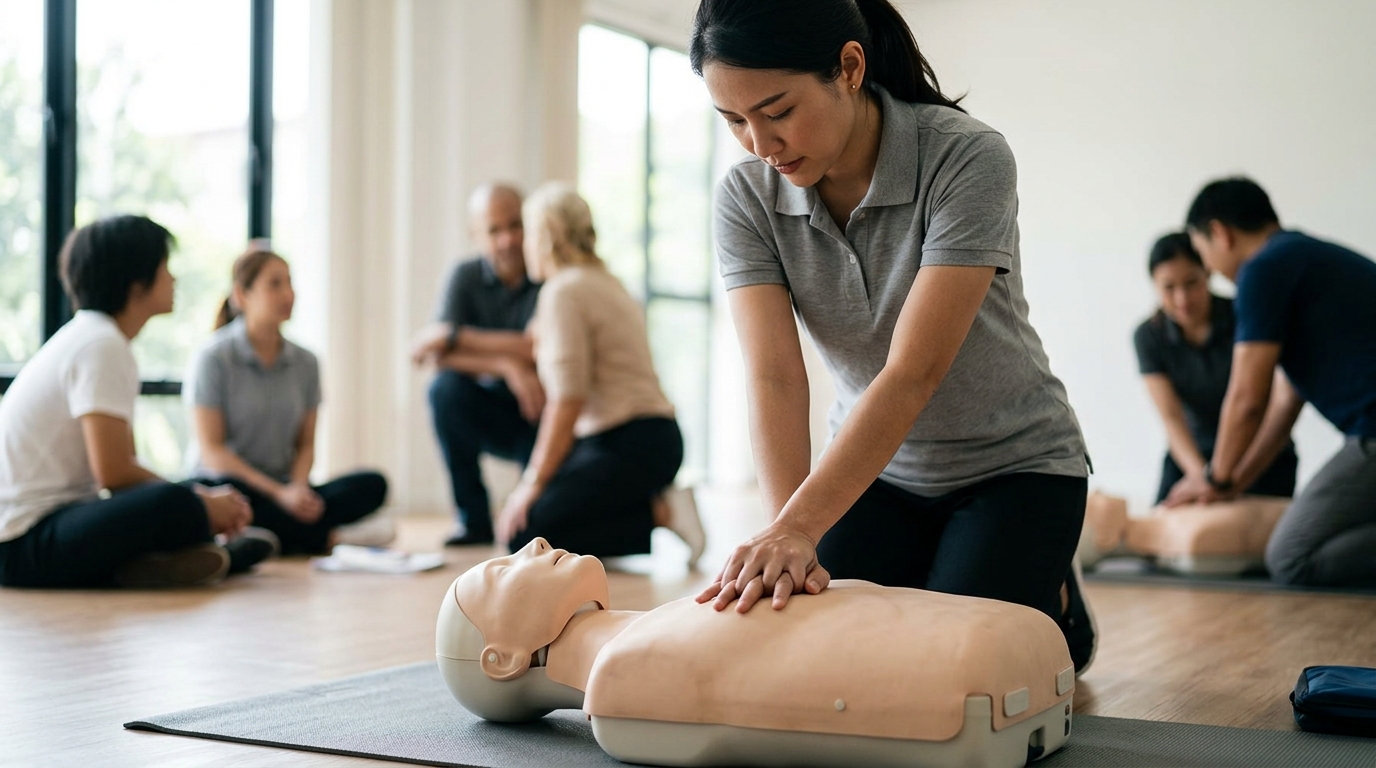
Cardiac arrest is a critical emergency where the heart stops beating effectively, leading to a rapid loss of consciousness and breathing. According to the World Health Organization, cardiovascular diseases remain the leading cause of death globally, accounting for an estimated 17.9 million lives each year. In these high-stakes scenarios, the difference between life and death often hinges on the quality of immediate bystander intervention. However, many well-intentioned individuals make critical errors during CPR first aid training that compromise patient survival rates. This guide details the most frequent pitfalls identified in emergency response protocols and provides precise methods to correct them, ensuring you are fully prepared to act when it matters most.
Inadequate Compression Depth and Rate
One of the most prevalent errors in CPR first aid training is the failure to achieve the correct depth and rhythm of chest compressions. CPR is defined as a manual emergency procedure performed when the heart of an individual stops beating. The primary goal is to manually pump blood to the brain and other vital organs until defibrillation or advanced medical care is available.
Many trainees compress the chest too shallowly, often less than 5 centimeters (2 inches) for adults. This depth is insufficient to generate adequate cardiac output. Furthermore, the rate of compressions is frequently too slow or too fast. The recommended rate is 100 to 120 compressions per minute. To avoid this mistake, trainees should practice with metronome apps or use audio cues provided during corporate CPR first aid training sessions. At First Aid Training Bangkok, our instructors emphasize muscle memory through repetitive drills to ensure you maintain this critical rhythm under stress.
Failing to Allow Complete Chest Recoil
Another common technical error is leaning on the chest between compressions. This prevents the heart from fully refilling with blood, drastically reducing the efficiency of each subsequent compression. Complete chest recoil is essential for restoring venous return to the heart.
To correct this, focus on pushing hard and fast, then immediately release all pressure. Your arms should remain straight, and your weight should come from your shoulders, not your arms. This technique reduces fatigue and ensures consistent performance. Our hands-on training modules specifically target this mechanic, using feedback manikins that provide real-time data on recoil quality.
Minimizing Interruptions in Chest Compressions
Every second without chest compressions causes a significant drop in coronary perfusion pressure. A frequent mistake during training is allowing pauses to exceed 10 seconds for pulse checks, airway adjustments, or AED analysis. These interruptions are necessary but must be executed with extreme speed and precision.
The strategy to avoid this is to prepare all actions before pausing. For instance, have the AED pads ready before you stop compressions. Perform pulse checks for no more than 10 seconds. If no pulse is detected, resume compressions immediately. This workflow is a core component of our advanced safety courses, where we simulate high-pressure environments to train rapid decision-making.
Incorrect Airway Management and Ventilation
2For untrained bystanders, hands-only CPR is often recommended, but those who perform ventilations frequently make errors in airway management. A common mistake is delivering breaths that are too forceful or too long, which can cause gastric inflation and vomiting. Additionally, failing to properly open the airway using the head-tilt chin-lift maneuver is a critical failure point.
Proper airway management requires clearing any visible obstructions and tilting the head back while lifting the chin. When giving breaths, ensure the chest rises visibly. If you are unsure about ventilation, continuous chest compressions are still highly effective. Our training emphasizes the balance between compression and ventilation ratios, ensuring you do not over-ventilate the patient.
Improper AED Pad Placement and Usage
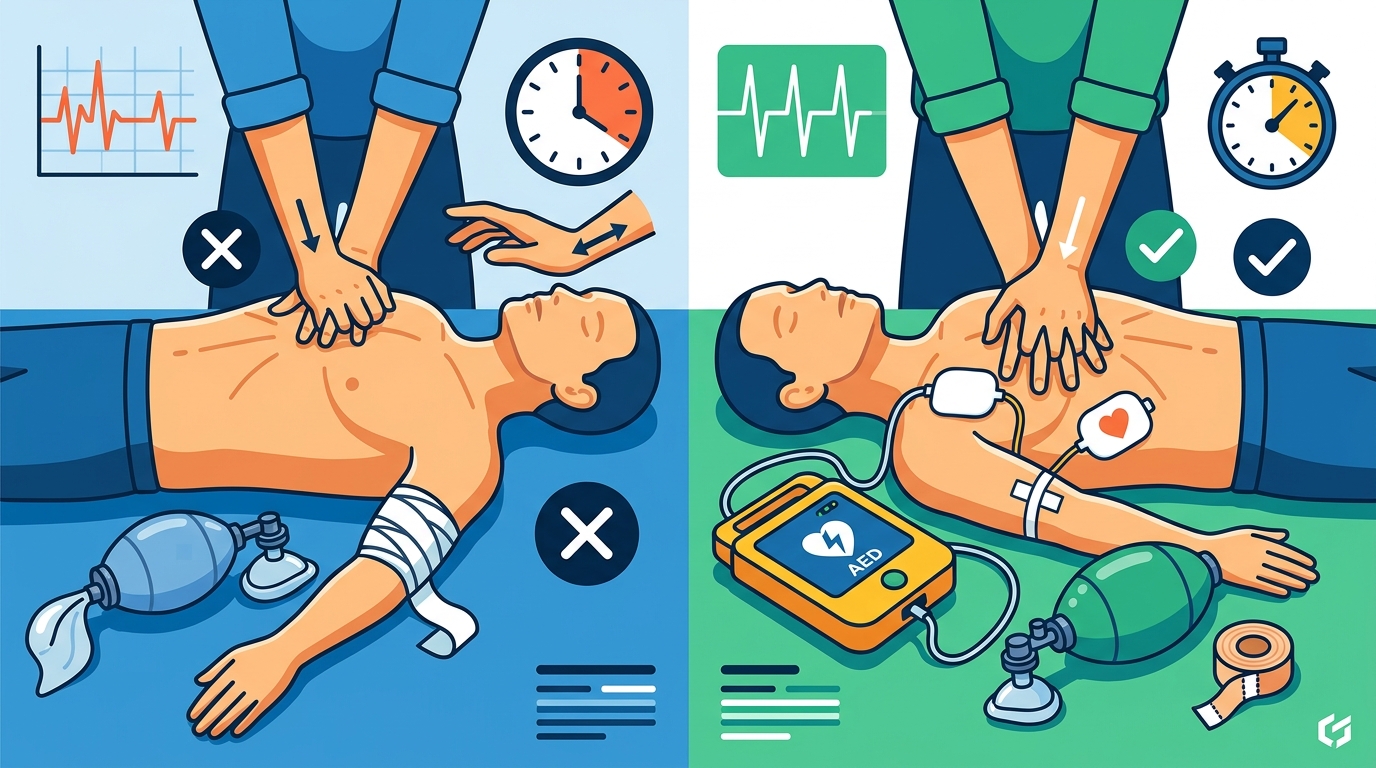
Automated External Defibrillators (AEDs) are designed to be user-friendly, yet misuse occurs during training. A common error is incorrect pad placement. Pads must be placed on the bare chest, one on the upper right side below the collarbone and the other on the lower left side of the rib cage. If the chest is hairy, it may be necessary to shave the area or use additional pads to ensure adhesion.
Another mistake is failing to ensure no one is touching the patient during analysis. This can interfere with the device's ability to detect a shockable rhythm. Familiarity with AED equipment and accessories is crucial. We provide extensive practice with various AED models to ensure you can operate them confidently in any setting.
Overcoming Psychological Barriers to Action
Technical skills are only half the equation. Psychological barriers, such as fear of legal repercussions or hesitation due to lack of confidence, often prevent individuals from acting. In Thailand, the Good Samaritan laws provide protection for those who act in good faith to assist in emergencies. Understanding these legal frameworks is a key part of our educational curriculum.
To overcome hesitation, visualize the emergency scenario beforehand. Recognize the signs of cardiac arrest: unresponsiveness and abnormal breathing. Once identified, call for help and begin CPR immediately. Confidence comes from preparation. Our individual CPR first aid training sessions are designed to build this confidence in a supportive, low-stress environment.
Comparative Analysis of Training Options
Choosing the right training path is essential for mastering these skills. The table below outlines the primary offerings from First Aid Training Bangkok, highlighting the focus and target audience for each.
| Training Type | Target Audience | Key Focus Area | Typical Duration |
|---|---|---|---|
| Corporate CPR & First Aid | Office Workers & Management | Workplace Safety & AED Integration | 1-2 Days |
| Individual CPR Course | General Public & Travelers | Basic Life Support & Hands-Only CPR | Half Day |
| Lifeguard Training | Pool & Beach Staff | Water Rescue & Advanced First Aid | Multi-Day |
| Fire Safety Training | Facility Managers & Safety Officers | Evacuation Protocols & Extinguisher Use | 1 Day |
Key Takeaways
- Depth Matters: Ensure compressions are at least 5 centimeters deep for adults to maintain blood flow.
- Rate is Critical: Maintain a compression rate of 100 to 120 per minute to optimize cardiac output.
- Full Recoil: Allow the chest to fully recoil between compressions to allow the heart to refill.
- Minimize Pauses: Limit interruptions in compressions to less than 10 seconds to preserve perfusion pressure.
- AED Readiness: Know the correct pad placement and ensure the area is clear before analysis.
- Legal Protection: Understand local Good Samaritan laws to act with confidence and legal security.
- Regular Refreshers: Skills degrade over time; regular training is essential for long-term retention.
Frequently Asked Questions
What is the primary difference between hands-only CPR and conventional CPR?
Hands-only CPR involves continuous chest compressions without rescue breaths, recommended for untrained bystanders or those unwilling to give breaths. Conventional CPR includes a cycle of 30 compressions followed by 2 rescue breaths, typically taught to certified first aid responders.
How often should I renew my CPR certification?
Most international guidelines, including those from the American Heart Association, recommend renewing CPR certification every two years. However, skills decay rapidly, so frequent practice is advised to maintain proficiency.
Is First Aid Training Bangkok's certification internationally recognized?
Yes, our certifications follow international standards and are recognized globally. We are the only EFR Center in the region to be internationally recognized and awarded by EFR/PADI Asia Pacific for our contribution to first aid training.
Can I take CPR training online?
We offer a combination of online eLearning theory and in-person hands-on training. This hybrid approach allows you to learn the concepts at your own pace and then practice the physical skills with our expert instructors.
What should I do if the patient vomits during CPR?
If the patient vomits, turn them to the side to clear the airway and prevent aspiration. Once the airway is clear, return them to their back and resume CPR immediately. This scenario is covered in our advanced first aid articles and training modules.
Do you provide on-site training for companies?
Yes, we provide on-site CPR certifications and first aid courses at your location in and around Bangkok, and anywhere in Thailand. This service is ideal for corporate teams seeking convenient and compliant safety training.
What is the cost of a standard CPR course?
Our individual CPR and AED training courses start from 2,900 THB. Corporate packages are available starting from 8,900 THB, depending on the number of participants and specific course requirements.
Take Action and Save Lives Today
Knowing how to perform CPR and use an AED can mean the difference between life and death for your colleagues, family, or community. Do not let common mistakes undermine your ability to help. Invest in your skills and confidence by enrolling in a course with Thailand's leading provider. Visit First Aid Training Bangkok to book your session and join the ranks of empowered first responders.