
Common Mistakes in Onsite Corporate CPR Training and How to Avoid Them
Workplace safety compliance is no longer just a regulatory checkbox. It is a critical component of corporate responsibility and employee well-being. Recent data indicates that the survival rate for out-of-hospital cardiac arrest drops by 7 to 10 percent for every minute without CPR. This statistic underscores the urgency of high-quality training. When companies bring training in-house, they often prioritize convenience over clinical accuracy. This approach can lead to dangerous gaps in knowledge. The following guide details the most frequent errors organizations make during onsite CPR certification and provides the exact steps to correct them.
Ignoring the Difference Between Adult and Pediatric Protocols
One of the most prevalent errors in corporate training is the assumption that CPR is a universal skill. It is not. Cardiopulmonary Resuscitation is a medical procedure used to manually preserve intact brain function until further measures are taken to restore spontaneous blood circulation. The mechanics of this procedure vary significantly depending on the patient's age and size.
Many corporate trainers default to a single adult-focused curriculum for all employees. This is a critical oversight. Pediatric CPR requires different compression depths, hand placements, and breath ratios. For example, compressing a child's chest with the force used for an adult can cause severe internal injury. Conversely, using pediatric force on an adult is ineffective. Organizations must ensure their training covers both scenarios if they have families on-site or if employees work in mixed environments.
To avoid this, request a comprehensive curriculum that explicitly includes pediatric modules. At First Aid Training Bangkok, we offer specialized courses that address these nuances. You can explore our comprehensive course offerings to find the right mix for your team. Ensuring your staff understands these distinctions is vital for effective emergency response.
Rushing Through Hands-On Practice Time
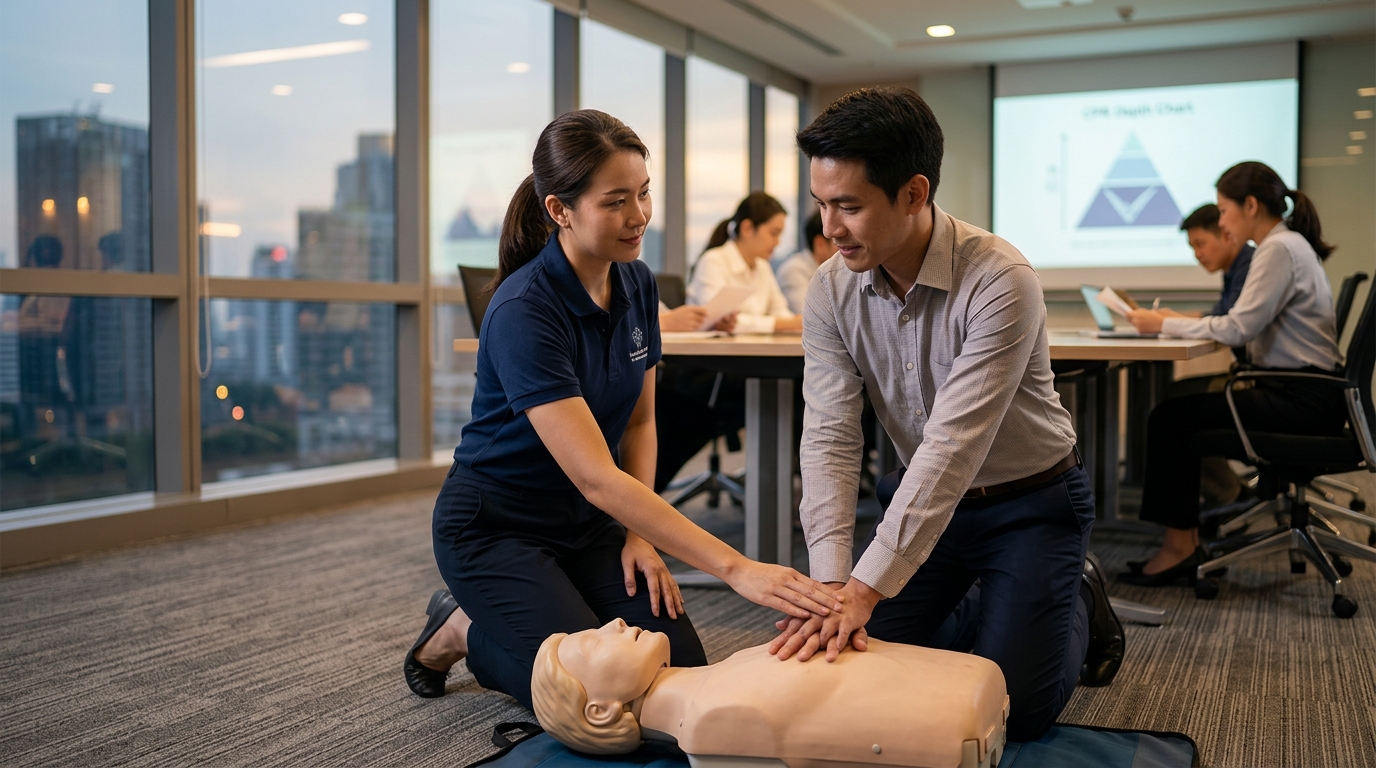
Efficiency is the primary driver for onsite training. However, rushing the hands-on component is a fatal flaw in corporate safety programs. CPR is a psychomotor skill. It requires muscle memory to perform correctly under extreme stress. Reading about chest compressions is not the same as performing them.
Many organizations book two-hour slots for groups of twenty people. This results in each participant receiving only minutes of actual practice. This is insufficient for building the necessary endurance and technique. Studies show that proper CPR technique degrades rapidly without regular reinforcement. If employees do not practice the correct rate of 100 to 120 compressions per minute, they will likely fail to maintain it during a real emergency.
The solution is to prioritize quality over speed. Limit class sizes to ensure every employee gets adequate manikin time. We recommend a ratio that allows for continuous feedback from instructors. Our corporate training services are designed to maximize this hands-on time. We ensure that every participant leaves with the physical confidence to act, not just the theoretical knowledge.
Overlooking the Legal Implications of Inadequate Training
Corporate leaders often view first aid training as a soft benefit. They fail to recognize the legal weight of workplace safety. Good Samaritan laws are legal provisions that protect individuals who voluntarily help those who are injured or ill from being sued for unintentional injury or death. However, these protections often require that the helper acted within the scope of their training.
If a company provides substandard training and an employee causes harm while trying to help, the organization may face liability. Inadequate training can be seen as negligence. In Thailand, the legal landscape for emergency responders is evolving. It is crucial to understand the current regulations. We provide detailed insights into the legal responsibilities and updates relevant to our region.
To mitigate risk, ensure your training is certified by recognized international bodies. This provides a defensible standard of care. Our about us page outlines our commitment to international standards and legal compliance. Choosing a provider that understands the local legal context is essential for corporate protection.
Failing to Integrate AED Training with Manual CPR
Automated External Defibrillators (AEDs) are life-saving devices. However, they are not a replacement for CPR. They are a complement. A common mistake is training employees to use an AED in isolation. This creates a false sense of security. An AED can only analyze the heart rhythm. It cannot circulate blood.
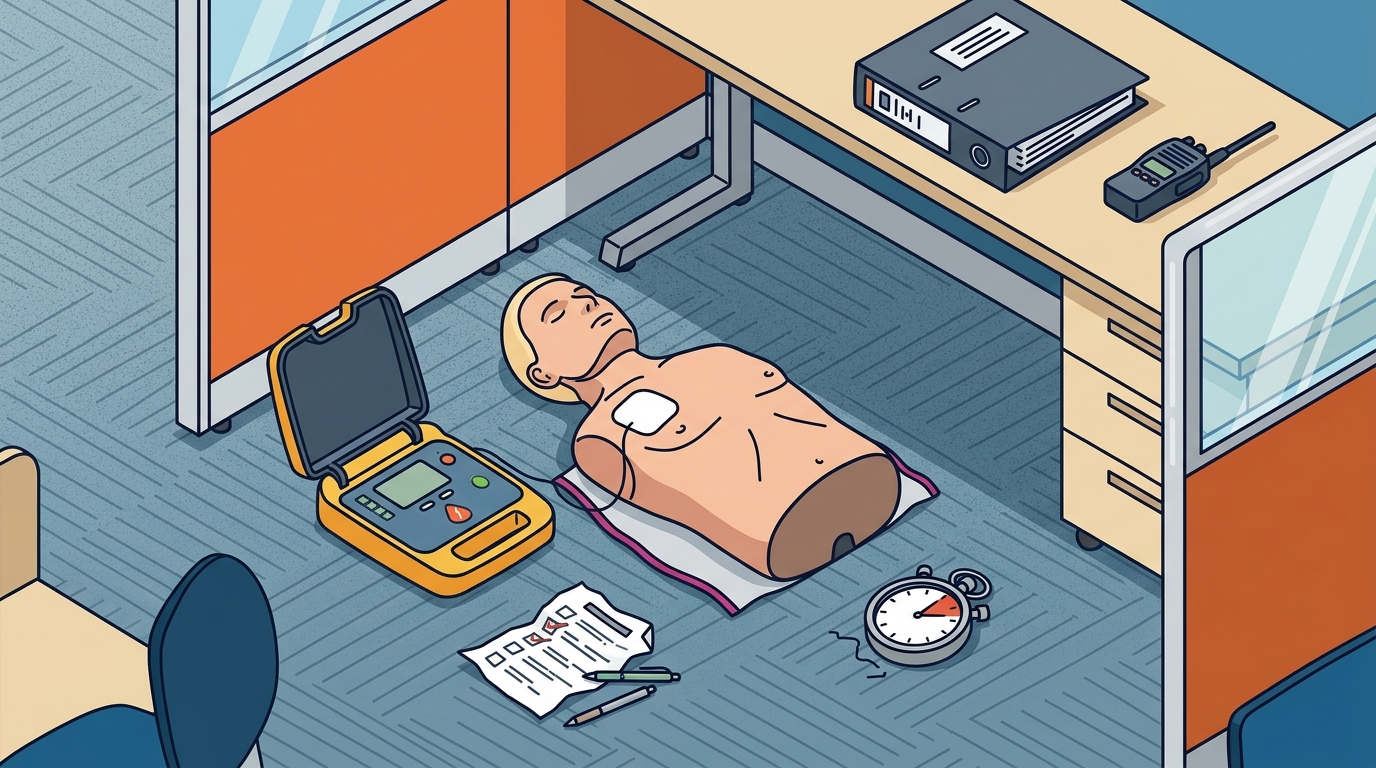
Without CPR, brain death occurs within minutes. The most effective protocol is a seamless transition from compressions to defibrillation and back again. Training must emphasize this integration. Employees need to know how to set up the AED while another person continues compressions. This coordination is difficult to master without realistic scenario-based practice.
We offer specific CPR and AED certification courses that focus on this synergy. These courses simulate real-world chaos. They teach teams how to communicate and coordinate under pressure. This level of detail is often missing in basic safety workshops. Investing in integrated training significantly increases the survival rate for cardiac arrest victims.
Choosing Providers Without Medical Advisory Oversight
Not all first aid trainers are created equal. Some providers focus solely on certification volume. They use outdated materials and generic instructors. This is a significant risk. Medical guidelines change frequently. The American Heart Association and the European Resuscitation Council update their protocols regularly.
Training based on outdated guidelines can be worse than no training. It reinforces incorrect techniques that may fail in a real emergency. It is critical to choose a provider that has a medical advisory board. This board ensures that all teaching materials are current and evidence-based.
First Aid Training Bangkok stands out because we have our own Medical Advisory Board. This team includes doctors and critical care nurses. They review our curriculum constantly. This ensures that your team learns the latest, most effective techniques. We are also the only EFR Center in the region to be internationally recognized by EFR/PADI Asia Pacific. This recognition is a testament to our quality. You can verify our accreditation and associations to confirm our standing.
Comparing Training Options for Corporate Needs
Selecting the right course depends on your specific operational needs. The table below summarizes the key differences between our primary corporate offerings.
| Course Type | Target Audience | Key Focus | Starting Price (THB) |
|---|---|---|---|
| Workplace First Aid | General Office Staff | Basic Response & Safety | 8,900฿ |
| CPR & First Aid Advanced | Safety Officers | Complex Scenarios | 8,900฿ |
| Primary & Secondary Care | First Responders | Comprehensive Care | 8,900฿ |
| Beginner CPR & AED | New Hires | Essential Skills | 8,900฿ |
Key Takeaways
- Corporate training must distinguish between adult and pediatric CPR protocols to prevent injury.
- Hands-on practice time is the most critical component of effective skill acquisition.
- Inadequate training can expose companies to legal liability under Good Samaritan laws.
- AED training must always be integrated with manual CPR for maximum efficacy.
- Providers with a Medical Advisory Board ensure curriculum accuracy and compliance.
- First Aid Training Bangkok has been a leader in Thailand since 2009.
- Our instructors include elite professionals like Khun Scott, an EFR Instructor Trainer.
Frequently Asked Questions
How often should corporate CPR training be renewed?
Most international guidelines recommend renewal every two years. However, skills degrade faster. We suggest annual refresher courses to maintain confidence and accuracy.
Can you provide onsite training in Bangkok?
Yes, we specialize in onsite training throughout Bangkok and Thailand. We bring all necessary equipment to your location. Contact us to schedule a session.
What is the Emergency First Response (EFR) program?
Emergency First Response is a global organization that provides first aid and CPR training. We are an authorized EFR center. Our training follows their strict international standards.
Do you offer training for specific industries?
Yes. We offer specialized courses such as Lifeguard Training and Tactical Combat Casualty Care. These are designed for specific operational risks.
Is the certification internationally recognized?
Yes, our certificates are recognized globally. They meet the standards of major health organizations. This is important for multinational corporations.
What is the cost of corporate training?
Corporate packages start from 8,900 THB. The price depends on the number of participants and the specific courses selected. We provide detailed quotations upon request.
How do I book a training session?
You can book a session by visiting our contact page or calling our team directly. We will work with your schedule to minimize downtime.
Secure Your Team's Future Today
Corporate safety is an investment, not an expense. Avoid the common pitfalls of inadequate training by choosing a provider that prioritizes clinical accuracy and legal compliance. First Aid Training Bangkok offers the expertise and infrastructure to elevate your workplace safety standards. We empower people to save lives through rigorous, realistic training.
Do not wait for an emergency to reveal the gaps in your preparedness. Contact us now to schedule your onsite CPR and First Aid training. Let us help you build a culture of safety that protects your most valuable asset, your people.