
Step-by-Step Process for Enrolling Resort Staff in Certified Lifeguard Training Programs
Resort safety is not merely a regulatory checkbox; it is a critical operational pillar that protects both guest lives and business continuity. According to recent industry safety reports, properties with certified lifeguard staff experience significantly fewer liability incidents and higher guest satisfaction scores compared to those relying on untrained personnel. The process of securing this protection begins with understanding the specific certification requirements available in your region. For resorts operating in Southeast Asia, particularly Thailand, First Aid Training Bangkok stands as the premier provider of these essential services. Since 2009, they have established themselves as the only EFR Center internationally recognized and awarded by EFR/PADI Asia Pacific, ensuring that your staff receives training that meets global standards. (Contact First Aid Training)
Step 1: Assess Your Resort's Specific Safety Needs
Before initiating any enrollment process, you must conduct a thorough audit of your resort's aquatic infrastructure. This includes evaluating the number of pools, beaches, or water features under your management. The complexity of your water environment dictates the level of training required for your staff. For instance, a resort with a single shallow pool may require different skill sets compared to one with deep-water lagoons or oceanfront access.
Lifeguard training is not a one-size-fits-all solution. You must determine if your staff needs basic water rescue skills or advanced emergency medical response capabilities. This assessment also involves reviewing local regulations. In many jurisdictions, including Thailand, specific ratios of lifeguards to swimmers are mandated by law. Understanding these legal requirements ensures that your enrollment strategy aligns with compliance standards, avoiding potential fines or operational shutdowns.
Step 2: Select the Appropriate Lifeguard Certification Program
Once your needs are defined, you must choose a certification program that offers both theoretical knowledge and practical application. The industry standard for comprehensive lifeguard training includes CPR (Cardiopulmonary Resuscitation), AED (Automated External Defibrillator) usage, and first aid for common aquatic injuries. The Emergency First Response (EFR) curriculum is widely recognized for its effectiveness in training layperson responders to handle medical emergencies confidently.
When evaluating programs, look for providers that offer a Medical Advisory Board to ensure their content reflects the latest medical guidelines. First Aid Training Bangkok, for example, utilizes a dedicated medical team including doctors and critical care nurses to keep their curriculum current. This ensures that your staff learns techniques that are not only effective but also medically sound. The cost for specialized lifeguard training typically starts around 10,800 THB per participant, depending on the depth of the course and included materials.
Step 3: Contact a Certified Training Provider
Identifying a reputable provider is the next critical step. You should seek a company that has been operating for over a decade and has a proven track record of training thousands of individuals. First Aid Training Bangkok has trained over 20,000 satisfied clients since its inception, making them a reliable partner for large-scale resort enrollments. Their status as Thailand's first full-time international CPR and first aid training company provides a level of expertise that newer entrants cannot match.
When contacting the provider, specify your group size and any special requirements. For example, if your staff includes non-native English speakers, inquire about bilingual training options. First Aid Training Bangkok offers courses in both English and Thai, ensuring clear communication and comprehension for all participants. This linguistic flexibility is crucial for ensuring that safety instructions are understood by every team member, regardless of their primary language.
Step 4: Schedule On-Site or Hybrid Training
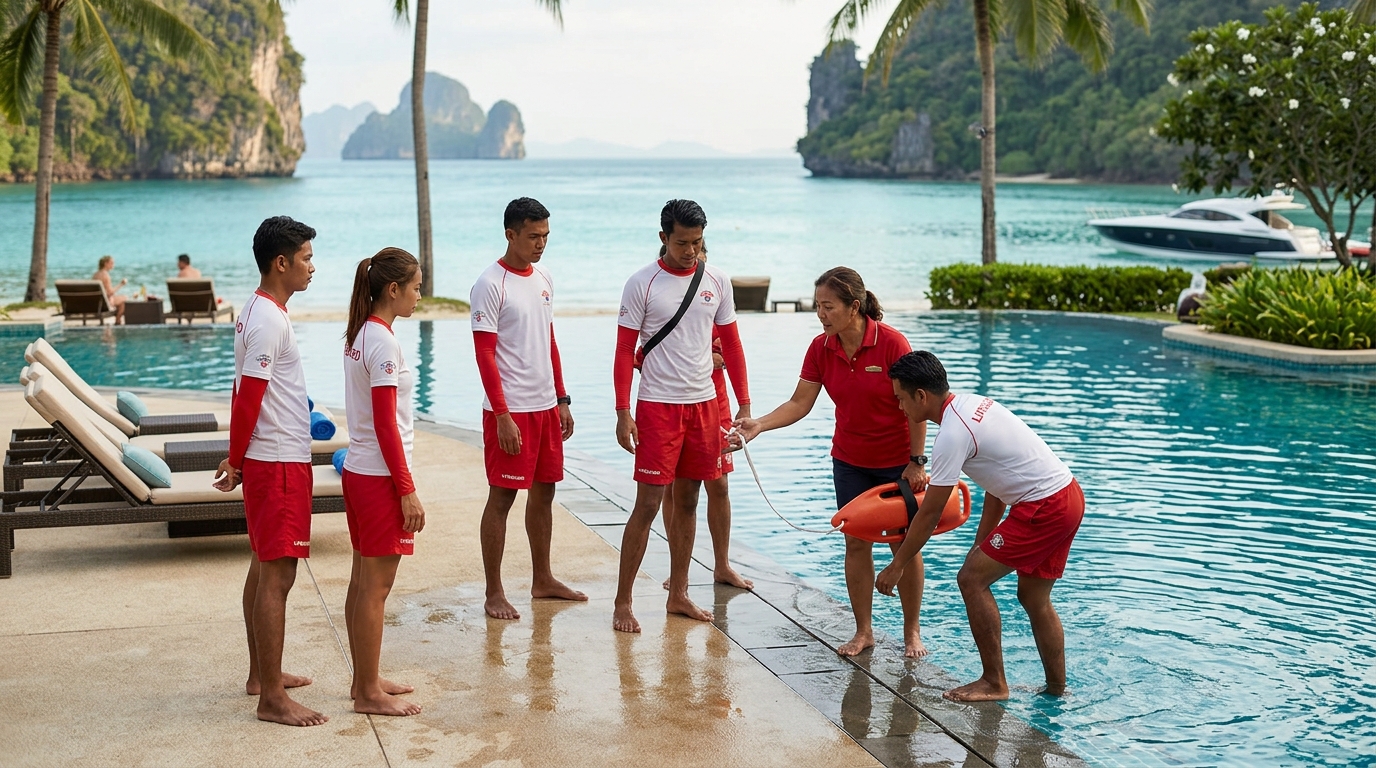
Convenience and minimal disruption to resort operations are key considerations when scheduling training. Many top-tier providers offer flexible scheduling options, including on-site training at your resort. This eliminates the need for staff to travel, reducing downtime and logistical costs. On-site training allows the instructor to tailor scenarios to your specific water features, making the learning experience more relevant and practical.
Alternatively, some providers offer a hybrid model combining online eLearning theory with in-person hands-on training. This approach can be particularly effective for large groups, as it allows staff to complete the theoretical portion at their own pace before gathering for practical assessments. When booking, ensure that the provider supplies all necessary equipment, such as CPR manikins and AED training devices, to facilitate realistic practice sessions.
Step 5: Verify Certification and Maintain Compliance
After training is complete, it is essential to verify that all staff members have received their official certificates. These documents serve as proof of competency and are often required for insurance purposes and regulatory audits. Ensure that the certificates are internationally recognized, which adds value to your resort's safety profile and reassures guests of the high standards maintained.
First aid and lifeguard certifications are not permanent. They typically require renewal every two years to ensure that skills remain sharp and knowledge is up-to-date with the latest medical guidelines. Establish a calendar system to track expiration dates and schedule refresher courses well in advance. This proactive approach prevents gaps in coverage and ensures continuous compliance with safety standards.
Comparison of Training Options
| Training Type | Best For | Key Benefits | Estimated Cost (THB) |
|---|---|---|---|
| Standard Lifeguard Training | Resorts with dedicated aquatic centers | Comprehensive rescue and medical skills | 10,800+ |
| CPR & First Aid Beginner | General staff safety awareness | Foundational emergency response | 8,900+ |
| Online CPR Certification | Large groups, flexible scheduling | Cost-effective, remote theory | Contact for Price |
| First Aid Instructor Training | Internal trainers | Train-the-trainer capability | 19,800+ |
Key Takeaways
- Proven Expertise: First Aid Training Bangkok has been the leading provider in Thailand since 2009, offering internationally recognized certifications.
- Medical Advisory Board: Their curriculum is overseen by a dedicated medical team, ensuring the highest standards of care and accuracy.
- Flexible Delivery: Options include on-site training, online eLearning, and hybrid models to suit resort operational needs.
- Bilingual Support: Courses are available in both English and Thai, facilitating clear communication for diverse staff teams.
- Comprehensive Coverage: Training covers CPR, AED usage, and first aid, addressing a wide range of potential aquatic emergencies.
- Cost-Effective: Corporate training packages start from 8,900 THB, providing excellent value for large groups.
- Compliance Assurance: Certifications help resorts meet local and international safety regulations, reducing liability risks.
Frequently Asked Questions
How long does the lifeguard training course take?
The standard lifeguard training course typically spans one to two days, depending on the depth of the curriculum and the number of participants. This intensive format ensures that staff acquire both theoretical knowledge and practical skills efficiently.
Is the certification internationally recognized?
Yes, certifications provided by accredited centers like First Aid Training Bangkok are internationally recognized. They adhere to guidelines set by organizations such as the International Liaison Committee on Resuscitation (ILCOR) and are accepted globally.
Can the training be conducted on-site at our resort?
Absolutely. One of the primary advantages of working with specialized providers is the ability to conduct on-site training. This minimizes staff downtime and allows for customized scenarios based on your specific water features.
What is the cost for corporate lifeguard training?
Corporate lifeguard training costs vary based on the number of participants and the specific course selected. Prices for specialized lifeguard training start around 10,800 THB per person, while general first aid courses start from 8,900 THB.
Do you offer bilingual training options?
Yes, training is available in both English and Thai. This ensures that all staff members, regardless of their primary language, can fully understand and apply the safety protocols taught during the course.
How often do lifeguard certifications need to be renewed?
Lifeguard and CPR certifications typically need to be renewed every two years. Regular renewal ensures that skills remain current and that staff are up-to-date with the latest medical guidelines and rescue techniques.
What qualifications do your instructors have?
Instructors are highly qualified professionals, including EFR Instructor Trainers, critical care nurses, and paramedics. Their diverse backgrounds ensure that training is both practical and medically accurate.
Secure Your Resort's Safety Today
Investing in certified lifeguard training is an investment in the safety and reputation of your resort. By following these steps and partnering with a trusted provider like First Aid Training Bangkok, you can ensure that your staff is prepared to handle any emergency with confidence and competence. Contact us now to schedule your training and empower your team to save lives.