
How to Choose a CPR First Aid Training Provider for Your Company in Bangkok
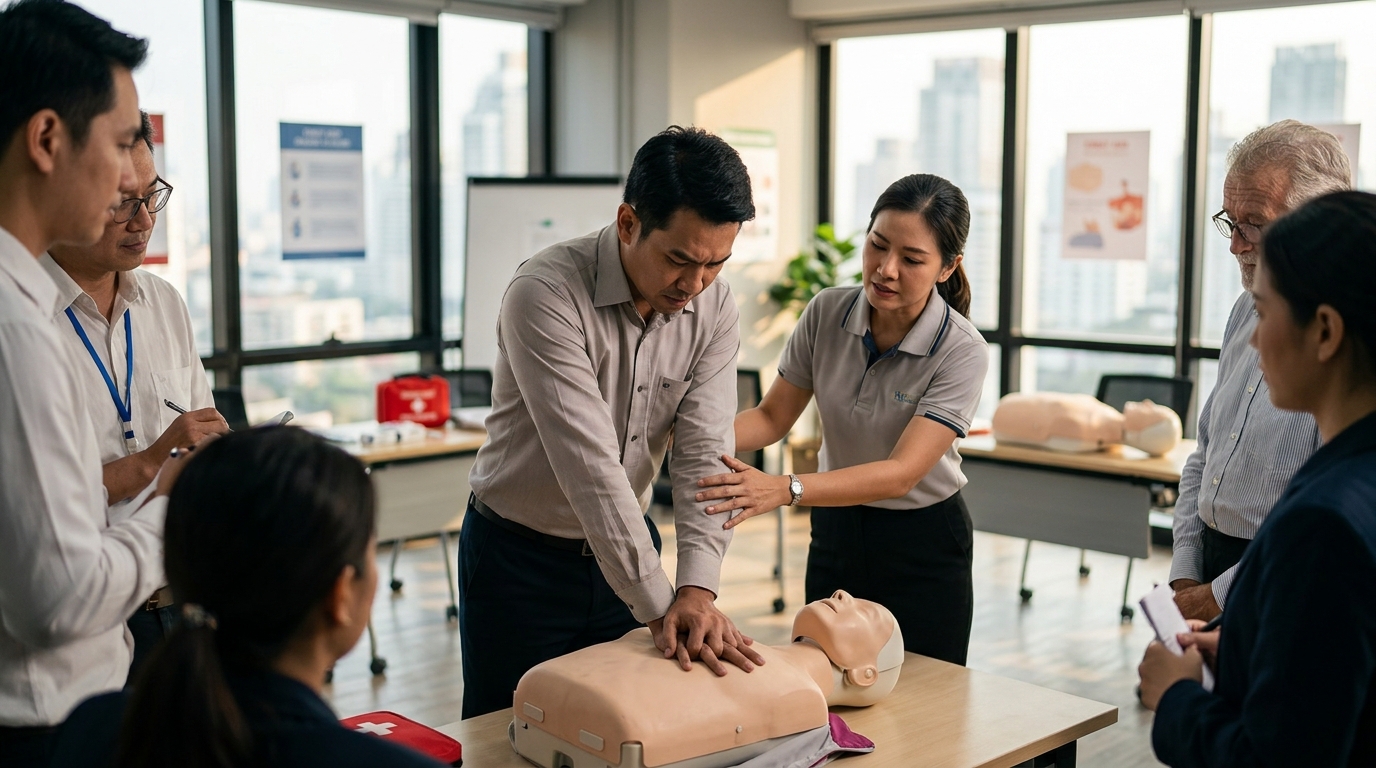
Selecting the right CPR and first aid training provider for your Bangkok-based company requires verifying accreditation standards, instructor qualifications, and curriculum relevance. First Aid Training Bangkok offers specialized corporate programs designed to build workplace safety cultures. This guide covers the critical factors you must evaluate to ensure your employees receive high-quality, compliant, and practical emergency response training.
Accreditation Standards
Accreditation is the formal recognition that a training provider meets specific quality and safety standards. When evaluating a provider, you must look beyond generic claims and verify their affiliations with recognized international bodies. First Aid Training Bangkok maintains partnerships with esteemed accreditation organizations that validate the quality of their services. These partnerships empower the provider to continually elevate their standards and ensure that the skills taught are current and effective.
International Affiliations
Reputable providers often align with global standards to ensure their certificates are recognized internationally. First Aid Training Bangkok is affiliated with organizations such as the American College of Surgeons Committee on Trauma and the National Association of Emergency Medical Technicians (NAEMT). These affiliations indicate that the training content adheres to rigorous medical and safety protocols. For multinational companies operating in Bangkok, this international alignment is crucial for maintaining consistent safety standards across different regions.
Industry Recognition
Industry recognition serves as a proxy for trust and reliability. First Aid Training Bangkok has been recognized by EFR/PADI Asia Pacific for its contributions to first aid training. This recognition highlights the provider's commitment to excellence in emergency response education. When choosing a provider, ask for documentation of their accreditations and verify that these partnerships are active and current. This ensures that your employees are learning from a curriculum that is regularly reviewed and updated by industry experts.
Instructor Qualifications
Instructor qualifications determine the depth and accuracy of the knowledge transferred to your employees. A qualified instructor is a certified professional who has undergone rigorous training and assessment to teach life-saving skills. At First Aid Training Bangkok, the instructor team includes highly skilled professionals with diverse backgrounds in medicine, nursing, and emergency response. This diversity ensures that your staff receives a well-rounded education that covers both theoretical knowledge and practical application.
Medical Advisory Board
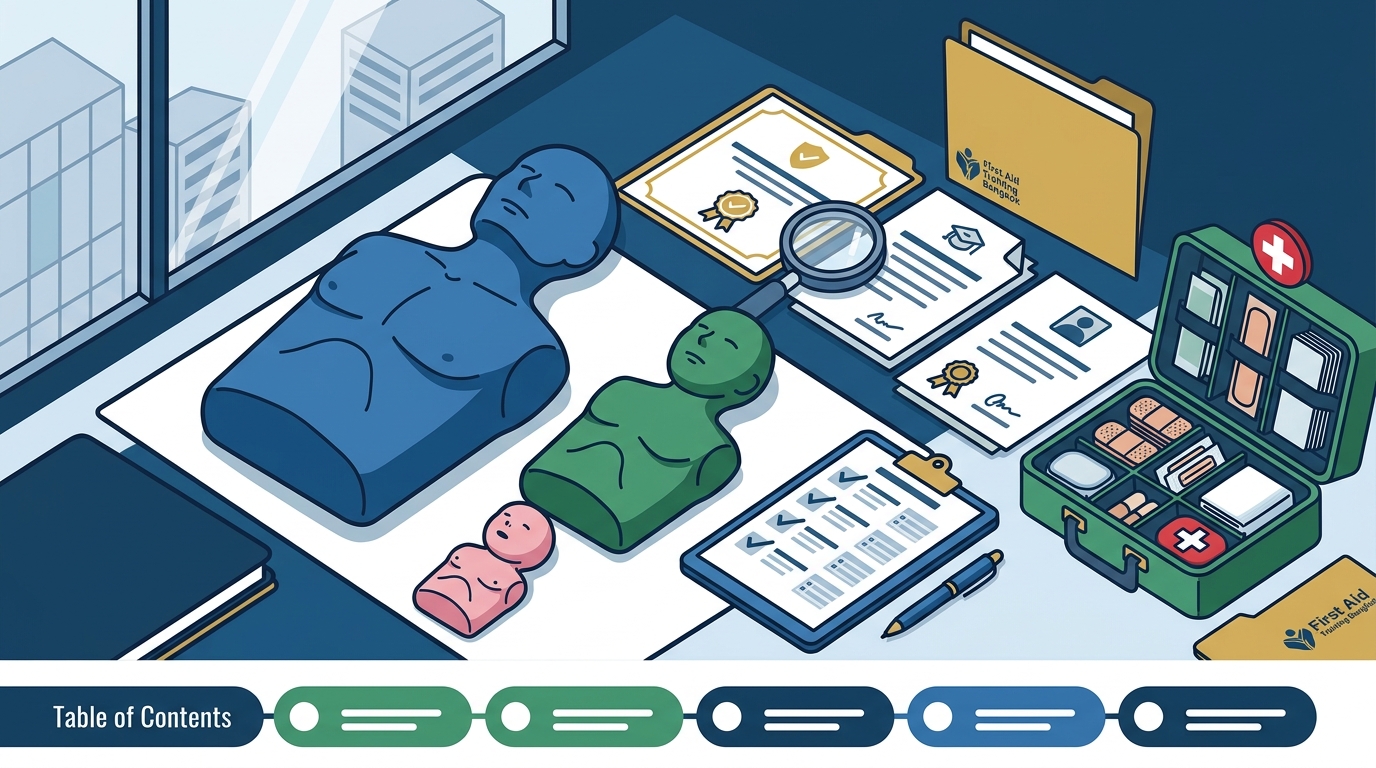
What sets First Aid Training Bangkok apart is the presence of a dedicated Medical Advisory Board. This board consists of medical doctors, flight nurses, and critical care nurses who ensure that the latest first responder skills are being delivered. Having a medical advisory board is a significant indicator of a provider's commitment to evidence-based training. It means that the curriculum is not just based on outdated manuals but is regularly reviewed by active medical professionals who understand the nuances of emergency care.
Experience and Expertise
Experience in teaching is just as important as medical knowledge. Instructors at First Aid Training Bangkok have extensive experience in delivering training in a friendly and low-stress environment. They understand that people learn best when they are relaxed and engaged. This approach is critical for corporate training, where employees may be anxious about learning new skills. A provider with experienced instructors will be able to manage the classroom dynamics effectively, ensuring that all participants, regardless of their learning style, can grasp the material.
Certification Requirements
Certification requirements define the validity and recognition of the skills your employees acquire. A certification is a formal document that verifies an individual has successfully completed a training program and demonstrated the required competencies. First Aid Training Bangkok provides detailed instruction on how to perform specific emergency patient care skills and basic life support (BLS). All their courses include the Emergency First Response student training manuals and a two-year certification. This standard duration is widely accepted in the industry and ensures that your employees' skills remain current.
Validity and Renewal
Recognition and Acceptance
The recognition of the certification by employers, regulators, and professional organizations is a key factor in choosing a provider. While no single certification is universally accepted by every entity, certifications from reputable providers like First Aid Training Bangkok are widely recognized. For companies with international operations, it is important to ensure that the certification is accepted in other countries where your employees may work. First Aid Training Bangkok's affiliations with international organizations enhance the global recognition of their certificates. This makes them a suitable choice for multinational corporations and companies with a diverse workforce.
Customized Workplace Scenarios
Customized workplace scenarios ensure that the training is relevant to the specific risks and challenges your employees face. A customized scenario is a training exercise that simulates real-life emergencies based on the unique environment of your workplace. First Aid Training Bangkok offers corporate training tailored to your specific needs. This includes on-site training at your workplace, which allows employees to practice in a familiar environment. This familiarity can reduce anxiety and improve retention of skills. By customizing the scenarios, the provider can address specific risks such as electrical hazards, chemical spills, or ergonomic injuries that are common in your industry.
On-Site Training Benefits
On-site training offers several benefits for corporate clients. It eliminates the need for employees to travel to a training center, saving time and reducing disruption to daily operations. It also allows the provider to assess the specific layout and resources of your workplace. This assessment can inform the placement of first aid kits and AEDs, ensuring that they are easily accessible in an emergency. First Aid Training Bangkok provides on-site training for various corporate clients, including schools, hotels, and international organizations. This experience demonstrates their ability to adapt their training to different environments and audiences.
Industry-Specific Risks
Different industries face different risks, and the training should reflect this. For example, a construction company may need training on trauma care and bleeding control, while an office environment may focus more on cardiac arrest and choking. First Aid Training Bangkok offers a range of safety courses that address specific risks, such as Stop the Bleed and Natural Disaster training. By selecting the appropriate courses, you can ensure that your employees are prepared for the most likely emergencies in their workplace. This targeted approach maximizes the return on investment in training and enhances overall workplace safety.
Language Options
Language options determine the accessibility and effectiveness of the training for your workforce. In a diverse city like Bangkok, where many employees may not be native English speakers, language is a critical factor. First Aid Training Bangkok offers training in both English and Thai. This bilingual capability ensures that all employees, regardless of their primary language, can understand and retain the material. Clear communication is essential in an emergency, and training in a language that the employee is comfortable with can significantly improve their confidence and response time.
Bilingual Instruction
Bilingual instruction involves delivering the training in two languages, either simultaneously or in separate sessions. First Aid Training Bangkok has instructors who are proficient in both English and Thai. This allows them to explain complex medical concepts in a way that is easy to understand for all participants. For companies with a mixed workforce, this is a significant advantage. It ensures that no employee is left behind due to language barriers. When choosing a provider, ask about the language proficiency of their instructors and whether they offer training in other languages if needed.
Cultural Sensitivity
Cultural sensitivity is another important aspect of language options. Instructors who are culturally aware can adapt their teaching style to suit the cultural norms of their audience. This can help to create a more inclusive and comfortable learning environment. First Aid Training Bangkok's instructors are experienced in working with diverse groups and are sensitive to cultural differences. This approach fosters a positive learning experience and encourages active participation from all employees. By choosing a provider that values cultural sensitivity, you can ensure that your training is effective and inclusive.
Workplace Specific Curriculum
Workplace specific curriculum ensures that the training content is directly applicable to your employees' daily tasks and responsibilities. A specific curriculum is a structured plan of study that covers the essential skills and knowledge required for a particular role or environment. First Aid Training Bangkok offers a variety of courses that can be tailored to your company's needs. These include Primary & Secondary Care, CPR and AED Training, and specialized courses like Lifeguard Training and Fire Safety Training. By selecting the appropriate curriculum, you can ensure that your employees are equipped with the skills they need to respond to emergencies in their specific workplace.
Core Competencies
Core competencies are the fundamental skills that all employees should possess, regardless of their role. These include recognizing the signs of a medical emergency, calling for help, and performing basic life support. First Aid Training Bangkok's core curriculum covers these essential skills in depth. Employees learn how to assess a scene for safety, check for responsiveness, and initiate CPR if necessary. They also learn how to use an AED, which is a critical skill in cases of cardiac arrest. By mastering these core competencies, your employees become confident first responders who can make a difference in an emergency.
Advanced Skills
Advanced skills are specialized techniques that may be required for certain roles or industries. These include managing airways, controlling bleeding, and treating for shock. First Aid Training Bangkok offers advanced courses that cover these topics. For example, their Stop the Bleed course teaches employees how to control severe bleeding using tourniquets and pressure dressings. This is a critical skill in trauma situations. By providing advanced training, you can ensure that your employees are prepared for a wider range of emergencies. This comprehensive approach to curriculum design ensures that your company is well-equipped to handle any situation that may arise.
| Factor | Why It Matters | First Aid Training Bangkok Approach |
|---|---|---|
| Accreditation | Ensures quality and international recognition | Affiliated with ACS, NAEMT, and EFR/PADI |
| Instructors | Guarantees accurate and effective teaching | Medical Advisory Board and experienced instructors |
| Certification | Validates skills and meets compliance needs | Two-year certification with recertification options |
| Customization | Addresses specific workplace risks | On-site training and industry-specific scenarios |
| Language | Ensures accessibility for diverse workforces | Bilingual instruction in English and Thai |
| Curriculum | Covers essential and advanced skills | Comprehensive courses from basic CPR to advanced trauma |
Key Takeaways
- Verify accreditation with recognized international bodies to ensure quality and global recognition.
- Check instructor qualifications, including medical backgrounds and teaching experience.
- Understand certification validity and recertification processes to plan your training schedule.
- Choose a provider that offers customized scenarios relevant to your specific workplace risks.
- Ensure language options match your workforce's needs for maximum accessibility and retention.
- Select a curriculum that covers both core competencies and advanced skills required for your industry.
- Consider on-site training to reduce disruption and allow for environment-specific practice.
- Look for providers with a medical advisory board to ensure evidence-based and current content.
Frequently Asked Questions
What is the difference between CPR and First Aid training?
CPR (Cardiopulmonary Resuscitation) is a specific technique used to restore circulation in a person who has stopped breathing. First Aid training covers a broader range of emergency care skills, including treating wounds, burns, and fractures. Most comprehensive courses include both CPR and First Aid skills to prepare responders for various emergencies.
How long does a CPR certification last?
Most CPR and First Aid certifications are valid for two years. After this period, recertification is required to maintain the skills. First Aid Training Bangkok offers recertification courses that allow employees to update their skills without repeating the entire initial training.
Can First Aid Training Bangkok provide on-site training for our company?
Yes, First Aid Training Bangkok offers on-site training for corporate clients. This allows employees to practice in a familiar environment and reduces the need for travel. You can request a quotation for on-site training by contacting their team directly.
What languages are the courses offered in?
First Aid Training Bangkok offers courses in both English and Thai. This bilingual capability ensures that all employees, regardless of their primary language, can understand and retain the material. Instructors are proficient in both languages and can adapt their teaching style to suit the audience.
Do I need to bring any equipment to the training?
No, the provider supplies all necessary equipment for the training, including CPR manikins, AED trainers, and first aid kits. Participants are advised to wear comfortable clothing that allows for floor-based skills practice.
Is the certification recognized internationally?
First Aid Training Bangkok's certifications are recognized internationally due to their affiliations with organizations like the American College of Surgeons and NAEMT. This makes them suitable for multinational companies and employees who may work in different countries.
How many employees can attend a single session?
The number of employees that can attend a single session depends on the specific course and the size of the training room. First Aid Training Bangkok can accommodate various group sizes for on-site training. You should specify the number of participants when requesting a quotation to ensure the appropriate setup.
Conclusion
Choosing the right CPR and first aid training provider for your company in Bangkok is a critical decision that impacts workplace safety and employee confidence. By evaluating accreditation standards, instructor qualifications, certification requirements, and curriculum relevance, you can ensure that your employees receive high-quality, practical training. First Aid Training Bangkok offers a comprehensive range of corporate training programs that are tailored to your specific needs. Their commitment to excellence, evidenced by their international affiliations and medical advisory board, makes them a reliable partner for your company's safety initiatives. To plan your visit or request a quotation, to discuss your training needs.