
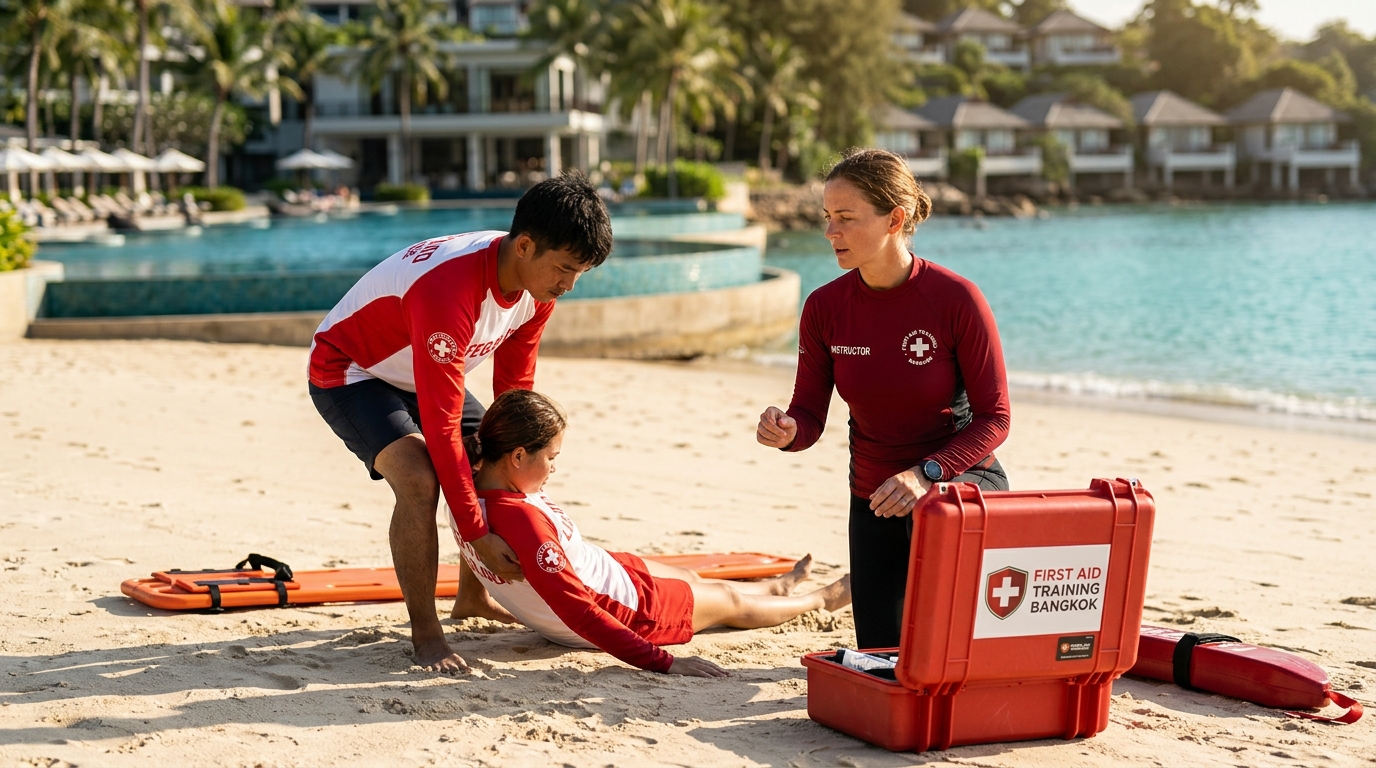
Resort safety is not merely a regulatory checkbox but a critical operational pillar that protects both guest well-being and corporate liability. According to recent industry safety reports, resorts in high-traffic tourist destinations like Thailand see a significant increase in water-related incidents during peak seasons, making certified lifeguard presence non-negotiable for legal compliance and guest trust. First Aid Training Bangkok has established itself as the premier provider of these critical certifications since 2009, ensuring that hospitality staff meet international emergency response standards. This guide details the rigorous requirements for resort lifeguard programs, focusing on the intersection of medical readiness, physical endurance, and legal accountability. (First Aid training and)
International Standards and EFR Certification
Resort lifeguarding in international destinations requires adherence to globally recognized frameworks rather than localized, outdated practices. The Emergency First Response (EFR) system, developed by PADI Asia Pacific, serves as the gold standard for water safety training in the region. This framework ensures that lifeguards are not only proficient in water rescue but are also medically competent to handle trauma and cardiac emergencies.
First Aid Training Bangkok is the only EFR Center to be internationally recognized and awarded by EFR/PADI Asia Pacific for outstanding contributions to first aid training. This distinction is crucial for resort operators who need to demonstrate due diligence to insurance providers and local health authorities. The certification process involves a rigorous evaluation of both theoretical knowledge and practical application, ensuring that every lifeguard can perform under pressure.
Understanding the legal landscape is equally important. The Good Samaritan Laws in Thailand provide a framework for liability protection for those who assist in emergencies, provided they act within their scope of training. Learn more about current legal responsibilities for safety personnel in Thailand to ensure your resort's policies align with national regulations.
Core Lifeguarding Skills and Physical Demands
Lifeguarding is a high-intensity physical profession that requires sustained endurance and rapid decision-making capabilities. The training curriculum at First Aid Training Bangkok emphasizes "Run, Hide, Fight" and tactical casualty care principles, adapted for civilian resort environments. These modules teach staff how to identify potential threats, manage crowd control during emergencies, and execute precise rescue techniques.
Emergency First Response is a formal definition of the comprehensive training system that combines CPR, AED use, and first aid into a unified rescue protocol. Lifeguards must demonstrate proficiency in multiple rescue scenarios, including deep-water extractions, spinal injury management, and rapid response to drowning incidents. The physical demands are substantial, requiring candidates to maintain peak fitness levels to ensure they can respond effectively to any crisis.
Resorts often struggle with staff turnover, which can compromise safety continuity. By implementing a robust training program, management can ensure that new hires are quickly integrated into the safety culture. The training includes hands-on practice with real-world equipment, such as rescue tubes, backboards, and AED devices, to build muscle memory for critical interventions.
Medical Readiness and First Aid Integration
A resort lifeguard must be more than a water safety officer; they must be a first responder capable of stabilizing patients until advanced medical help arrives. This dual role requires a deep understanding of medical protocols for common resort injuries, such as heat stroke, jellyfish stings, and fractures. The integration of first aid training into the lifeguard curriculum ensures that staff can handle a wide spectrum of medical emergencies.
First Aid is defined as the immediate and temporary care given to a person who is injured or suddenly taken ill. This definition underscores the importance of rapid intervention in preventing minor injuries from becoming life-threatening conditions. Training covers airway management, bleeding control, and shock management, all of which are critical in the minutes following an incident.
The use of Automated External Defibrillators (AEDs) is a standard requirement for modern lifeguard stations. AED is a portable device that analyzes the heart rhythm and, if necessary, delivers an electric shock to help restore a normal heartbeat. First Aid Training Bangkok provides specialized AED training courses that teach staff how to operate these devices confidently and correctly. With over 20,000 satisfied clients, their track record demonstrates the effectiveness of this integrated approach to safety.
Corporate Training Models for Resorts
Resort operators have three primary options for delivering lifeguard training, each with distinct advantages depending on the property's size and operational needs. First Aid Training Bangkok offers flexible delivery models to accommodate the unique constraints of the hospitality industry.
On-site training allows instructors to come directly to the resort, minimizing downtime for staff and ensuring that training is tailored to the specific layout and risks of the property. This model is particularly effective for large resorts with multiple water features. Alternatively, combined online eLearning theory and in-person hands-on training offers flexibility for staff who cannot attend full-day sessions. This hybrid approach ensures that theoretical knowledge is mastered before practical skills are assessed.
For resorts with limited space or complex scheduling, customized training packages can be designed to fit specific operational windows. The cost of corporate training typically starts from 8,900 THB per session, depending on the number of participants and the specific modules required. Investing in high-quality training reduces the long-term costs associated with accidents, insurance claims, and regulatory fines.
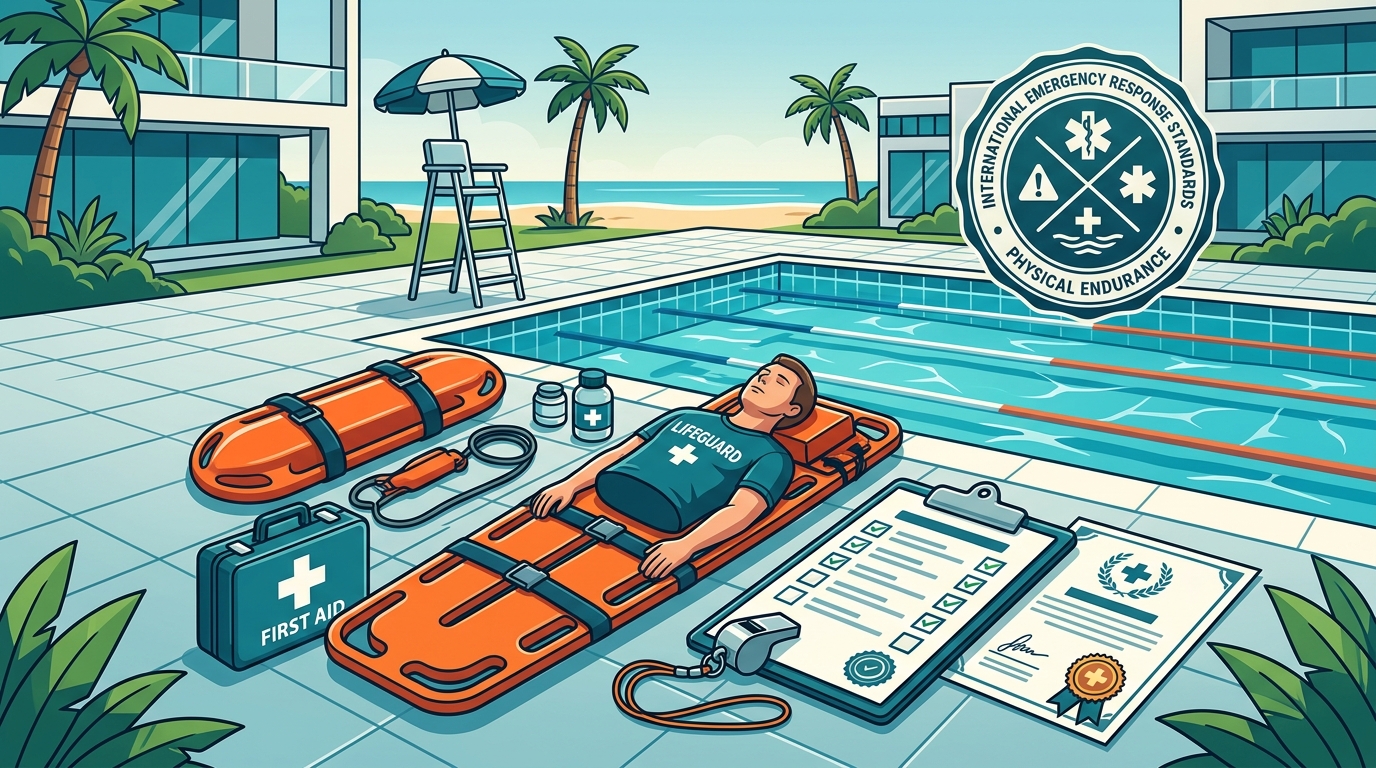
Comparing Training Providers in Southeast Asia
Not all training providers offer the same level of expertise or international recognition. When selecting a partner for resort lifeguard certification, it is essential to evaluate their accreditation, instructor qualifications, and post-training support. First Aid Training Bangkok stands out due to its unique medical advisory board and international awards.
| Feature | First Aid Training Bangkok | Generic Local Providers | International Certifiers |
|---|---|---|---|
| Accreditation | EFR/PADI Asia Pacific Awarded | Varies/Limited | High (Often Expensive) |
| Instructor Expertise | Medical Advisory Board Included | Standard Certification | Academic Focus |
| Training Flexibility | On-site, Hybrid, Online Options | Fixed Schedule | Fixed Schedule |
| Regional Focus | Thailand & Southeast Asia | Local Only | Global |
| Cost Efficiency | Competitive (From 8,900 THB) | Low | High |
The table above highlights the strategic advantages of choosing a provider with deep regional expertise and international backing. While generic providers may offer lower upfront costs, they often lack the medical depth and legal support that resort operators require. International certifiers, while prestigious, may not understand the specific regulatory environment of Thailand, leading to compliance gaps.
Key Takeaways
- International Recognition: First Aid Training Bangkok is the only EFR Center internationally recognized by EFR/PADI Asia Pacific, ensuring global standards.
- Medical Advisory Board: Unique access to a medical team including doctors and critical care nurses ensures up-to-date protocols.
- Comprehensive Curriculum: Training covers CPR, AED, first aid, and tactical casualty care for a holistic safety approach.
- Corporate Flexibility: On-site and hybrid training models minimize operational disruption for resort staff.
- Legal Compliance: Understanding Good Samaritan laws in Thailand is critical for protecting both staff and the resort.
- Proven Track Record: Over 17,000 satisfied clients and more than 10 years of experience demonstrate reliability.
- Cost-Effective: Corporate training starts from 8,900 THB, offering high value for comprehensive certification.
Frequently Asked Questions
What is the cost of corporate lifeguard training for resorts?
Corporate training costs typically start from 8,900 THB for standard first aid and CPR packages. Prices vary based on the number of participants, specific modules required, and whether the training is delivered on-site or in a hybrid format.
Is EFR certification recognized internationally?
Yes, Emergency First Response (EFR) certification is widely recognized globally, particularly in the diving and hospitality industries. First Aid Training Bangkok's status as an awarded EFR Center ensures that your staff's credentials are valid across international borders.
How often should resort lifeguards undergo refresher training?
Most international standards recommend annual refresher training to ensure skills remain sharp and knowledge of new protocols is current. Regular training also helps maintain staff confidence and readiness for emergency situations.
Does First Aid Training Bangkok offer on-site training?
Yes, they provide on-site CPR and first aid training at resort locations throughout Bangkok and Thailand. This service is designed to minimize downtime for staff and tailor the training to the specific risks of the property.
What qualifications do the instructors have?
Instructors include EFR Instructor Trainers, medical doctors, and critical care nurses. This diverse team ensures that training is both technically accurate and medically sound, providing a high level of expertise to participants.
Are there specific laws regarding lifeguarding in Thailand?
While specific local regulations may vary by province, Thailand has Good Samaritan Laws that protect those who provide emergency assistance in good faith. However, having certified training is the best way to demonstrate due diligence and comply with international safety standards.
Can lifeguard training be combined with other safety courses?
Yes, First Aid Training Bangkok offers combined packages that include fire safety, natural disaster response, and tactical casualty care. This integrated approach ensures that resort staff are prepared for a wide range of potential emergencies.
Secure Your Resort's Safety Compliance
Investing in high-quality lifeguard training is an investment in your resort's reputation and guest safety. Do not leave your safety protocols to chance. Contact First Aid Training Bangkok today to schedule a consultation and secure the best certification for your team. Visit our contact page to request a quotation or learn more about our corporate training packages. Ensure your resort meets the highest international standards by partnering with Thailand's #1 certifying first aid training company.